
Milk Bread Doughnuts
Servings: 12 pieces (depending on the size)
Calories: 243kcal
Soft and fluffy milk bread doughnuts made with tangzhong. These pillowy yeasted doughnuts are fried until golden and finished with glaze or cinnamon sugar.
Print Recipe
Ingredients
Tangzhong:
- 18 g bread flour
- 108 g whole milk
Main dough:
- 360 g bread flour plus more for dusting
- 7 g instant yeast
- 34 g milk powder
- 120 g whole milk
- 50 g egg
- 48 g unsalted butter
- 5 g salt
- 50 g sugar
For frying:
- Oil
Glaze (optional):
- 150 g powdered sugar
- 38 g milk
- pinch of salt
- 1 tsp Matcha powder or cocoa powder
Topping: (optional)
Instructions
Prepare tangzhong:
- Combine the flour and milk in a non-stick pan or a saucepan. Use a whisk to stir to combine until you don't see any more lumps. Put on the stove and turn the heat to low-medium and keep stirring
- The mixture will start to thicken. Remember to keep stirring and don't crank up the heat. It will be a thick slurry consistency, about 2 minutes or so of cooking over low-medium heat
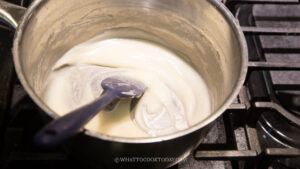
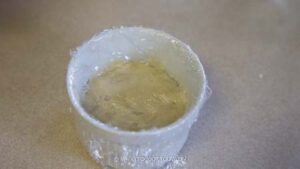
- Remove from the stove and cover with a cling wrap, touching the surface of the tangzhong directly to prevent a "skin" from forming on the surface. Let it sit at room temperature until it cools down to at least lukewarm
Prepare the dough
- Put all ingredients for the main dough in a bowl of a stand mixer fitted with a dough hook attachment. Add the tangzhong you prepare earlier
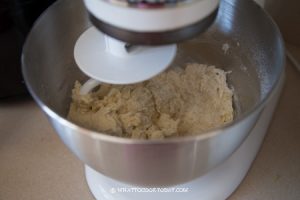
- Use a dough hook attachment to knead the dough until all the crumbly dough starts to come together into one mass, about 2-3 minutes. Continue to knead until the dough clears the side of the bowl and elastic. This may take about 5-8 more minutes kneading on medium speed for this to happen. It feels sticky to the touch and that's normal. Try not to add any more flour, the more flour you add, the drier the dough. If the dough feels too dry to you, add one tablespoon of water and knead again
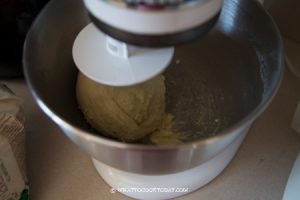
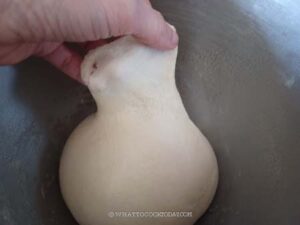
- When you gently stretch a small amount of the dough thinly, it doesn't break easily. This shows proper gluten development
1st proofing:
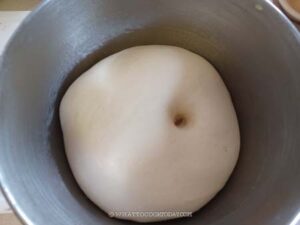
- Place this dough in a lightly oiled large bowl, cover it with a clean and damp tea cloth or plastic wrap and let it rise at a warm place for about 1 hour. The dough will puff up and double in volume
Shaping:
- Prepare two large baking sheets lined with parchment paper. I spray the parchment with some non-stick spray. You can brush with some oil to prevent the dough from sticking to the paper later
- Fold the edges of the dough towards the center to deflate the dough. Cover the dough and let it rest for about 5 minutes
- Roll the dough out into about 1/2 inch thickness.
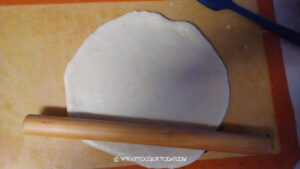
- Dust the doughnut cutter with some flour to prevent sticking. Use a doughnut cutter or a round ring cutter, about 2 1/2 inch in diameter for small doughnuts, and about 3 1/2 to 4 inch round cutter for larger size doughnuts. If you use a doughnut cutter, you will have some doughnut holes too
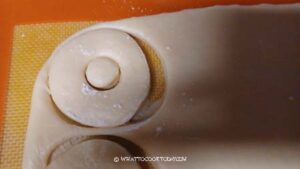
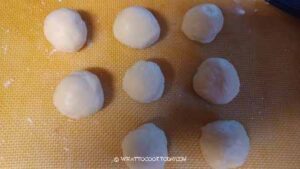
- Cut out as many doughnuts as close as possible. Gather the scraps up, cover and let it rest for 5 minutes and roll it out again to cut out more donuts, OR, you can just roll the dough scraps into several doughnut holes
2nd proofing:
- Place the cut doughnuts on a prepared baking pan
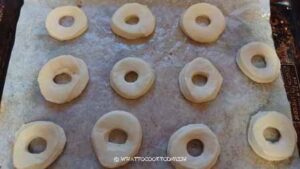
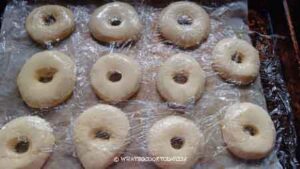
- Cover with an oiled plastic wrap and let them proof again until they are puffy, about 30-45 minutes, depending on temperature
Frying:
- Fill up a medium to large size pot with oil, about 2 inches high. Preheat the oil over medium heat. When you stick a skewer into the oil and you see bubbles around it, the oil is ready. If you have digital thermometer, it should be 350-360 F
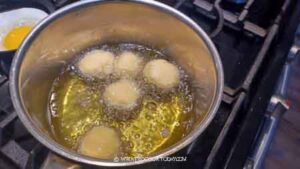
- Gently get one of the doughnut dough and put it into the oil. I suggest fry 2-3 at a time, or you can fry several doughnut holes at a time. Fry until nicely golden brown on one side then use a skimmer and flip over to the other side and fry again until golden brown
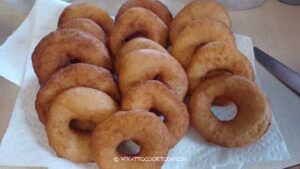
- Place the fry doughnuts on absorben paper towel, to let excess oil drip. Continue frying the rest
Glazing:
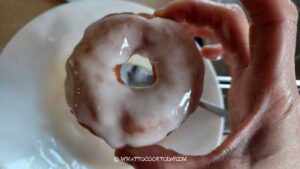
- Combine all ingredients for the glaze. If it's too thick, add more milk, 1/2 tsp at a time. Only prepare the glaze when you are ready to use it
- Dip the doughnuts into the glaze and let them stand on the wire rack so the glaze can dry up and set
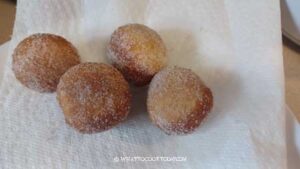
- If you don't want to do any glaze, you can just dust with some powdered sugar or combine about 1/2 cup granulated sugar with about 2 teaspoons of ground cinnamon. Toss the warm doughnuts into the cinnamon sugar mixture so they stick well to the doughnuts
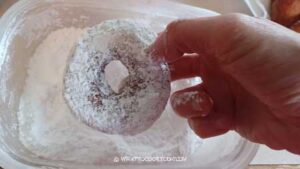
- You can also toss the warm doughnut in powdered sugar
Nutrition
Serving: 1doughnut with glaze | Calories: 243kcal | Carbohydrates: 42g | Protein: 6g | Fat: 6g | Saturated Fat: 3g | Polyunsaturated Fat: 0.5g | Monounsaturated Fat: 1g | Trans Fat: 0.1g | Cholesterol: 29mg | Sodium: 188mg | Potassium: 115mg | Fiber: 1g | Sugar: 19g | Vitamin A: 200IU | Vitamin C: 0.3mg | Calcium: 61mg | Iron: 0.5mg
