This post may contain affiliate links. Please read our disclosure policy.
Soft and fluffy milk bread doughnuts made with tangzhong. These pillowy yeasted doughnuts are fried until golden and finished with glaze or cinnamon sugar.
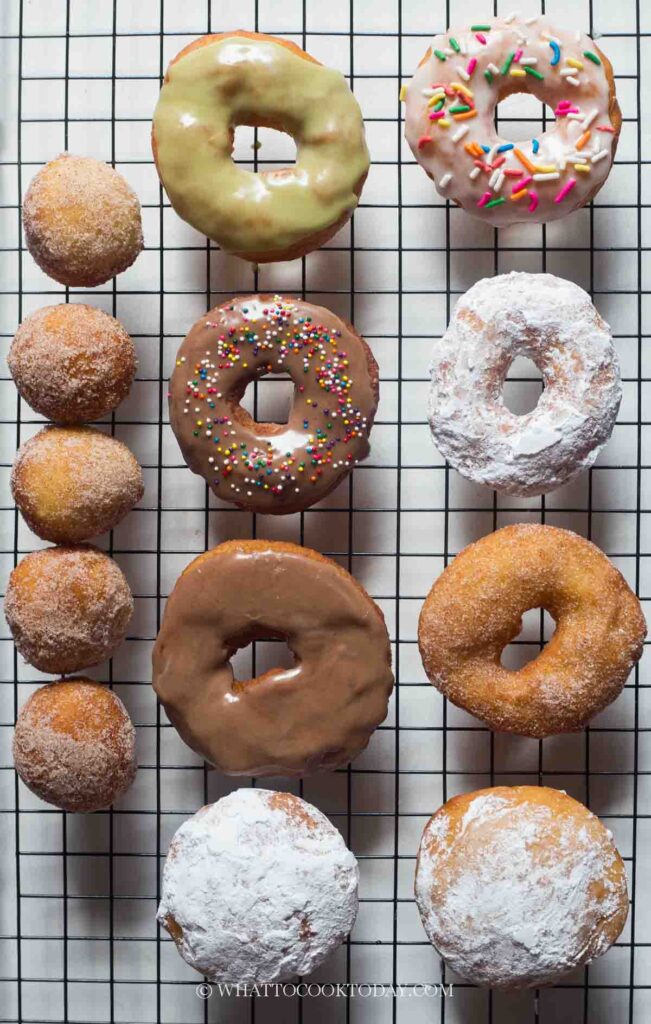
These milk bread doughnuts are the kind of doughnuts that disappear surprisingly fast in my house. They are made with a yeasted milk bread dough and use the tangzhong method, which gives the doughnuts an incredibly soft, fluffy, and pillowy texture. My kids absolutely love these doughnuts. I don’t make them very often because, honestly, I don’t particularly enjoy frying. But my kids insisted that true doughnuts need to be fried LOL! So, here they are.
The dough itself is very similar to a soft Japanese-style milk bread. Tangzhong helps the dough retain moisture, so the inside stays soft and tender while the outside becomes lightly golden and crisp when fried.
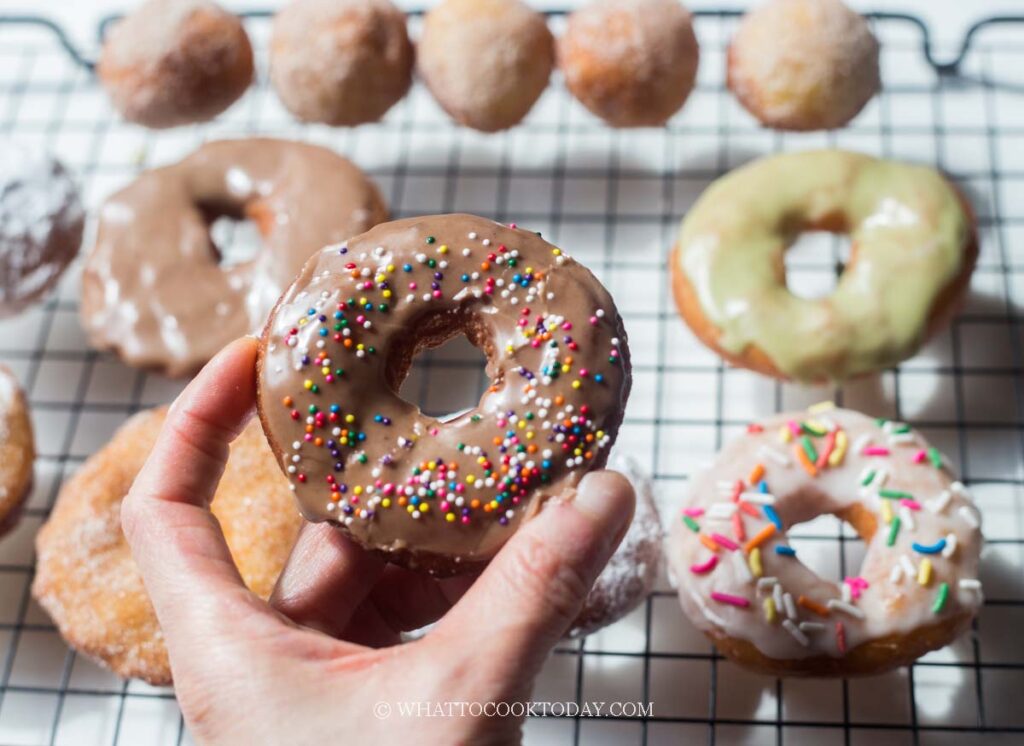
You can enjoy them plain, toss them in cinnamon sugar, dust them with powdered sugar, or dip them in a simple glaze. I especially like the matcha glaze, but a chocolate version is also delicious.
Why you’ll love these doughnuts
- Super soft and pillowy. The tangzhong helps create a wonderfully soft interior.
- Light and fluffy. These are yeasted doughnuts rather than cake doughnuts, so the texture is airy and bread-like.
- Not overly sweet. The dough itself is lightly sweetened, which makes it perfect with a sweet glaze or cinnamon sugar.
- Versatile. You can glaze, sugar, fill, or simply dust them with powdered sugar.
- Make-ahead friendly. You can prepare the dough ahead of time and allow it to proof when you’re ready to make the doughnuts.
Ingredients and substitutions
- Bread flour: Bread flour gives these doughnuts their chewy, stretchy structure and helps support the fluffy texture. I recommend using bread flour rather than substituting with all-purpose flour if possible.
- Whole milk: Whole milk gives the dough a richer flavor and softer texture. You can substitute with 2% milk, although the dough may be slightly less rich.
- Milk powder: Milk powder contributes to the milky flavor and tender texture. I recommend keeping it in the recipe if you have it.
- Instant yeast: Instant yeast can be added directly to the flour. If you’re using active dry yeast instead, you can still use it, but you may want to dissolve it in some of the milk first and allow it to become foamy.
- Butter: Use unsalted butter so you have better control over the salt in the recipe. The butter should be softened but not melted.
- Egg: The recipe uses 50 g of egg, which is approximately one large egg without the shell. For the most consistent result, weigh the egg after cracking it.
- Glaze: The glaze is completely optional. Powdered sugar, cinnamon sugar, or even a simple dusting of powdered sugar works beautifully.
- Matcha or cocoa powder: Use matcha for a slightly earthy glaze or cocoa powder for a chocolate version. You can also leave the glaze plain.
Tips for making the best milk bread doughnuts
1. Don’t add too much flour
This is probably the most important tip.
The dough is supposed to be soft and somewhat sticky. It can be tempting to keep adding flour because sticky dough feels difficult to handle, but too much flour will give you dense, dry doughnuts. Use lightly floured hands and work surface instead.
2. Don’t rush the tangzhong
Cook the tangzhong over low to medium-low heat while stirring constantly. You aren’t trying to make a thick paste. It should resemble a thick slurry.
If you cook it over high heat, the milk can scorch and the flour can clump.
3. Cool the tangzhong before adding it
The tangzhong should be lukewarm or cooler before you add it to the dough. If it’s too hot, it can negatively affect the yeast.
4. Pay attention to the dough, not just the clock
Proofing times are estimates. A warm kitchen may require less time, while a cool kitchen may require considerably longer.
Look for dough that has visibly expanded and become puffy.
5. Don’t overproof the shaped doughnuts
Overproofed doughnuts can become fragile and may collapse when transferred to the oil. You want them puffy and airy, but they should still have some structure.
6. Don’t overcrowd the pot
Fry only a few doughnuts at a time. Too many doughnuts will lower the oil temperature, which can result in greasy doughnuts.
7. Keep the oil temperature consistent
Oil that’s too hot can brown the outside before the center is cooked. Oil that’s too cool can cause the doughnuts to absorb too much oil.
A kitchen thermometer makes frying much easier and more consistent.
8. Let the oil drain properly
I like placing the fried doughnuts on a wire rack set over a baking sheet rather than directly onto paper towels. This allows air to circulate around the doughnuts and prevents the bottoms from becoming soggy.
Variations
- Cinnamon Sugar Doughnuts
Skip the glaze and toss the warm doughnuts in cinnamon sugar. This is one of the easiest ways to finish them and is especially good when you want something less messy than glazed doughnuts. - Matcha Glazed Doughnuts
Add 1 teaspoon matcha powder to the powdered sugar glaze. For a stronger matcha flavor, you can add a little more matcha, but remember that matcha can also make the glaze slightly more bitter. - Chocolate Glazed Doughnuts
Replace the matcha powder with 1 teaspoon cocoa powder. For an extra chocolatey version, add chocolate sprinkles on top. - Vanilla Glaze
Simply omit the matcha or cocoa powder from the glaze and add a small splash of vanilla extract. - Filled Doughnuts
Instead of cutting a hole in the center, cut the dough into rounds and fry them as whole pieces. Once cooled, use a piping bag fitted with a small round tip to fill them with: Pastry cream, Custard, Chocolate cream, Strawberry jam, Nutella, Red bean paste, Whipped cream - Sugar-Coated Doughnut Holes
Don’t throw away the doughnut holes! Fry them until golden brown and toss them in cinnamon sugar while warm. They’re especially fun for kids because they’re bite-sized.

Frequently Asked Questions
1. Can I use all-purpose flour instead of bread flour?
Yes, but bread flour is my preference for this recipe. It provides more gluten, which helps create the stretchy, fluffy texture associated with milk bread.
If you use all-purpose flour, avoid adding extra flour just because the dough feels sticky.
2. Why is my dough so sticky?
This is normal. The dough is intentionally soft because the finished doughnuts are supposed to be soft and fluffy.
As long as the dough is developing gluten and becoming elastic during kneading, try not to add excessive flour.
3. Can I make the dough without a stand mixer?
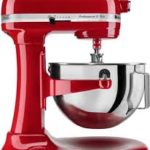
Yes. You can knead the dough by hand, although it will take longer and be more work because this is a relatively soft dough. A stand mixer makes the process much easier.
4. Can I use active dry yeast?
Yes. Active dry yeast can be substituted for instant yeast. You may want to dissolve it in some of the milk first and allow it to sit briefly before mixing the dough.
5. How do I know when the doughnuts are done proofing?
The shaped doughnuts should look noticeably puffy and lighter. If you gently press one with a fingertip, the indentation should slowly spring back. If it immediately springs back, it probably needs more proofing. If it collapses or doesn’t spring back at all, it may be overproofed.
6. Why are my doughnuts greasy?
The oil was likely too cool, or too many doughnuts were added to the pot at once. Try to maintain the oil around 350°F (175°C) and fry only a few doughnuts at a time.
7. Why did my doughnuts brown too quickly?
Your oil was probably too hot. Lower the heat and allow the oil temperature to come back down before continuing.
8. Can I bake these instead of frying them?
You can, but they won’t have exactly the same texture. These were developed as fried doughnuts, and frying gives them that characteristic lightly crisp exterior while keeping the inside soft and fluffy. If you prefer baked doughnuts, I would recommend using a recipe specifically developed for baking rather than simply changing the cooking method here.
9. Can I make these ahead of time?
Yes. The dough can be prepared ahead and refrigerated after the first rise. When you’re ready to continue, allow the chilled dough to warm up enough to become workable before shaping and completing the second proof. Keep in mind that refrigeration will slow the yeast activity, so the timing will be longer.
10. How should I store leftover doughnuts?
These doughnuts are best eaten fresh, but leftovers can be kept in an airtight container at room temperature for a day or two. Because homemade yeasted doughnuts don’t contain the preservatives found in commercial doughnuts, they are best enjoyed as soon as possible. If they have been glazed, allow the glaze to set before storing them.
These milk bread doughnuts are definitely a little more work than grabbing a box of doughnuts from the store, especially because you have to deal with yeast, proofing, and frying. But that first bite makes it worthwhile. The outside is lightly golden while the inside is incredibly soft and fluffy, thanks to the milk bread dough and tangzhong. And because the dough isn’t overly sweet, you can finish them in so many different ways. My kids will always vote for the fried version, of course. 😂 And while I still don’t love frying, I have to admit that freshly fried, pillowy-soft milk bread doughnuts are pretty hard to resist.
Milk Bread Doughnuts
Ingredients
Tangzhong:
- 18 g bread flour
- 108 g whole milk
Main dough:
- 360 g bread flour plus more for dusting
- 7 g instant yeast
- 34 g milk powder
- 120 g whole milk
- 50 g egg
- 48 g unsalted butter
- 5 g salt
- 50 g sugar
For frying:
- Oil
Glaze (optional):
- 150 g powdered sugar
- 38 g milk
- pinch of salt
- 1 tsp Matcha powder or cocoa powder
Topping: (optional)
Instructions
Prepare tangzhong:
- Combine the flour and milk in a non-stick pan or a saucepan. Use a whisk to stir to combine until you don't see any more lumps. Put on the stove and turn the heat to low-medium and keep stirring
- The mixture will start to thicken. Remember to keep stirring and don't crank up the heat. It will be a thick slurry consistency, about 2 minutes or so of cooking over low-medium heat
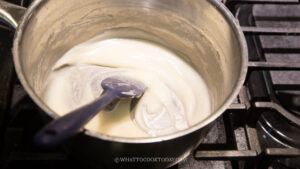
- Remove from the stove and cover with a cling wrap, touching the surface of the tangzhong directly to prevent a "skin" from forming on the surface. Let it sit at room temperature until it cools down to at least lukewarm
Prepare the dough
- Put all ingredients for the main dough in a bowl of a stand mixer fitted with a dough hook attachment. Add the tangzhong you prepare earlier
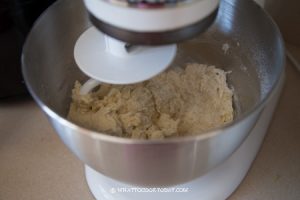
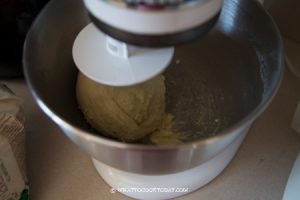
- Use a dough hook attachment to knead the dough until all the crumbly dough starts to come together into one mass, about 2-3 minutes. Continue to knead until the dough clears the side of the bowl and elastic. This may take about 5-8 more minutes kneading on medium speed for this to happen. It feels sticky to the touch and that's normal. Try not to add any more flour, the more flour you add, the drier the dough. If the dough feels too dry to you, add one tablespoon of water and knead again
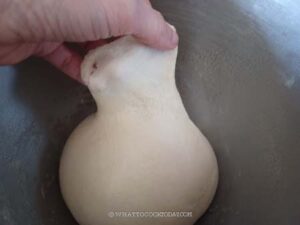
- When you gently stretch a small amount of the dough thinly, it doesn't break easily. This shows proper gluten development
1st proofing:
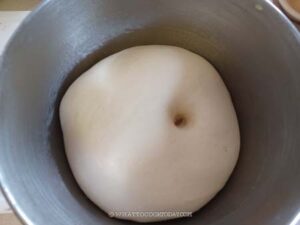
- Place this dough in a lightly oiled large bowl, cover it with a clean and damp tea cloth or plastic wrap and let it rise at a warm place for about 1 hour. The dough will puff up and double in volume
Shaping:
- Prepare two large baking sheets lined with parchment paper. I spray the parchment with some non-stick spray. You can brush with some oil to prevent the dough from sticking to the paper later
- Fold the edges of the dough towards the center to deflate the dough. Cover the dough and let it rest for about 5 minutes
- Roll the dough out into about 1/2 inch thickness.
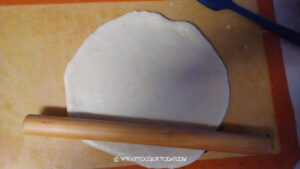
- Dust the doughnut cutter with some flour to prevent sticking. Use a doughnut cutter or a round ring cutter, about 2 1/2 inch in diameter for small doughnuts, and about 3 1/2 to 4 inch round cutter for larger size doughnuts. If you use a doughnut cutter, you will have some doughnut holes too
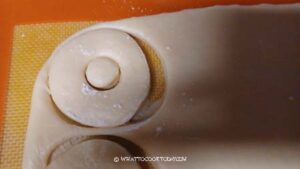
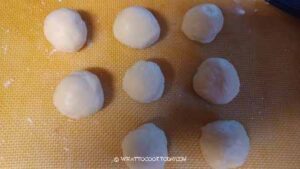
- Cut out as many doughnuts as close as possible. Gather the scraps up, cover and let it rest for 5 minutes and roll it out again to cut out more donuts, OR, you can just roll the dough scraps into several doughnut holes
2nd proofing:
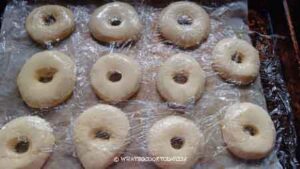
- Place the cut doughnuts on a prepared baking pan
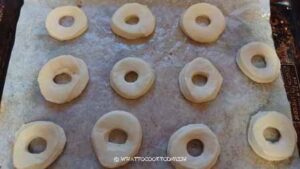
- Cover with an oiled plastic wrap and let them proof again until they are puffy, about 30-45 minutes, depending on temperature
Frying:
- Fill up a medium to large size pot with oil, about 2 inches high. Preheat the oil over medium heat. When you stick a skewer into the oil and you see bubbles around it, the oil is ready. If you have digital thermometer, it should be 350-360 F
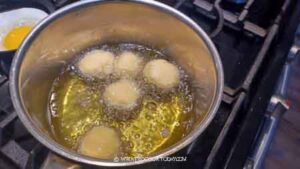
- Gently get one of the doughnut dough and put it into the oil. I suggest fry 2-3 at a time, or you can fry several doughnut holes at a time. Fry until nicely golden brown on one side then use a skimmer and flip over to the other side and fry again until golden brown
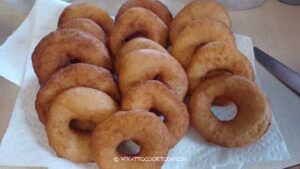
- Place the fry doughnuts on absorben paper towel, to let excess oil drip. Continue frying the rest
Glazing:
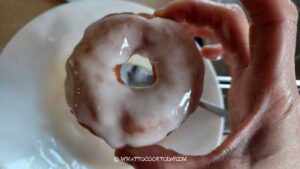
- Combine all ingredients for the glaze. If it's too thick, add more milk, 1/2 tsp at a time. Only prepare the glaze when you are ready to use it
- Dip the doughnuts into the glaze and let them stand on the wire rack so the glaze can dry up and set
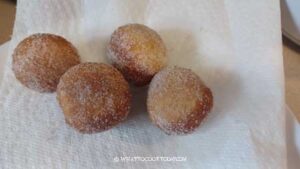
- If you don't want to do any glaze, you can just dust with some powdered sugar or combine about 1/2 cup granulated sugar with about 2 teaspoons of ground cinnamon. Toss the warm doughnuts into the cinnamon sugar mixture so they stick well to the doughnuts
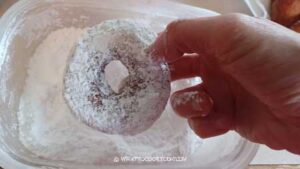
- You can also toss the warm doughnut in powdered sugar


2 comments
Hi Marvellina,
If I use bread machine to knead and proof the dough, is the tangzhong placed in the same order as the liquid ingredients?
Hi Tuty, yes it should be the same order.