This post may contain affiliate links. Please read our disclosure policy.
These bak kueh-inspired minced meat and mung bean dumplings feature a soft, chewy skin, savory pork and mung bean filling, and fragrant banana leaf wrapping.
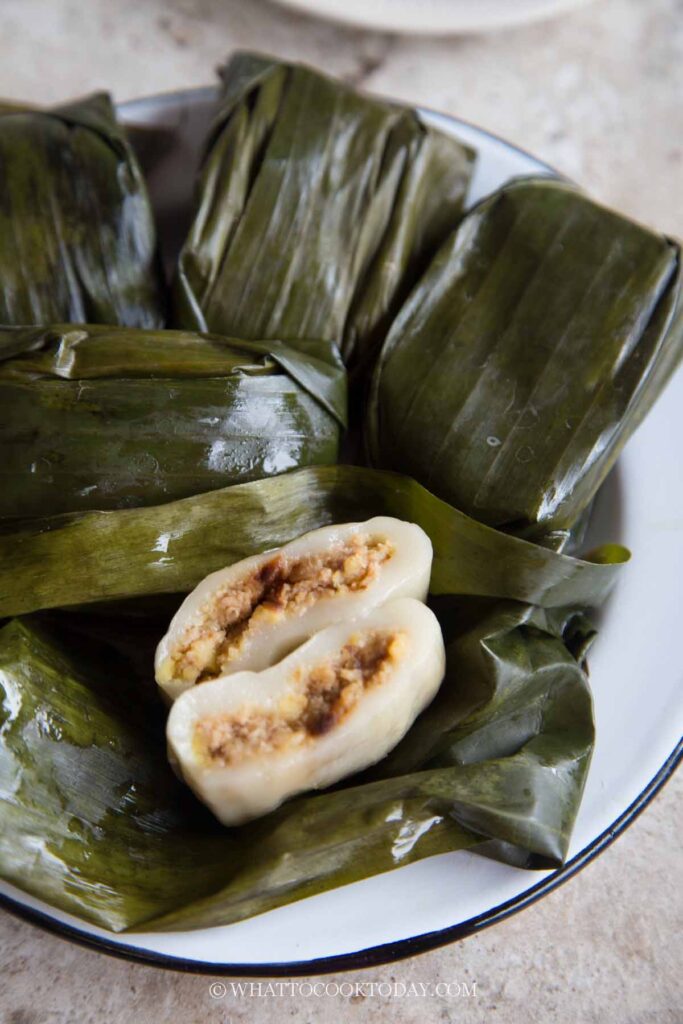
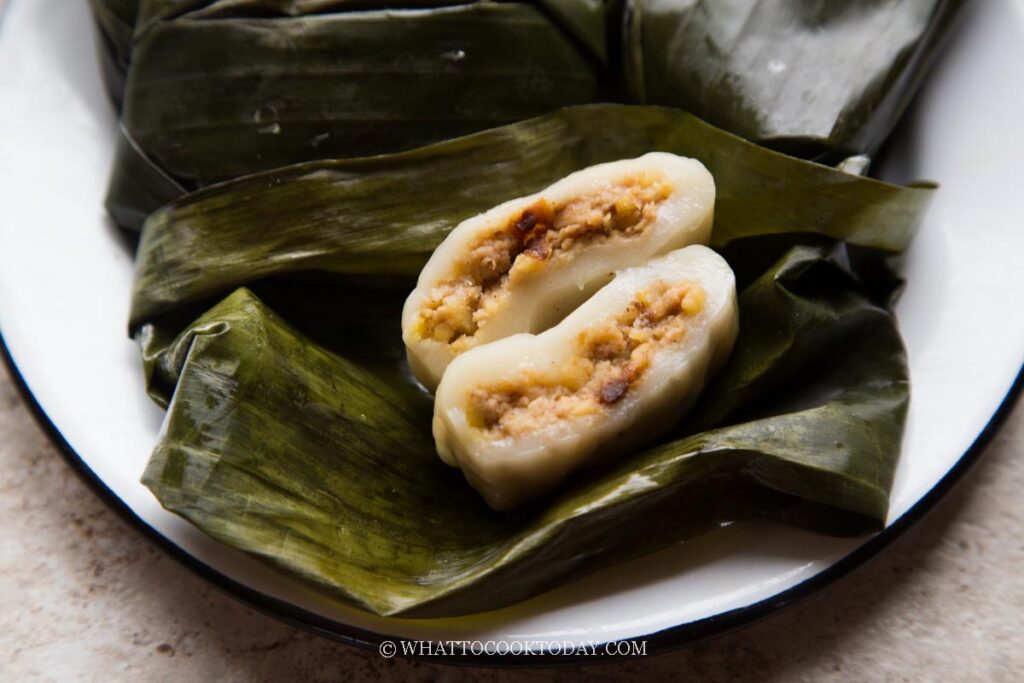
These steamed minced meat and mung bean dumplings are made with a soft, slightly chewy glutinous rice flour and potato skin wrapped around a savory filling of seasoned ground pork, mung beans, and crispy fried shallots. Each dumpling is wrapped in banana leaf and steamed until soft, chewy, and fragrant.
This recipe is a little different from many dumplings you may be familiar with because the filling isn’t simply meat. The combination of ground pork and mung beans gives the filling a soft, almost paste-like texture, while the fried shallots add a wonderful savory sweetness.
A recipe made from memories
A reader once reached out to me asking if I could recreate something their aunt used to make. Unfortunately, their aunt had passed away, and there were no written notes or recipes left behind. All they had were memories and descriptions of what the dumplings looked and tasted like. So I developed this recipe based on those descriptions. I’m so happy to say that the result came pretty close to what they remembered their aunt making.
She wasn’t entirely sure whether the recipe originated from Malaysia or Singapore, but in their family, these were called “bak kueh.” “Bak” generally refers to meat, while “kueh” is a broad term used for many types of cakes or snack foods and can refer to both sweet and savory preparations, many of which are steamed.
Since I couldn’t find a definitive traditional English name for this particular preparation, I call them minced meat and mung bean dumplings. The name describes exactly what they are, while “bak kueh” is the name I like to preserve from the family who inspired this recipe.
Ingredients and substitutions
- Glutinous rice flour: This forms the chewy, soft outer skin of the dumplings. Glutinous rice flour is essential here because regular rice flour will not give you the same texture. No substitutions for this
- Mashed potato: Mashed potato makes the skin softer and more pliable and helps keep it from becoming overly tough after steaming.
- Hot boiling water: The hot water partially gelatinizes the glutinous rice flour, helping create a soft and workable dough.
- Oil: A little oil makes the dough smoother and more supple and easier to wrap.
- Split mung beans: These are cooked until tender and used partly mashed and partly whole, giving the filling some texture while also helping bind everything together.
- Ground pork: Ground pork provides the savory, meaty component of the filling. Ground chicken or turkey can be used, although the flavor will be slightly different.
- Dark soy sauce: This adds color and a deeper soy flavor to the pork.
- Soy sauce: Regular soy sauce provides the main salty, savory seasoning.
- Five-spice powder: Just a small amount gives the filling a warm, aromatic flavor without overpowering the mung beans and pork. You can skip if you don’t have it, but I don’t recommend it
- Sesame oil: Sesame oil adds a nutty aroma to the filling.
- Cornstarch: Cornstarch helps bind the meat mixture together and gives the filling a softer, cohesive texture.
- Chicken powder: This adds extra savory depth. You can substitute with a little chicken bouillon powder if that is what you have.
- Brown sugar: A small amount balances the savory seasoning and gives the filling a subtle sweetness.
- Oil: Use this for frying the shallots and cooking the pork.
- Shallots: Fried shallots are an important part of the filling. They add sweetness, fragrance, and little bits of texture throughout the dumpling. You can use red onion in a pinch
- Banana leaves: Banana leaves are used to wrap the dumplings while steaming. They add a subtle fragrance and also make the dumplings easier to handle.
How to serve
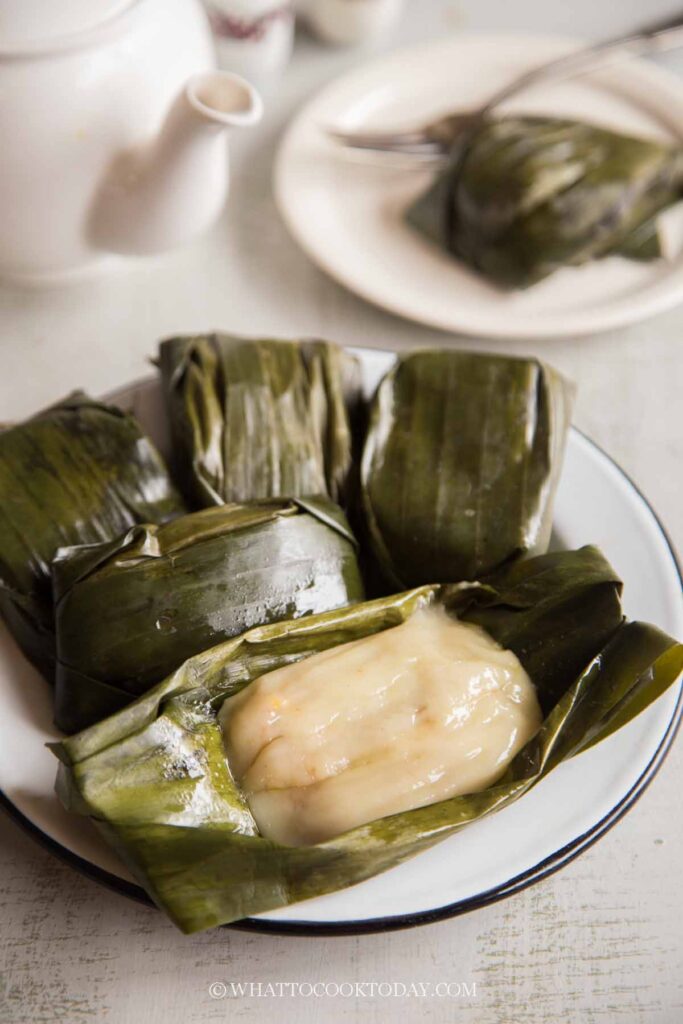
- These dumplings are best served warm or at room temperature.
- You can leave them wrapped in the banana leaves until you’re ready to eat them. The banana leaves also make them convenient to pick up and serve.
- I personally like to unwrap them just before eating so you get the aroma from the banana leaf as you open the parcel.
Storage and reheating
- Refrigerator: Let the dumplings cool completely, then place them in an airtight container. They can be refrigerated for about 3–4 days.
- Steamer: Reheat refrigerated dumplings in a steamer for about 5 minutes, or until heated through.
- Microwave: You can also microwave them for 1–2 minutes, or until heated through. Covering them loosely with a damp paper towel helps keep the skin from drying out.
- Freezer: For longer storage, freeze the cooled dumplings in an airtight container or freezer-safe bag for up to 1 month.
- From frozen: Thaw overnight in the refrigerator, then reheat in the steamer or microwave until completely heated through.
Tips for making bak kueh
- Don’t skip soaking the mung beans: The mung beans need to be properly hydrated before steaming so they cook evenly and become soft enough to mash.
- Keep some mung beans whole: Mashing only half of the mung beans gives the filling a nicer texture. The mashed portion helps bind the filling while the whole beans provide little bites of texture.
- Don’t make the filling too dry: The filling should be moist and somewhat mushy rather than crumbly. Add water a tablespoon at a time if necessary while cooking.
- Cool the filling completely: Warm filling can make the dough soft and difficult to handle. Cooling it completely makes wrapping much easier.
- Work quickly with the dough: Glutinous rice flour dough can develop a dry surface if left uncovered. Keep the unused dough balls covered while you wrap each dumpling.
- Adjust the dough gradually: The exact amount of water needed can vary depending on how moist your mashed potatoes are. Add the water gradually rather than adding all of it at once.
- Don’t skip the banana leaves: Besides being traditional-looking, the banana leaves make the dumplings easier to steam and handle and give them a lovely subtle fragrance.
What I love most about this recipe is that it came from someone’s memory of food made by a loved one. There was no old recipe card to work from and no written instructions to follow. Instead, there were descriptions of the dumplings, the filling, the banana leaf wrapping, and the memories of how they tasted. From those details, I worked on developing a recipe that could hopefully recreate something familiar. I’m always especially happy when a recipe like this works—not necessarily because it is the most traditional or definitive version, but because it gives someone a way to make something they thought they might never taste again. I hope this recipe can do the same for you.
Minced Meat and Mung Beans Dumplings (Bak Kueh)
Ingredients
For the skin:
- 260 g glutinous rice flour
- 200 g mashed potato
- 150 g hot boiling water
- 2 tsp oil
Filling (enough for 12, may have a bit leftovers maybe)
- 80 g split mung bean soak for 4 hours
- 120 g ground pork
- 1 tsp dark soy sauce
- 1 Tbsp soy sauce
- ½ tsp five spice powder
- 1 tsp sesame oil
- 1 tsp corn starch
- 1 tsp chicken powder
- 1 tsp brown sugar
- 1 Tbsp oil
- 2 large shallots thinly sliced
Instructions
Prepare the filling:
- Soak mung beans in water for at least 4 hours. After soaking the beans, discard water and steam over medium heat for 20 minutes or until the beans are soft
- Divide the mung beans in half and mash half of the beans into a paste consistency
- Marinate the ground pork with dark soy sauce, soy sauce, five-spice powder, sesame oil, cornstarch, chicken powder, and brown sugar for at least 15 minutes or up to 24 hours (keep in the fridge if marinating for longer than 30 minutes)
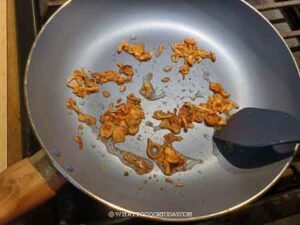
- Preheat 1 Tbsp of oil on a large skillet. Add the shallots and fry them until they are golden brown and slightly crisp. Remove the shallots from the oil.
- Add the pork to the same oil. Use a spatula to break the chunks of meat and stir fry until they just start to turn color.
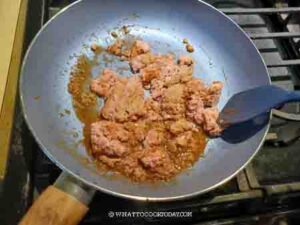
- Add the mashed mung beans and the rest of the unmashed mung beans. Continue to stir until the meat mixture is kind of mushy. If the mixture seems a bit dry, add a bit of water, 1 Tbsp at a time.
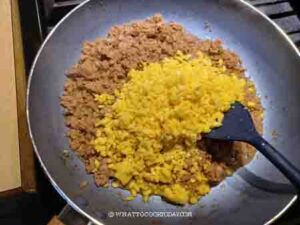
- Stir in the shallots.
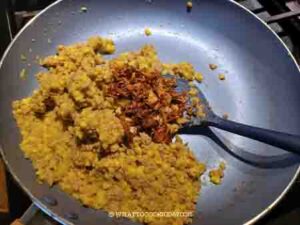
- Have a taste and adjust to your preference. It should be savory with just a hint of sweetness. Let it cool down completely before using . You can prepare the filling ahead up to this point. Cover and keep in the fridge for up to 3 days
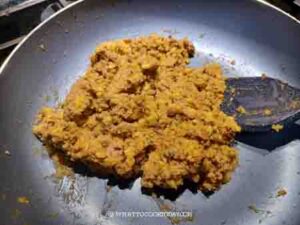
- When ready to use, divide the filling into 15 portions
Prepare the skin:
- Roughly combine flour, salt, and mashed potato. Pour in hot boiling water, start with 130 g first.
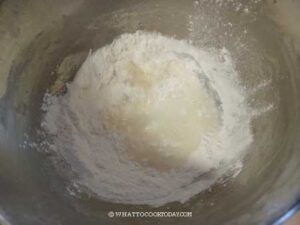
- Use spatula to stir when it's not too hot anymore , knead with your hand until the dough is soft and supple.
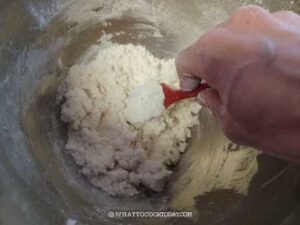
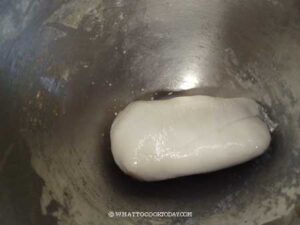
- Add the oil and knead into soft pliable dough. If the dough feels dry, add a bit more water, 1 tsp at a time. Wrap in plastic wrap and rest for 15 minutes.
Wrapping:
- While waiting, prepare the banana leaves. Cut the banana leaves into 15 x 18 cm. Remove the spines from the leaves if any. Wipe them clean and dip each one in hot boiling water for about 30 seconds or so and wipe them dry before using. Brush the smooth side of each leaf with some oil to prevent sticking
- Divide dough into 15 equal pieces. Roll into balls, keep them covered and work with one dough at a time. Push into the dough with your thumb
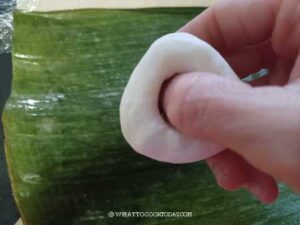
- Form a large cavity large enough for the filling, like a bowl.
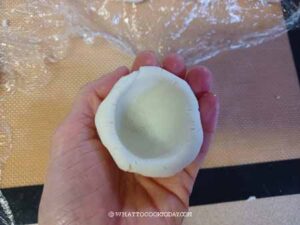
- Fill with filling and then enclose the dough by pinching the seams together
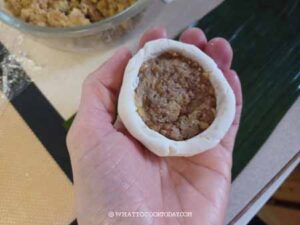
- Place on top of the oiled banana leaf.
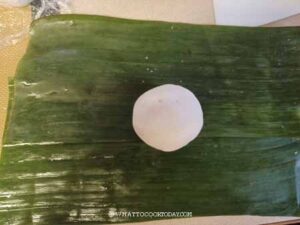
- Fold the top and bottom over to cover the filling
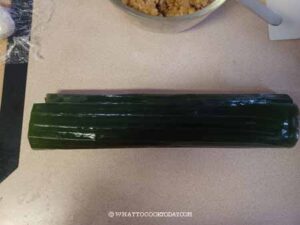
- Gently press on them to flatten
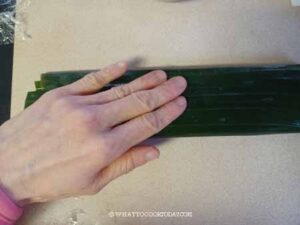
- Then fold the two sides
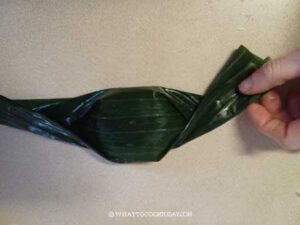
- Then fold them up and then flip it over so the folds are at the bottom now
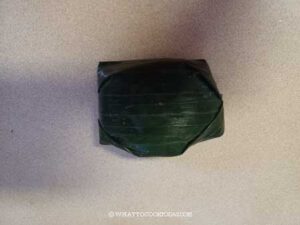
Steaming:
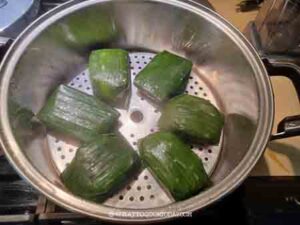
- Bring the water in the steamer to a rolling boil. Place the wrapped dumplings on a steaming rack and steam for 15 minutes over medium heat
Serve:
- Serve while they are warm or at room temperature
Storage:
- Let them cool completely and then keep them in an air-tight container and they can be kept in the fridge for about 3-4 days. Simply reheat in the steamer for about 5 minutes or until heated through. You can also reheat in the microwave for 1-2 minutes or until heated through
- For a longer storage, keep them in the freezer for up to 1 month. You can thaw them overnight in the fridge and then reheat in the steamer or microwave

4 comments
Omg. Thanks for posting this. My late grandma used to make this. And I rem she said this was a peranakan recipe but no one could verify or replicate it. I think the only difference was I remember her using coriander and quite a bit of white pepper powder. Thank you for recreating this. You made me think of her today 🥲
Hi Rebecca! I was hoping somebody would recognize this kueh too! Now I know that it’s of Peranakan origin! 🙂 The use of more coriander and white pepper powder sounds just about right to me too, especially in a Peranakan kueh like this! I will have to incorporate that when I make them again next round! Thank you for sharing!
I am going to have to try and make it too! Just to clarify it’s coriander powder and not fresh coriander. I remember she would toast the coriander seed and grind it up. If you do make this version, let me know what you think. Sadly, she has many recipes that are now lost. By the time we wanted to record them down, she couldn’t remember them. Thank you once again.
Thanks for the tips! toasting the seeds before grinding will amplify the aroma for sure! Sadly, many family-treasured old recipes are nowhere to be found now 🙁