This post may contain affiliate links. Please read our disclosure policy.
This pandan pillow cake is soft, fluffy, and wonderfully fragrant, with a delicate, airy crumb. Learn how to make this Southeast Asian bakery-style pandan chiffon loaf cake at home.
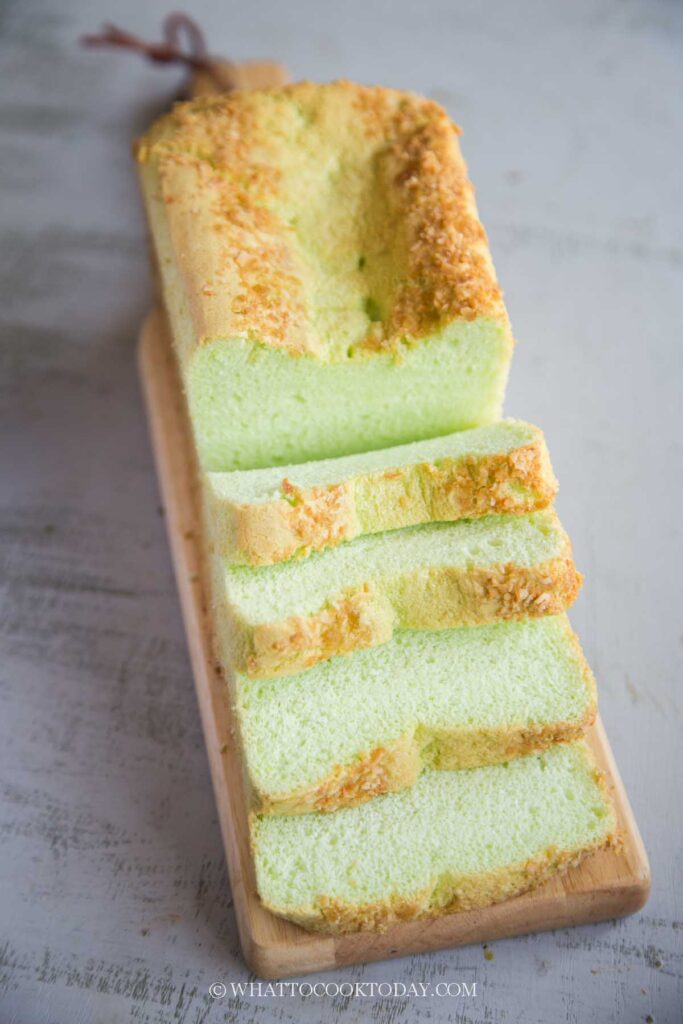
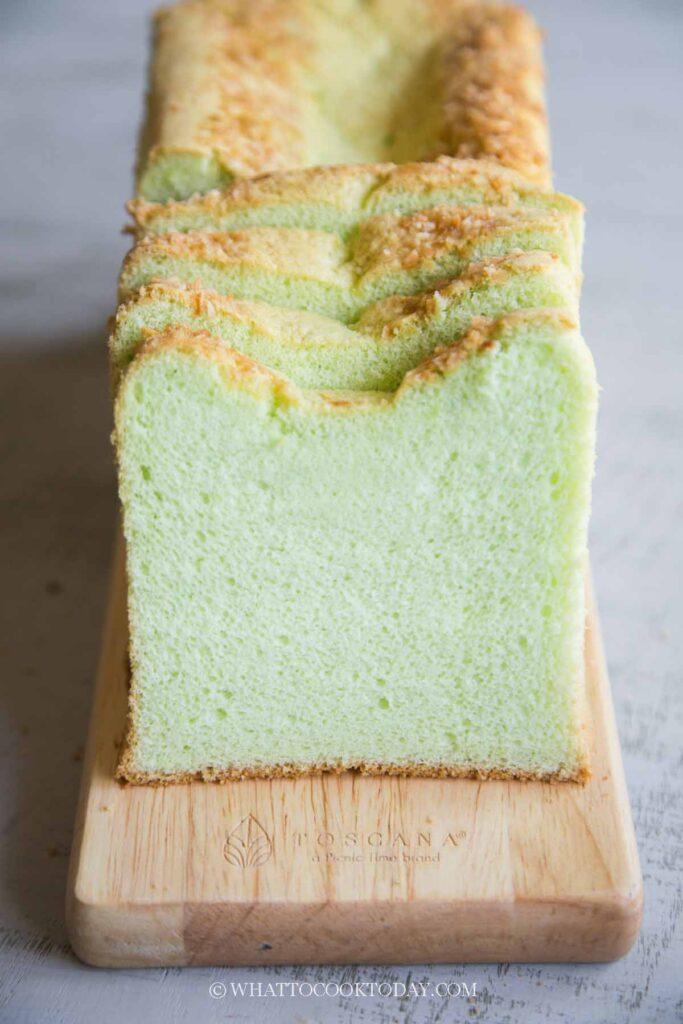
This pandan pillow cake is a soft, fluffy, and beautifully fragrant chiffon cake baked in a loaf pan instead of the traditional chiffon tube pan. It has a lovely tall shape, a delicate golden-green crust, and an incredibly light, airy texture that almost melts in your mouth. The natural fragrance of pandan juice gives this cake its distinctive Southeast Asian flavor.
If you’ve visited bakeries in Southeast Asia, you may have come across chiffon cakes baked in rectangular paper loaf pans. They are often sold as individual loaves, with their characteristic tall, soft, and pillowy appearance. This homemade version recreates that bakery-style pandan loaf cake using a regular 9 x 5-inch metal loaf pan.
What makes this recipe a little different is that I include two baking methods. The first method involves briefly taking the cake out of the oven to make a slit across the top, while the second method uses a lower baking temperature and doesn’t require you to remove or invert the cake during cooling. Both methods work, so you can choose whichever you feel more comfortable with.
What is pandan pillow cake?
Pandan pillow cake is essentially a chiffon cake baked in a rectangular loaf pan. The name “pillow cake” comes from its tall, soft, and pillowy appearance. It is especially popular in Southeast Asian bakeries, where chiffon cakes are commonly baked in sturdy paper loaf pans for easy handling, packaging, and selling.
The cake is made using the traditional chiffon cake method, which involves preparing a rich egg yolk batter separately from a whipped egg white meringue. The two mixtures are gently folded together to create a light and airy batter.
Unlike butter cakes, chiffon cakes use oil instead of butter. This gives the cake its characteristic moist and tender crumb, and it stays soft even after refrigeration.
Pandan is another defining feature. Fresh pandan juice gives the cake a naturally sweet, grassy, floral aroma that pairs beautifully with the delicate eggy flavor of chiffon cake.
Why you’ll love this recipe
- Light and fluffy: The whipped egg whites give the cake its beautiful volume and delicate texture.
- Naturally fragrant: Fresh pandan juice provides a lovely aroma without needing artificial pandan flavoring.
- Stays soft for days: Thanks to the oil-based batter, the cake remains moist and tender for several days.
- No special chiffon pan required: You can make this cake using a regular 9 x 5-inch loaf pan.
- Two baking methods: Choose between the take-out-and-slit method or the lower-temperature method.
What does pandan pillow cake taste and feel like?
The first thing you’ll notice is how incredibly soft and fluffy this cake is. The crumb is light, airy, and moist, with a delicate springiness when you press it gently. It isn’t dense or heavy like a butter loaf cake.
The pandan flavor is fragrant but not overpowering. It has a subtle grassy, floral sweetness that is characteristic of fresh pandan. Because this is a relatively light cake, the natural aroma of pandan really shines through.
I also find that chiffon cake tastes even better the next day. The pandan fragrance has time to develop, and the texture remains soft and tender. If you can resist cutting into it immediately, I recommend waiting until the following day!
Ingredients and substitutions
- Egg yolks: Separate the eggs while they are cold, then allow the yolks and whites to come to room temperature before using.
- Egg whites: Make sure there is absolutely no trace of egg yolk in the whites, or they may not whip properly.
- Oil: Use a neutral-flavored oil such as canola, vegetable, or sunflower oil. Avoid strongly flavored oils.
- Pandan juice: Fresh pandan juice gives the cake its characteristic aroma. I recommend making your own if fresh or frozen pandan leaves are available. See my guide on how to make pandan juice and pandan extract.
- Cake flour: Cake flour helps produce a fine, delicate crumb. I don’t recommend substituting it with all-purpose flour if you want the softest texture.
- Cornstarch: Helps keep the crumb tender and light. You can use additional cake flour if needed, although the texture may be slightly different.
- Sugar: Granulated white sugar is used to stabilize and sweeten the meringue.
- Salt: Balances the sweetness and enhances the pandan flavor.
- Lemon juice or vinegar: Helps stabilize the egg white meringue. You can also substitute the same amount of cream of tartar if preferred.
Tips for making a successful pandan pillow cake
1. Use a loaf pan without a nonstick coating if possible
A regular uncoated metal loaf pan is my preference. Chiffon cake needs to cling to the sides of the pan as it rises. A nonstick pan can still work, but the cake may not rise as tall because it has less grip on the sides. There is also a greater risk of the cake slipping out when you invert it to cool.
2. Only line the bottom of the pan
Line the bottom of the loaf pan with parchment paper to make releasing the cake easier. Do not grease or line the sides. The cake needs to cling to the sides as it rises.
3. Bring the eggs to room temperature
Separate the eggs while they are cold because the yolks and whites are easier to separate. Then let them come to room temperature before making the batter. Room-temperature egg whites generally whip more readily and produce good volume.
4. Don’t rush the meringue
I recommend beating the egg whites at medium speed rather than high speed. It takes a little longer, but the resulting meringue tends to have finer bubbles and a more stable structure. With my KitchenAid mixer, I use speed 6. Once the meringue reaches stiff peaks with a slight bend at the tip, lower the speed to 4 and beat for another minute to even out the bubbles.
5. Don’t overbeat or underbeat the meringue
The meringue should be glossy, smooth, and firm enough to hold its shape, with just a slight bend at the tip. An overly dry or grainy meringue is difficult to incorporate evenly into the yolk batter and can result in a less uniform cake.
6. Fold gently but thoroughly
The egg yolk batter is relatively thick, so I like to use a whisk for the first two additions of meringue. This helps lighten the batter without having to fold excessively. For the final addition, switch to a rubber spatula so you can scrape the bottom of the bowl and incorporate everything evenly.
7. Don’t let the cake rise too quickly
A chiffon cake that rises too quickly can collapse when removed from the oven because its internal structure hasn’t had enough time to set. This is why the baking temperature and oven rack position are important. Follow the recommended temperature changes for your chosen baking method.
8. Make sure the cake is fully baked
An underbaked chiffon cake is one of the most common reasons for a collapsed cake. The top should feel dry and spring back lightly when touched. When in doubt, bake for another 5 minutes. It is generally safer to bake chiffon cake a little longer than to remove it too early.
9. Allow enough time for cooling
For the first baking method, the cake needs to cool upside down. Do not rush to unmold it while it is still warm. Allow approximately 2–3 hours for it to cool completely.
10. Give the cake time to develop its flavor
Although you can enjoy the cake on the day it is baked, I find that it tastes even better the following day. The pandan aroma becomes more pronounced, and the texture remains wonderfully soft.
How to serve pandan pillow cake
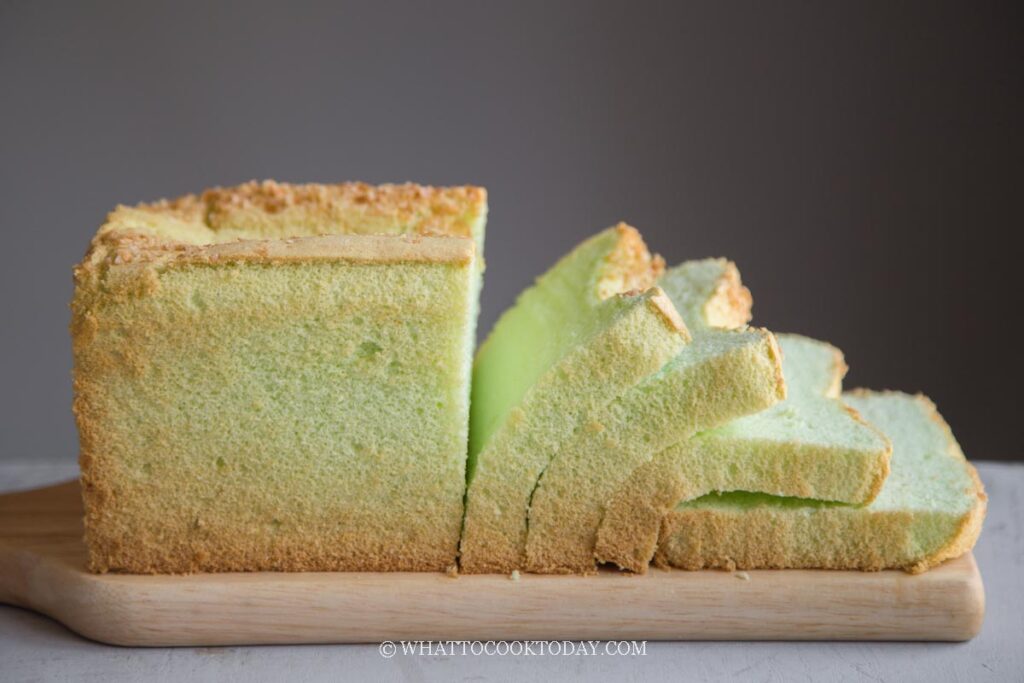
I recommend waiting until the following day before serving if you can resist the temptation! The pandan fragrance develops further, and the cake tastes even better after resting overnight. Slice with a sharp serrated knife using gentle sawing motions. This helps preserve the delicate, airy crumb without compressing the cake. Enjoy it on its own with a cup of coffee or tea. It is also lovely served with a little lightly sweetened whipped cream.
How to store pandan pillow cake
Allow the cake to cool completely before storing. Place the whole cake or individual slices in an airtight container and keep at room temperature for up to 3 days. The cake should remain soft, fluffy, and moist during this time. Avoid leaving the cake uncovered, as chiffon cake can dry out relatively quickly when exposed to air.
Frequently asked questions
1. Can I use a paper loaf pan instead of a metal loaf pan?
Yes! Sturdy paper loaf pans are commonly used by Southeast Asian bakeries to bake and package chiffon loaf cakes. Make sure you choose a paper pan that is specifically designed for baking and is sturdy enough to support the batter as it rises. Follow the manufacturer’s instructions regarding whether the pan needs additional support during baking. Baking time may vary depending on the material and dimensions of your paper pan.
2. Can I use a nonstick loaf pan?
Yes, you can. I have used a nonstick loaf pan successfully, but the cake tends to be shorter because it cannot grip the sides as well. If you are using baking method 1, there is also a greater chance of the cake slipping out when you invert the pan to cool.
3. Why did my pandan pillow cake collapse after baking?
The most common reasons are underbaking, an unstable meringue, or a cake that rises too quickly before its structure has set. Make sure you beat the meringue to the correct consistency, fold it gently into the batter, and bake until the cake is fully cooked.
4. Why didn’t my cake rise as tall as yours?
The type of loaf pan can make a difference. A nonstick pan may prevent the cake from gripping the sides properly. Also, make sure your egg whites are whipped correctly and that you don’t deflate the batter too much when folding.
5. Why did my cake crack on top?
Some cracking is normal for chiffon cakes, especially when baked in a loaf pan. The slit in baking method 1 or the line created with oil or butter in baking method 2 helps encourage the cake to crack in a more controlled way.
6. Can I make this cake without pandan juice?
You can replace the pandan juice with an equal amount of water or milk, but the cake will no longer have its characteristic pandan aroma. You may add pandan extract for flavor, following the manufacturer’s recommended amount.
7. Can I refrigerate pandan pillow cake?
You can, but I prefer storing it at room temperature for up to 3 days. Refrigeration can make chiffon cake feel firmer because of the oil in the cake solidifying slightly. If refrigerated, let the slices sit at room temperature before serving.
8. Can I freeze pandan pillow cake?
Yes. Once completely cooled, slice the cake and wrap individual portions tightly in plastic wrap. Place them in a freezer-safe container or bag and freeze for up to 1 month for the best quality. Thaw at room temperature while still wrapped to prevent condensation from forming directly on the cake.

Ingredients
Equipment
Method
- I have used a pan with non-stick coating, while it works too, but the cake is much shorter and there's a risk of the cake slipping out of the pan when you invert it to cool down if you use baking method 1.
- Whether your pan has a non-stick coating or does not have non-stick coating , line the bottom of the pan with parchment paper for easier release, but do not line or grease the side of the pan
- For baking method 1 (take out and slit method, cool upside down): Preheat your oven to 350 F (180 C) for conventional oven. If you have a convection oven, I suggest lowering the temperature by 20 F (15 C). Place the oven rack 3rd rack from the bottom/lower middle of the oven (or adjust accordingly, you will know your oven best)For baking method 2 (low baking temperature, no need to cool upside down) : Preheat your oven to 320 F (160 C) for conventional oven. If you have a convection oven, I suggest lowering the temperature by 20 F (15 C). Place the oven rack at the lowest rack (or adjust accordingly, you will know your oven best)
- The eggs and juice need to be at room temperature. Carefully separate the egg yolks from the whites while they are still cold. They are easier to separate when they are cold. Let them come to room temperature
- Combine the yolks, sugar, and pandan juice with a whisk until they are well-combined. Sift in the cake flour, cornstarch, and salt. Use a whisk to combine again into a smooth and rather thick batter. Set aside

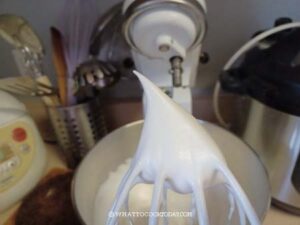
- Beat the egg whites on medium speed until frothy, add cream of tartar or lemon juice/vinegar and whip until it turns whitish and air bubbles are fine. Gradually add the sugar as you beat, in 3 batches. I beat them at medium speed (speed 6 on Kitchen Aid). This will take a bit longer compared to beating at high speed. I used to do higher speed (speed 8), but the meringue is smoother and nicer when I maintain the speed on 6 and much more stable too. I highly recommend stopping several times to check on the consistency and scraping the sides of the bowl to make sure no sugar left on the side of the bowl. Whip until you reach a stiff peak but still have a slight bent on the tip. Then lower the speed to 4 and whip for 1 minute to even out large bubbles and stop beating
- Gently fold 1/3 of the meringue into the thick batter. Using a whisk, using a cutting motion and fold over to mix.

- Repeat this motion several rounds. Continue on with the second 1/3 of the meringue again to mix.
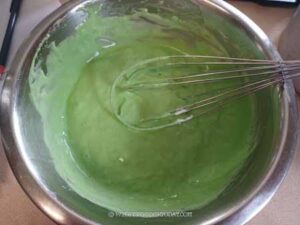
- For the last 1/3 of the meringue, use a rubber spatula instead to ensure you get all the batter at the bottom of the bowl mixed in as well. Use a cut down in the middle and fold over motion to fold gently but quickly. Make sure you don't see any more white meringue. The mixture should be fluffy and voluminous.

- Pour the batter into the prepared loaf pan. Use a rubber spatula to smooth the surface. Gently tap the pan on the countertop 2-3 times to pop any air bubbles. Use a skewer to draw a zig zag to pop bubbles inside the cake batter, carefully not to disturb the parchment paper lining at the bottom
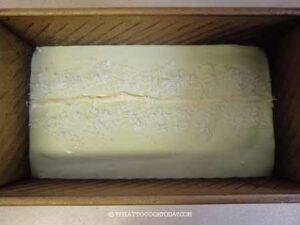
- Place the loaf pan on the positioned rack and bake for 12-13 minutes or until the top has dried to the touch. Take it out and use a very sharp knife to cut one slit in the middle, about 1/2 an inch deep is sufficient. When the cake cracks, it will follow this line that you created instead of just cracking all over the place. Try to accomplish this within one minute
- Put the loaf pan back into the oven. Reduce the temperature to 300 F (150 C) for conventional oven. Lower the temperature by 20 F or 15 C for convection oven. Bake for another 60 minutes.
- The cake will gradually rise tall and then will fall down just a bit towards the end of baking. This is very normal. You don’t want your cake to rise tall too quickly, because it will collapse when you take it out
- The cake should be dry to touch and springs back lightly when you touch. If you are unsure, add another 5 minutes to the baking time. It is safer to overbake than underbake a chiffon cake. Underbaked chiffon cake will collapse when you take it out
- If you don’t like to take the cake out halfway to make a slit like in method 1, you can use this baking method 2
- Before putting the pan in the oven, use a chopstick dip in oil and draw a line in the middle of the batter. You can also squeeze very soft butter in the middle. This helps the cake cracks along this line instead of cracking all over the places you don't want it to crack. I sprinkled a bit of desiccated coconut on the sides of the butter. This is totally optional.
- The cake will very gradually rise tall and then will fall down just a bit towards the end of baking. This is very normal. You don’t want your cake to rise tall too quickly, because it will collapse when you take it out
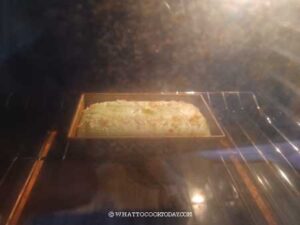
- Put the pan in the lowest rack of the oven and lower the temperature to 300 F (150 C) and bake for 75-80 minutes or until the top spring back when you gently press on it and a cake tester comes out clean. If you are unsure whether the cake is done or not, you can add another 5 minutes or so. It is better to overbake than underbake chiffon cake. An underbaked chiffon cake will collapse when you take it out of the oven

- Drop the loaf pan from about 10 cm height on the counter several times to prevent shrinkage when you pull the cake out of the oven. Then carefully invert the pan upside down immediately on two small bowls or cups on the side. I haven’t tried this myself but I have seen some people resting the loaf pan on one of the side.
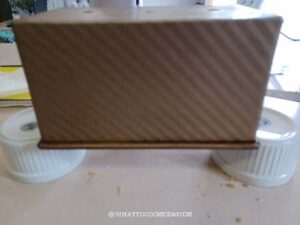
- Please don’t be tempted to remove it from the pan if it’s still warm. It takes about two to three hours to cool down completely
- Because we bake this cake at much lower temperature and at the lowest rack to let it very slowly rise, the cake is very stable and won’t collapse if you don’t invert it. Drop the loaf pan from about 10 cm height on the counter several times to prevent shrinkage when you pull the cake out of the oven. Put it on the cooling rack to cool down completely. You don’t need to invert the pan. The cake will shrink slightly, but it should not collapse.
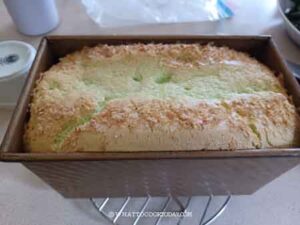
- Once it’s cool down completely, use a spatula knife to run through the 4 sides and then gently tip the loaf pan over to release the cake. Peel off the parchment paper from the bottom. The bottom of the cake will concave a bit, and this is normal because we line it with parchment paper and the cake couldn’t cling to the bottom of the pan, and instead, pulling on the paper causing it to concave a bit
- I suggest that you wait for 24 hours before serving the cake (if you can wait). The flavor always gets better the next day compared to when you serve it on the same day

- Let the cake cool down completely. Store the cake in an air-tight container for up to 3 days at room temperature. The cake remains soft and fluffy for about 3 days
