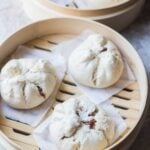
Cantonese Char Siu Bao (Steamed BBQ Pork Buns)
Servings: 12 steamed buns
Calories: 228kcal
Make dim sum-style Char Siu Bao at home with this streamlined recipe. These Cantonese BBQ pork buns are incredibly light, fluffy, and cake-like texture that you will absolutely enjoy!
Print Recipe
Ingredients
Starter dough: (prepare 1-2 hours before)
- 200 g cake flour
- 160 g water plus more as needed
- 1 tsp instant yeast see notes 1
Main dough:
- 180 g cake flour
- 1 Tbsp double-acting baking powder
- 100 g sugar
- ½ tsp ammonium carbonate also known as baker's ammonia- crushed finely to avoid lumps
- ½ tsp salt
- 20 g lard or use shortening
Filling:
- 224 gr Chinese bbq pork see notes 2
- 2 cloves garlic minced
- 1 small onion peeled and finely chopped
- 1 Tbsp ginger grated or finely chopped
- 1 Tbsp cooking oil
Seasonings for filling:
- 1 Tbsp oyster sauce
- 1 Tbsp soy sauce
- 1 Tbsp hoisin sauce
- 1 tsp dark soy sauce optional
- 3 Tbsp sugar
- 1 tsp sesame oil
- 120 g water
- 1 tsp red yeast rice powder optional, for red color
- Salt to taste
Cornstarch slurry: (to thicken the filling)
- 2 Tbsp cornstarch
- 2 Tbsp water
Instructions
- I have updated this recipe to give you a choice of making char siu bao using my basic steamed bun dough or if you want to go for a more authentic Cantonese char siu bao that looks like the ones served at the dim sum restaurant (with a nice cracks on top), follow the dough recipe in this recipe card
- My basic steamed bun dough gives a soft and slightly chewy texture. The dough using a starter and all cake flour gives a cake-like texture and extremely light and fluffy because of the ammonium carbonate and baking powder.
Making the filling (prepare the day before):
- Mix all the ingredients for the sauce and set aside. Prepare the cornstarch slurry by mixing cornstarch and water and set aside.1 Tbsp oyster sauce, 1 Tbsp soy sauce, 1 Tbsp hoisin sauce, 1 tsp dark soy sauce, 3 Tbsp sugar, 1 tsp sesame oil, 120 g water, 2 Tbsp cornstarch, 2 Tbsp water, 1 tsp red yeast rice powder

- Preheat your wok or skillet over medium heat. Add in the oil. Add garlic, onion (I used red onion here in the photo because that's all I had at that time) and ginger and saute until fragrant and soft, about 3 minutes. If you are using uncooked meat, add it here and saute until they are opaque in color.2 cloves garlic, 1 small onion, 1 Tbsp cooking oil, 1 Tbsp ginger

- Add the sauce you prepare earlier. Add the diced char siu pork if that's what you are using. Bring it to a simmer. Give the cornstarch slurry a stir and then add into the pork mixture and keep stirring and it will start to thicken. The filling should be moist but not water. Have a taste and add more sugar and or salt if needed. It should be more at the sweeter side than savory.224 gr Chinese bbq pork, Salt to taste

- Turn off the heat and transfer the filling to a heat-proof container or plate. Spread it out to let it cool down completely at room temperature. Cover and then store in the fridge
Prepare the dough:
- You can prepare the basic steamed buns dough or follow the steps below for this dough version that is more like the one served at the dim sum restaurant
- In a mixing bowl of a stand mixer or a regular bowl, combine ingredient for starter dough by mixing 200 g cake flour, water, and 1/2 tsp of instant yeast.200 g cake flour, 160 g water, 1 tsp instant yeast

- Cover and let it sit at a warm place and it will double in about 1-2 hours.

- The sponge will be spongey looking and has cracks on top as it expands. Add the sugar and lard and stir until the sugar dissolves.180 g cake flour, 100 g sugar, 20 g lard

- It is very important that you stir until the sugar dissolves before adding the rest of the ingredients

- Add cake flour, baking powder, salt, ammonium carbonate (baker's ammonia), and lard into the mixing bowl. Don't be alarmed by the aroma of ammonium carbonate (it's not the most pleasant smell!), but trust me, your char siu bao won't smell like that!1 Tbsp double-acting baking powder, 1/2 tsp ammonium carbonate, 1/2 tsp salt

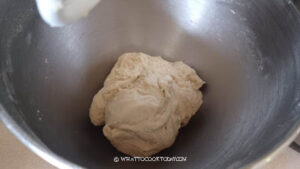
- Give the mixture a rough stir and then knead on a medium speed until the dough is smooth but slightly tacky to the touch
Wrapping:
- Divide the filling you prepared into 12 portions
- Divide the dough into 12 equal pieces, about 50 grams each. Roll them into round dough balls and cover with a cling wrap to prevent them from drying out.

- Work with one dough at a time. Flatten the dough with your palm and then use a rolling pin to roll it out to form a circle about 4-5 inches, with a slightly thicker middle part. This is to support the weight of the filling.

To create that signature crack on top:
- Place one portion of the char siu filling in the middle

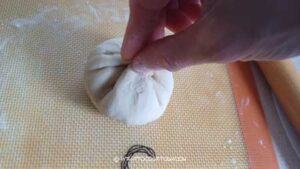
- Gather the dough at the position of 12, 4, and 8 o'clock to meet at the center.
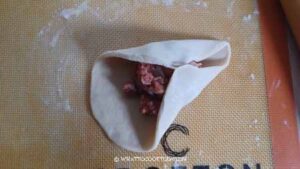
- Pinch together to secure at the center and also along the three lines
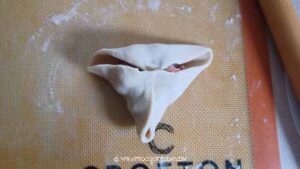
- Then lightly press down the center with your finger

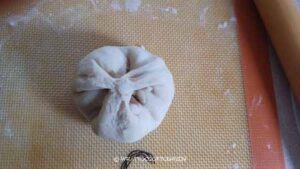
- Gather the all three points to meet at the center and pinch to seal
- Place on a piece of parchment paper. Continue working with the rest of the dough and the filling. You don't have to proof this dough and can be steamed right away
Proofing: (if using my basic steamed bun dough)
- Let the shaped buns proof until about 50% double its original size. They don't have to double in size. This may take about 15-30 minutes, but please don't go by the time, just observe to make sure the buns have puffed up to half its original size and feel lighter, before steaming or the buns will be tough. Don't overproof them as well.
Steaming: (if using my basic steamed bun dough)
- Bring the water in a steamer to a boil. Wrap the lid with a cloth if you are not using a bamboo steamer. This will prevent water dripping from the lid creating burn spots. Place some of the buns on the steamer. Lower the heat to MEDIUM. Close the lid and leave about 1/4-inch of gap to let some steam escapes. Steam on MEDIUM heat for about 15 minutes. Turn off the heat and wait for 5 minutes and then remove steamed buns from the steamer to cooling rack. This will prevent the bottom from getting wet and soggy.
Steaming: (if using dough with baker's ammonia)
- Place the shaped buns in the steaming basket. Wrap the lid of a steamer with a cloth if you are not using a bamboo steamer. This will prevent water dripping from the lid creating burn spots. Bring the water in a steamer to a boil on the highest heat. It is imperative that you use your largerst burner on the stove with the highest heat to encourage that "cracks" and fluffy texture.
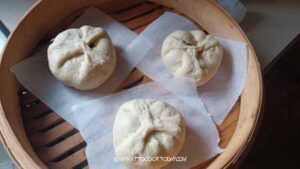
- If you use stack-up bamboo steamer, don't stack more than 2 rack. Just steamed in batches. If you stack too high, the top rack won't get the "maximum" heat possible
- Steam for a full 15 minutes on the highest heat
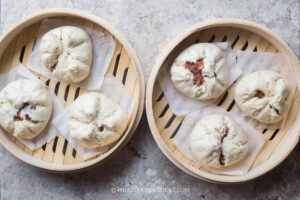
The high temperature is required to completely break the baker's ammonia into gases and ensure the pungent ammonia fully evaporates and give you an airy texture without any unpleasant chemical taste
To serve:
- They are best served while they are still warm
Storing:
- If you make extra and plan to store them, once the steamed buns have cooled down, place them on a baking sheet not touching each other and put them inside the freezer for 1 hour then transfer to a freezer bag
Reheating:
- They can be reheated in the steamer without thawing. Steam over high heat for 5 minutes
Video
Notes
- You can also use only 1/2 tsp of instant yeast and let it ferment overnight at room temperature
- If you don't have BBQ pork on hand, you can also use about 500 grams of uncooked chicken meat (thighs would be best if possible) or other meat, like pork tenderoin, or meatless protein of your choice. Cut into small pieces and cook as per recipe instruction
Nutrition
Serving: 1serving (out of 12 pieces) | Calories: 228kcal | Carbohydrates: 37g | Protein: 9g | Fat: 5g | Saturated Fat: 1g | Polyunsaturated Fat: 1g | Monounsaturated Fat: 2g | Trans Fat: 0.01g | Cholesterol: 17mg | Sodium: 384mg | Potassium: 127mg | Fiber: 1g | Sugar: 12g | Vitamin A: 86IU | Vitamin C: 1mg | Calcium: 76mg | Iron: 1mg
