This post may contain affiliate links. Please read our disclosure policy.
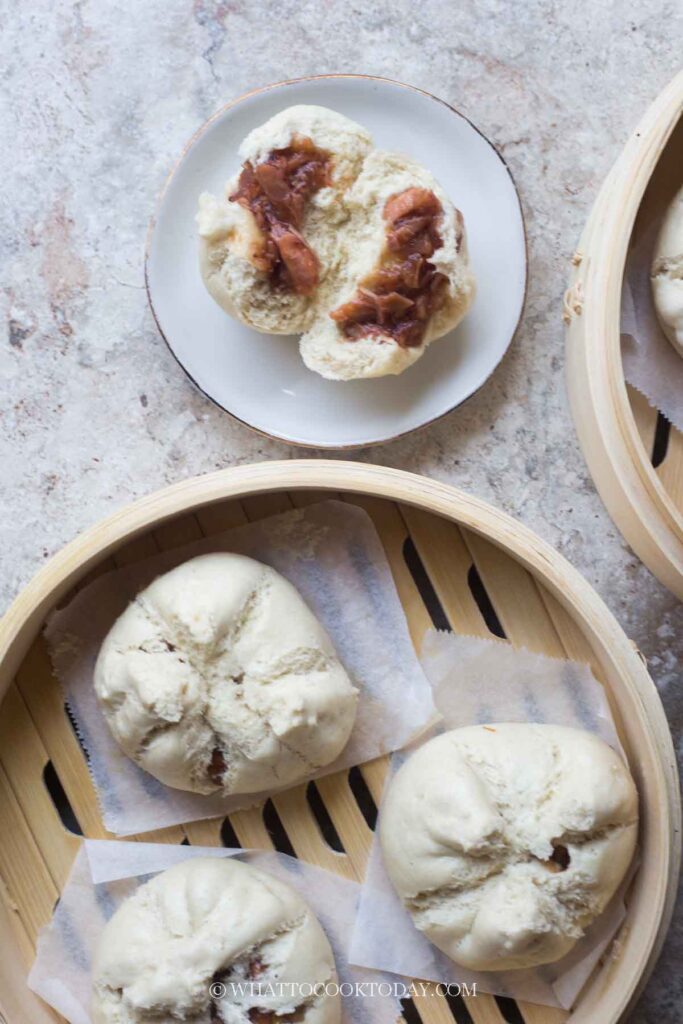
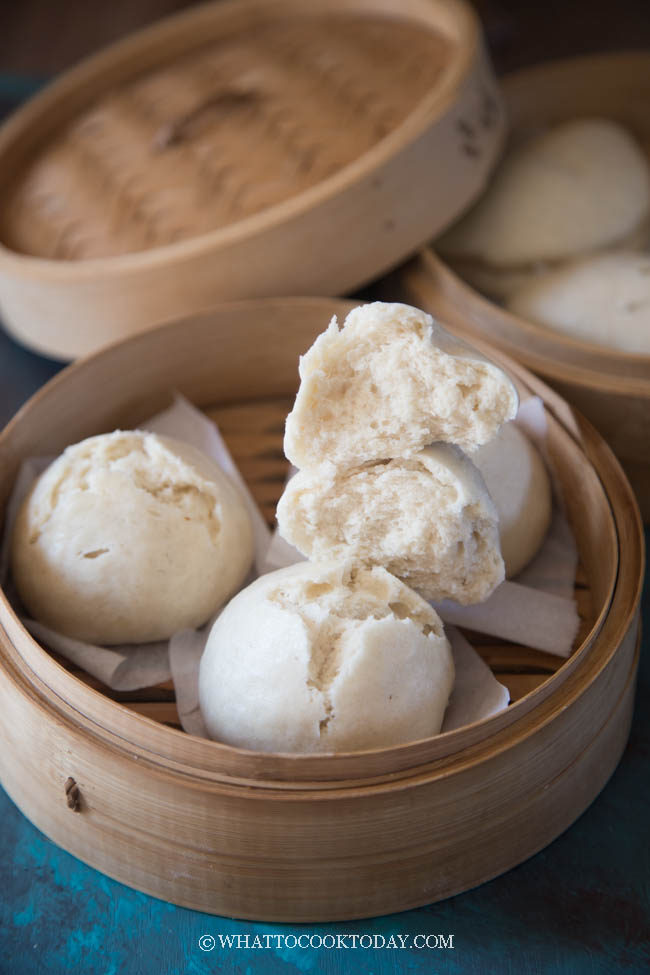
Make dim sum-style Char Siu Bao at home with this streamlined recipe. These Cantonese BBQ pork buns are incredibly light, fluffy, and cake-like texture that you will absolutely enjoy!

If you’ve been following my blog for a while, you probably know that I already have a char siu bao recipe made with my everyday steamed bun dough. That version is soft, fluffy, slightly chewy, and incredibly versatile. It’s still one of my favorite doughs because I use it for all kinds of steamed buns. But if you’ve ever ordered char siu bao at a Cantonese dim sum restaurant, you’ve probably noticed they’re quite different.
Instead of being soft and chewy, traditional Cantonese char siu bao have an incredibly light, airy, almost cake-like texture with beautiful signature cracks that bloom across the top during steaming. For years, I’ve wanted to recreate that exact texture at home.
After experimenting with several recipes and techniques, I finally settled on this version. It keeps the process much simpler than many traditional recipes while producing the texture my family loves most. These buns are wonderfully fluffy, feather-light, slightly sweet, and filled with juicy char siu filling. They have become our preferred version whenever we’re craving dim sum-style BBQ pork buns.
What Makes Cantonese Char Siu Bao Different?
Unlike many Asian steamed buns that use a straightforward yeast dough, Cantonese char siu bao has a very unique texture.
The dough is:
1. Extra light and airy
2. Slightly sweet
3. Soft with a delicate cake-like crumb
4. Characterized by cracks on top after steaming. Those cracks are not mistakes—they’re actually one of the defining characteristics of traditional Cantonese char siu bao.
Why You’ll Love This Recipe
- The sponge dough creates incredible flavor and a soft, airy crumb without requiring a traditional lao mian starter.
- Baker’s ammonia produces the signature light, cake-like texture that’s difficult to achieve with baking powder alone.
- The streamlined method is much easier than traditional dim sum recipes while still delivering authentic results.
- The filling is rich, glossy, sweet-savory, and stays beautifully juicy inside the buns.
- These buns freeze exceptionally well, making them perfect for meal prep or quick breakfasts and snacks whenever you’re craving dim sum at home.
A Little History: Traditional “Old Dough” (Lao Mian) Method
Before commercial yeast became widely available, many Cantonese dim sum shops relied on an old dough starter known as lao mian (老面).
Lao mian works similarly to a sourdough starter, except, you do not accumulate any discard. Instead of making a fresh dough every day, a portion of fermented dough from the previous batch was saved and mixed into the next day’s dough without discarding anything. Over time, this continuously refreshed starter developed a rich population of wild yeast and beneficial bacteria. The dough was then mixed with fresh flour, sugar, and other ingredients before being allowed to ferment again.
Because lao mian continues producing acid during fermentation, the dough traditionally had to be neutralized with alkaline ingredients before steaming. Experienced dim sum chefs carefully adjusted the alkalinity by feel and experience. Too little alkali and the buns could taste sour. Too much and the buns developed an unpleasant alkaline flavor and yellowish color. It was a process that required years of practice and tremendous skill. Today, most home cooks (and even many restaurants) simplify the process by using commercial yeast instead of maintaining an old dough starter.
How This Dough Differs from My Everyday Steamed Bun Dough
I still absolutely love my regular steamed bun dough, and I use it all the time for savory buns, sweet buns, and almost every steamed bun recipe on my blog.
Here’s how the two compare.
1. My Regular Steamed Bun Dough: Soft and fluffy, slightly chewy, versatile for almost any filling, smooth surface after steaming, and easier ingredients that most home bakers already have.
2. This Dim Sum-Style Dough: Extremely light and airy, delicate cake-like texture, slightly sweeter, beautiful cracked tops, uses baker’s ammonia for authentic texture, and is closer to what you’ll find at Cantonese dim sum restaurants.
Neither dough is better—they simply create different styles of steamed buns.
If you’re looking for an everyday steamed bun recipe, my original dough is still the one I recommend.
But if you’ve been chasing that authentic dim sum restaurant texture with feather-light crumbs and signature cracked tops, this recipe is the closest I’ve come after years of testing.
Why I Use a Sponge Dough Instead
This recipe uses what’s called a sponge (or starter) dough. A portion of the flour, water, and yeast are mixed together first and allowed to ferment for 1 to 2 hours before the remaining ingredients are added. This shorter fermentation offers several benefits:
1. It develops more flavor than mixing everything at once.
2. It creates a lighter crumbs
3. It gives the dough better structure.
4. It produces a texture that’s much closer to traditional dim sum char siu bao without maintaining a lao mian starter.
It’s a great compromise between authenticity and convenience.
The Secret Ingredient: Baker’s Ammonia (Ammonium Carbonate)
One ingredient that really makes a difference is baker’s ammonia, also known as ammonium carbonate. I’ll admit—I was hesitant to buy it at first because I wasn’t sure I’d use it often. Now I keep it stocked in my pantry. It creates an incredibly light, fluffy interior that baking powder alone simply can’t replicate.
When exposed to high heat, baker’s ammonia breaks down into carbon dioxide, ammonia gas, and water vapor. Those gases expand rapidly, giving the buns their airy, delicate texture. The ammonia completely evaporates during steaming, leaving behind no chemical taste or smell—as long as the buns are steamed properly over high heat. The result is that signature fluffy, almost cake-like crumb that makes Cantonese char siu bao so unique.

Isn’t Baker’s Ammonia Just for Cookies?
5. Not at all. Although baker’s ammonia isn’t as common today, it has been used for generations in European and Asian baking. It’s especially popular for:
1. Old-fashioned crisp cookies
2. Crackers
3. Traditional biscuits
4. Some Chinese pastries
5. Cantonese steamed buns like char siu bao
It creates a lighter texture than baking powder in recipes that are relatively low in moisture.
Where Can I Buy Baker’s Ammonia?
I was pleasantly surprised to find mine at Michael’s in the cake decorating section. You can also find it at: Baking supply stores, Some specialty grocery stores, Online retailers. A small container lasts quite a long time because each recipe only uses a tiny amount.
Tips for Using Baker’s Ammonia Successfully
- Crush it first. Baker’s ammonia can form small hard pellets during storage. Crush it into a fine powder before mixing it into the dough so it distributes evenly.
- Always steam over high heat. Unlike regular steamed buns, this dough needs vigorous steam. High heat ensures the baker’s ammonia completely decomposes into gas and fully evaporates. Insufficient heat may leave behind an unpleasant ammonia smell.
- Steam long enough. Don’t shorten the steaming time. A full 18–20 minutes allows enough time for the ammonia to dissipate while fully cooking the buns.
- Don’t worry about the smell while steaming. You may notice a brief ammonia smell escaping from the steamer. That’s completely normal. It’s actually a sign that the ammonium carbonate is breaking down as intended. Once the buns are finished steaming properly, that smell disappears.
- Use only the recommended amount. More is definitely not better. Too much baker’s ammonia can produce an overly strong smell and negatively affect the texture.
Why This Dough Cracks on Top
Many people think the cracked tops are accidental, but they’re actually intentional. The dough is shaped differently from pleated steamed buns. Instead of creating decorative pleats, the dough is wrapped in a special way to encourage cracking during steaming. During steaming, the rapid expansion from the yeast, baking powder, and baker’s ammonia causes the top to naturally split open into beautiful cracks. That’s exactly the look you’ll find in many Cantonese dim sum restaurants.

Ingredients & Substitutions
- Cake flour: Cake flour gives these buns their signature soft, delicate, cake-like texture. Its lower protein content produces a much finer crumb than all-purpose flour. I don’t recommend substituting all-purpose flour if you’re aiming for authentic dim sum-style char siu bao because the buns will be noticeably chewier.
- Water: Water hydrates the sponge dough and develops the gluten needed to support the airy structure. Room temperature water works well.
- Instant yeast: Instant yeast ferments the sponge and provides much of the rise. There’s no need to bloom it first. If using active dry yeast, dissolve it in the water first and allow it to become foamy before mixing with the flour.
- Double-acting Baking powder: Baking powder gives the buns an extra lift during steaming, creating a lighter texture. Make sure your baking powder is double-acting kind for the best result.
- Sugar: Sugar lightly sweetens the dough, which is characteristic of Cantonese char siu bao. It also feeds the yeast during fermentation.
- Baker’s ammonia (ammonium carbonate): This is the key ingredient for achieving the incredibly light, airy, cake-like texture found in traditional dim sum char siu bao. Crush it into a fine powder before adding it to the dough to prevent lumps. Do not substitute with baking soda or more baking powder. While you can omit it if necessary, the texture will be noticeably different and the buns won’t have the same light crumb or characteristic cracked tops.
- Salt: Salt enhances the flavor while helping strengthen the dough.
- Lard: Lard contributes richness, tenderness, and a soft mouthfeel. Traditional Cantonese recipes almost always use lard. You can substitute vegetable shortening if preferred.
- Char siu (Chinese BBQ pork): Homemade or store-bought char siu both work well. Dice it into small pieces so the filling is easy to wrap and evenly distributed in every bite.
- Garlic, onion, and ginger: These aromatics build a flavorful base for the filling. Finely chopping them helps them blend smoothly into the sauce.
- Cooking oil: Used for sautéing the aromatics before adding the sauce.
- Oyster sauce: Adds savory richness and depth that complements the sweet char siu.
- Soy sauce: Provides seasoning and balances the sweetness of the filling.
- Hoisin sauce: Gives the filling its signature sweet-savory flavor with a hint of spice.
- Dark soy sauce (optional): Mainly used to deepen the color of the filling. The recipe is still delicious without it.
- Sesame oil: Adds a nutty aroma that rounds out the filling.
- Water: Loosens the sauce and creates enough moisture for a juicy filling.
- Red yeast rice powder (optional): Adds the traditional reddish hue often seen in restaurant-style char siu filling without affecting the flavor very much.
- Cornstarch slurry: A mixture of cornstarch and water thickens the filling into a glossy consistency that stays inside the buns instead of leaking during wrapping.
Tips for Success
- Chill the filling thoroughly before wrapping. Cold filling is much easier to work with and helps prevent the dough from becoming sticky.
- Don’t make the filling too wet. It should be thick enough to hold its shape on a spoon. A runny filling makes the buns difficult to seal.
- Keep the dough covered whenever you’re not actively working with it. Even a few minutes of exposure can dry out the surface.
- Leave the center of the wrapper slightly thicker than the edges. This helps support the filling and prevents the bottom from becoming too thin after wrapping.
- Seal the dough tightly so the filling doesn’t leak during steaming.
- Resist the urge to peek while steaming. Opening the lid too early can cause the buns to collapse.
- Steam over high heat for the full recommended time. This is especially important when using baker’s ammonia, as it needs sufficient heat to fully decompose and evaporate.
- If you’re using a metal steamer, wrap the lid with a clean kitchen towel to prevent condensation from dripping onto the buns.
- Transfer the finished buns to a cooling rack immediately after steaming so the bottoms don’t become soggy.
Variations
- Substitute the char siu filling with barbecue chicken for a lighter option.
- Replace the pork with finely diced roasted mushrooms and extra onions for a vegetarian version.
- Add finely diced water chestnuts to the filling for extra crunch.
- Make mini char siu bao for dim sum parties or appetizers by dividing the dough into 18 to 20 smaller portions.
Storage
Allow the buns to cool completely before storing. Refrigerate leftovers in an airtight container for up to 3 days.For longer storage, arrange the cooled buns in a single layer on a baking sheet and freeze until firm. Transfer them to a freezer-safe bag or container. They keep well for up to 2 months.
Reheating
Steam refrigerated buns for about 5 minutes until heated through. Frozen buns can go directly into the steamer without thawing. Steam over high heat for about 5 to 7 minutes or until hot all the way through.
Frequently Asked Questions
- Can I omit the baker’s ammonia?
Yes, but the buns won’t have the same light, cake-like texture or authentic cracked tops. They will still taste good but will be closer to regular steamed buns. - Will the buns taste like ammonia?
No. When used in the correct amount and steamed over high heat for the full cooking time, the ammonia completely evaporates, leaving no unpleasant taste or smell. - Can I use all-purpose flour?
I don’t recommend it for this recipe. Cake flour is one of the main reasons these buns have such a delicate crumb. All-purpose flour will produce a denser, chewier bun. - Why didn’t my buns crack?
Several factors can affect cracking, including dough consistency, shaping, steam intensity, and using baker’s ammonia. High heat and the correct dough formulation are both important for achieving the signature split tops. - Can I make the filling ahead of time?
Absolutely. In fact, I recommend making it a day ahead. The filling tastes even better after the flavors have had time to meld, and it’s much easier to wrap when thoroughly chilled. - Can I freeze these?
Yes. These buns freeze beautifully and reheat directly from frozen, making them perfect for quick breakfasts, snacks, or whenever a dim sum craving strikes.
Cantonese Char Siu Bao (Steamed BBQ Pork Buns)
Ingredients
Starter dough: (prepare 1-2 hours before)
- 200 g cake flour
- 160 g water plus more as needed
- 1 tsp instant yeast see notes 1
Main dough:
- 180 g cake flour
- 1 Tbsp double-acting baking powder
- 100 g sugar
- ½ tsp ammonium carbonate also known as baker's ammonia- crushed finely to avoid lumps
- ½ tsp salt
- 20 g lard or use shortening
Filling:
- 224 gr Chinese bbq pork see notes 2
- 2 cloves garlic minced
- 1 small onion peeled and finely chopped
- 1 Tbsp ginger grated or finely chopped
- 1 Tbsp cooking oil
Seasonings for filling:
- 1 Tbsp oyster sauce
- 1 Tbsp soy sauce
- 1 Tbsp hoisin sauce
- 1 tsp dark soy sauce optional
- 3 Tbsp sugar
- 1 tsp sesame oil
- 120 g water
- 1 tsp red yeast rice powder optional, for red color
- Salt to taste
Cornstarch slurry: (to thicken the filling)
- 2 Tbsp cornstarch
- 2 Tbsp water
Instructions
- I have updated this recipe to give you a choice of making char siu bao using my basic steamed bun dough or if you want to go for a more authentic Cantonese char siu bao that looks like the ones served at the dim sum restaurant (with a nice cracks on top), follow the dough recipe in this recipe card
- My basic steamed bun dough gives a soft and slightly chewy texture. The dough using a starter and all cake flour gives a cake-like texture and extremely light and fluffy because of the ammonium carbonate and baking powder.
Making the filling (prepare the day before):
- Mix all the ingredients for the sauce and set aside. Prepare the cornstarch slurry by mixing cornstarch and water and set aside.1 Tbsp oyster sauce, 1 Tbsp soy sauce, 1 Tbsp hoisin sauce, 1 tsp dark soy sauce, 3 Tbsp sugar, 1 tsp sesame oil, 120 g water, 2 Tbsp cornstarch, 2 Tbsp water, 1 tsp red yeast rice powder

- Preheat your wok or skillet over medium heat. Add in the oil. Add garlic, onion (I used red onion here in the photo because that's all I had at that time) and ginger and saute until fragrant and soft, about 3 minutes. If you are using uncooked meat, add it here and saute until they are opaque in color.2 cloves garlic, 1 small onion, 1 Tbsp cooking oil, 1 Tbsp ginger

- Add the sauce you prepare earlier. Add the diced char siu pork if that's what you are using. Bring it to a simmer. Give the cornstarch slurry a stir and then add into the pork mixture and keep stirring and it will start to thicken. The filling should be moist but not water. Have a taste and add more sugar and or salt if needed. It should be more at the sweeter side than savory.224 gr Chinese bbq pork, Salt to taste

- Turn off the heat and transfer the filling to a heat-proof container or plate. Spread it out to let it cool down completely at room temperature. Cover and then store in the fridge
Prepare the dough:
- You can prepare the basic steamed buns dough or follow the steps below for this dough version that is more like the one served at the dim sum restaurant
- In a mixing bowl of a stand mixer or a regular bowl, combine ingredient for starter dough by mixing 200 g cake flour, water, and 1/2 tsp of instant yeast.200 g cake flour, 160 g water, 1 tsp instant yeast

- Cover and let it sit at a warm place and it will double in about 1-2 hours.

- The sponge will be spongey looking and has cracks on top as it expands. Add the sugar and lard and stir until the sugar dissolves.180 g cake flour, 100 g sugar, 20 g lard

- It is very important that you stir until the sugar dissolves before adding the rest of the ingredients

- Add cake flour, baking powder, salt, ammonium carbonate (baker's ammonia), and lard into the mixing bowl. Don't be alarmed by the aroma of ammonium carbonate (it's not the most pleasant smell!), but trust me, your char siu bao won't smell like that!1 Tbsp double-acting baking powder, 1/2 tsp ammonium carbonate, 1/2 tsp salt

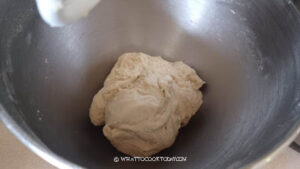
- Give the mixture a rough stir and then knead on a medium speed until the dough is smooth but slightly tacky to the touch
Wrapping:
- Divide the filling you prepared into 12 portions
- Divide the dough into 12 equal pieces, about 50 grams each. Roll them into round dough balls and cover with a cling wrap to prevent them from drying out.

- Work with one dough at a time. Flatten the dough with your palm and then use a rolling pin to roll it out to form a circle about 4-5 inches, with a slightly thicker middle part. This is to support the weight of the filling.

To create that signature crack on top:
- Place one portion of the char siu filling in the middle

- Gather the dough at the position of 12, 4, and 8 o'clock to meet at the center.
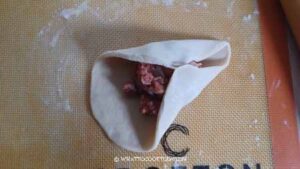
- Pinch together to secure at the center and also along the three lines
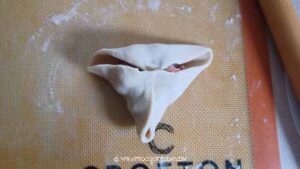
- Then lightly press down the center with your finger

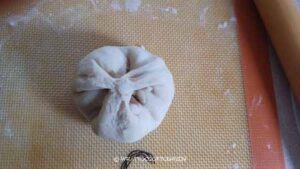
- Gather the all three points to meet at the center and pinch to seal
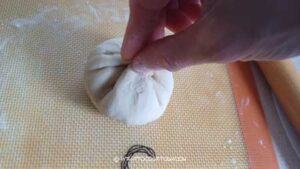
- Place on a piece of parchment paper. Continue working with the rest of the dough and the filling. You don't have to proof this dough and can be steamed right away
Proofing: (if using my basic steamed bun dough)
- Let the shaped buns proof until about 50% double its original size. They don't have to double in size. This may take about 15-30 minutes, but please don't go by the time, just observe to make sure the buns have puffed up to half its original size and feel lighter, before steaming or the buns will be tough. Don't overproof them as well.
Steaming: (if using my basic steamed bun dough)
- Bring the water in a steamer to a boil. Wrap the lid with a cloth if you are not using a bamboo steamer. This will prevent water dripping from the lid creating burn spots. Place some of the buns on the steamer. Lower the heat to MEDIUM. Close the lid and leave about 1/4-inch of gap to let some steam escapes. Steam on MEDIUM heat for about 15 minutes. Turn off the heat and wait for 5 minutes and then remove steamed buns from the steamer to cooling rack. This will prevent the bottom from getting wet and soggy.
Steaming: (if using dough with baker's ammonia)
- Place the shaped buns in the steaming basket. Wrap the lid of a steamer with a cloth if you are not using a bamboo steamer. This will prevent water dripping from the lid creating burn spots. Bring the water in a steamer to a boil on the highest heat. It is imperative that you use your largerst burner on the stove with the highest heat to encourage that "cracks" and fluffy texture.
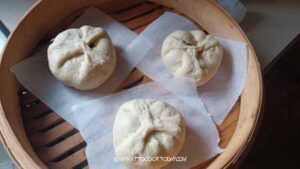
- If you use stack-up bamboo steamer, don't stack more than 2 rack. Just steamed in batches. If you stack too high, the top rack won't get the "maximum" heat possible
- Steam for a full 15 minutes on the highest heat
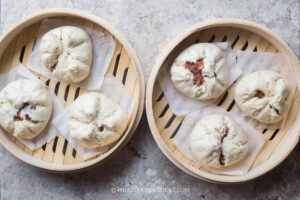
To serve:
- They are best served while they are still warm
Storing:
- If you make extra and plan to store them, once the steamed buns have cooled down, place them on a baking sheet not touching each other and put them inside the freezer for 1 hour then transfer to a freezer bag
Reheating:
- They can be reheated in the steamer without thawing. Steam over high heat for 5 minutes
RECOMMEDED TOOLS


Marv’s Recipe Notes
- You can also use only 1/2 tsp of instant yeast and let it ferment overnight at room temperature
- If you don’t have BBQ pork on hand, you can also use about 500 grams of uncooked chicken meat (thighs would be best if possible) or other meat, like pork tenderoin, or meatless protein of your choice. Cut into small pieces and cook as per recipe instruction
*Nutrition facts are just estimates and calculated using online tools*
Check out this Soft and Fluffy No-Yeast Chinese Steamed Buns. These are so good and super easy to make! I have used this no-yeast steamed buns recipe to make char siu bao and all kind of steamed buns with sweet or savory fillings.

14 comments
Good job👍thanks
Hi Marvelline,would like to inquire, for the chinese bbq pork, it can be cooked and uncooked? I saw from the instructions under filling portion, it can be uncooked too? If uses cooked bbq pork, do frying with onion, ginger ad sauces dry up the meat and make it tougher? Thank you so much with so many questions .
Hi Judy, no problem with the questions! Yes you can use already prepared char siu or uncooked meat too. If using cooked char siu, stir frying with aromatics won’t dry it up. I actually forgot to put in about 1/4 cup of water in the recipe (your question helps me to vet through my recipe!). So the key is to keep the filling moist. Besides, we are steaming the buns, so no worries that the filling will dry up. I hope that answers your question!
Made these the other night. I used shredded chicken (as I had some that I needed to use) and substituted Worcestershire sauce for the Oyster sauce (that’s what I had XD). I also don’t have a steamer so I made do with a large pot with a trivet inside.
It was really, really tasty and quite easy to do. Will definitely be making them again soon.
I’m happy to know that you enjoyed them Aiko 🙂
Very nice
I’m glad you like Jemima! Thanks for stopping by!
Fabulous! Just tried these but with good quality gluten free flour ( it has tapioca starch and xanthan gum in it ) but added 1 TSP of lemon juice as I’ve been told acid is needed in gluten free recipes with yeast. An absolute hit and will definitely make again.
Hi Carol, I would love to try out the gluten free version too. I just bought a gluten free flour, but mine doesn’t have xanthan gum in it. OOpss!! I guess I need to get xanthan gum then! I will definitely try it out with a lemon juice too!