This post may contain affiliate links. Please read our disclosure policy.
A comforting Chinese home-style dish with tender, flavor-packed bites and a rich, savory sauce. It’s simple cooking with a surprisingly delicious twist!
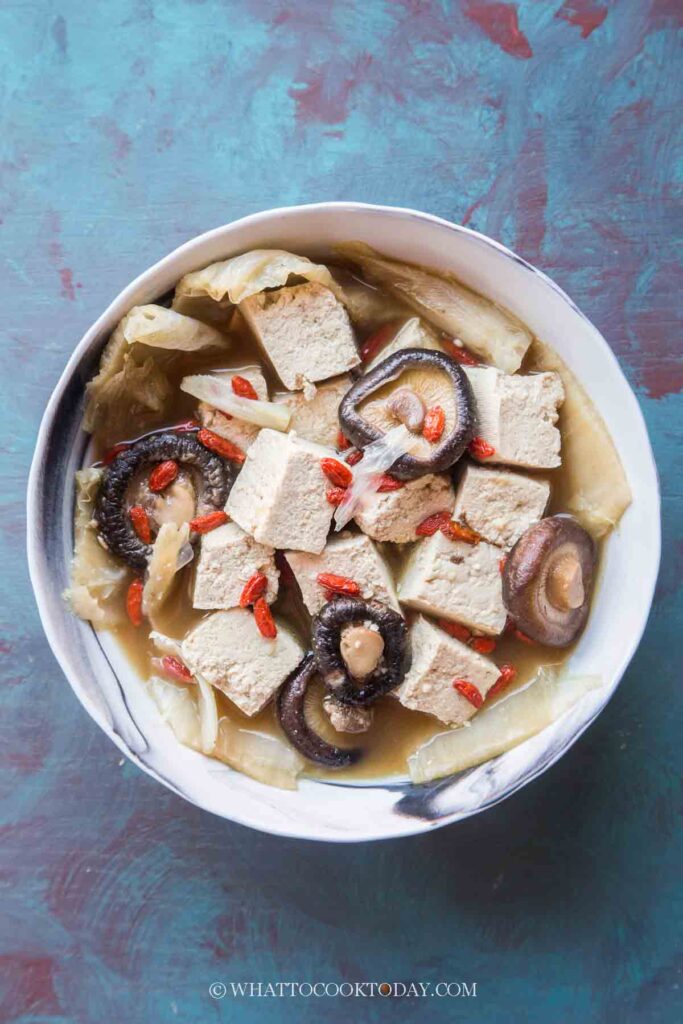
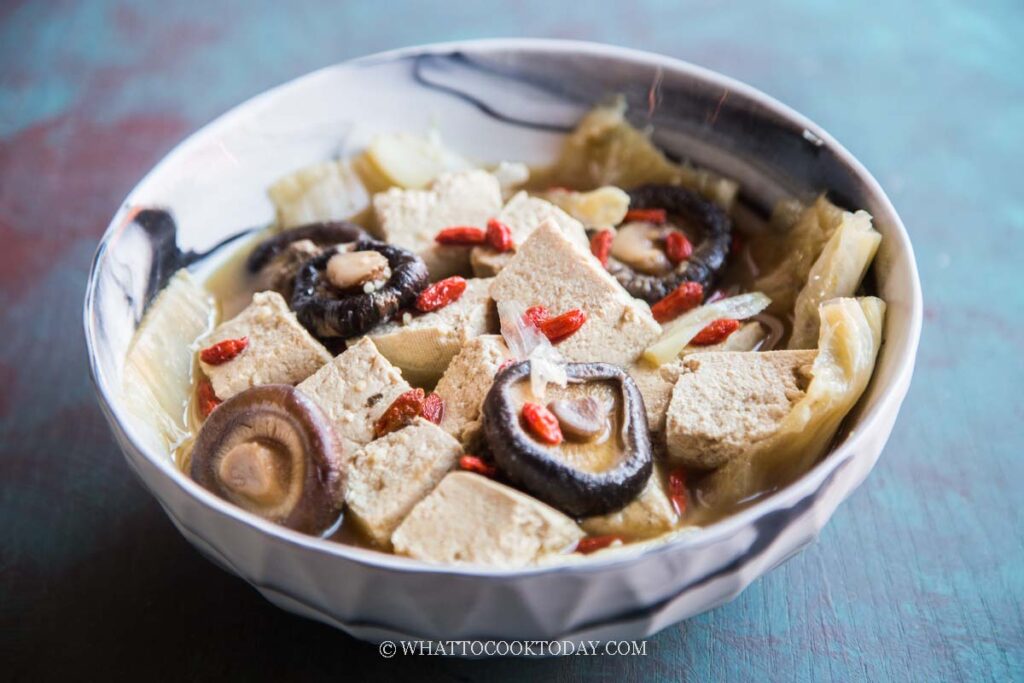
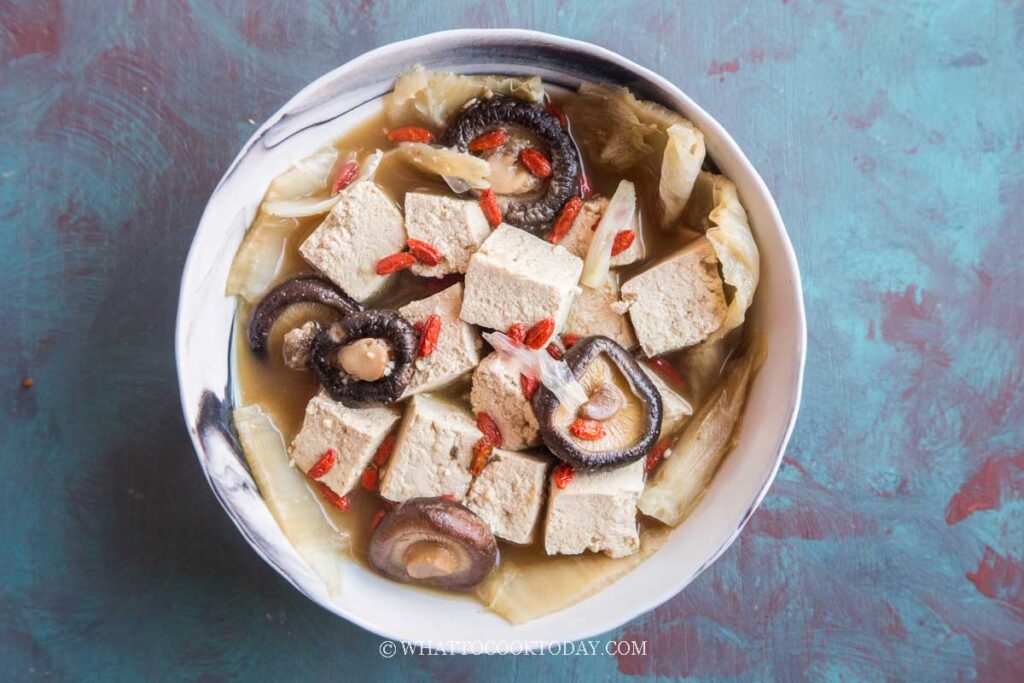
This braised napa cabbage with frozen tofu is a comforting Chinese-style vegetable dish that is simple to prepare but full of flavor. Napa cabbage is gently braised with shiitake mushrooms, garlic, ginger, and a savory sauce until tender and sweet. The real star, though, is the frozen tofu! Freezing extra-firm tofu transforms its texture into something wonderfully spongy, allowing it to soak up all the delicious braising liquid. If you have never tried frozen tofu before, this is a great recipe to start with!
Why You Should Try Frozen Tofu
If you have only ever eaten tofu fresh, you might be surprised by what happens when you freeze it. Freezing tofu completely changes its texture, and I think it is one of the easiest ways to make tofu even more interesting.
When tofu freezes, the water trapped inside forms ice crystals. These ice crystals expand and create tiny pockets throughout the tofu. Once the tofu thaws, the ice melts and leaves behind a network of little holes. This gives the tofu a porous, sponge-like texture that is quite different from its original smooth and dense texture.
The result is tofu that is firmer, chewier, and slightly spongy. More importantly, it becomes excellent at absorbing sauces, broths, and seasonings. Instead of simply sitting in the braising liquid, frozen tofu acts like a little sponge, soaking up all those savory flavors.
I especially love using frozen tofu in braised dishes, hot pots, soups, and stews. It holds its shape well while cooking and gives every bite so much more flavor.
A few things to know about freezing tofu:
- Use extra-firm tofu for the best result. It has a denser structure and gives you a wonderfully spongy texture after freezing and thawing.
- Freeze the entire block rather than cutting it into cubes first. I find this gives a better texture.
- Freeze the tofu for at least 24 hours. You can keep it frozen longer until you are ready to use it.
- Thaw the tofu completely before cooking. Thawing overnight in the refrigerator is my preferred method.
- Once thawed, drain off the excess water. You can gently squeeze out some additional water if you like, but there is no need to press it completely dry.
What Makes This Braised Napa Cabbage So Good?
- Frozen tofu absorbs all the savory flavors. The spongy texture allows the tofu to soak up the braising liquid, making it much more flavorful than regular fresh tofu.
- Napa cabbage becomes naturally sweet. As it slowly cooks, the cabbage softens and releases its natural moisture, creating a delicious broth that complements the tofu.
- Dried shiitake mushrooms add umami. Their deep, earthy flavor gives the braising liquid extra richness and makes the whole dish taste more satisfying.
- The sauce is savory and comforting. Oyster sauce, soy sauce, Shaoxing wine, and white pepper come together to create a delicious sauce that coats the cabbage and tofu.
Ingredients and Substitutions
- Napa cabbage: Napa cabbage is ideal for braising because its leaves become tender and sweet while the thicker white stems retain a little bite. Cut them into large chunks so they do not completely fall apart during cooking.
- Extra-firm tofu: Use tofu packed in a water-filled tray rather than carton-style tofu for this freezing method. Freezing and thawing transforms the texture, making it porous and spongy. Firm tofu can also work, although the texture may be slightly different. I do not recommend anything less than firm tofu
- Dried shiitake mushrooms: These add a wonderful earthy aroma and umami to the dish. You can substitute fresh shiitake mushrooms, but dried ones have a more concentrated flavor.
- Chicken or vegetable stock: Either works well. Use vegetable stock if you prefer to keep the dish vegetarian.
- Garlic and ginger: These are the main aromatics and give the braising liquid its wonderful fragrance.
- Oyster sauce: This provides savory depth and a touch of sweetness. For a vegetarian version, use vegetarian mushroom oyster sauce.
- Soy sauce: Adds saltiness and depth to the sauce.
- Sugar: Just a little helps balance the savory seasonings.
- White pepper: Freshly ground white pepper adds gentle warmth without overpowering the other flavors.
- Shaoxing wine: Adds fragrance and depth. You can substitute dry sherry if needed or omit it if you prefer not to use alcohol.
- Mushroom powder: Optional, but it adds another layer of umami.
- Cornstarch: Used to thicken the braising liquid into a light, glossy sauce. You can also use potato starch as a substitute
Tips for Making the Best Braised Napa Cabbage with Frozen Tofu
- Freeze the tofu ahead of time: I recommend keeping a package of extra-firm tofu in the freezer so you don’t have to wait whenever you want to make this dish.
- Cut the cabbage into large pieces: Napa cabbage shrinks considerably as it cooks, so larger pieces hold their shape better.
- Don’t skip the dried shiitake mushrooms: They contribute a lot of flavor to the braising liquid. If you have time, you can also use some of the strained mushroom soaking liquid in place of part of the stock.
- Add the tofu toward the end: The tofu needs time to absorb the sauce, but adding it too early and stirring too much can cause the cubes to break apart.
Frequently Asked Questions
1. Can I use regular tofu instead of frozen tofu?
Yes, you can. However, the texture will be quite different. Regular extra-firm tofu has a smooth and dense texture, while frozen tofu becomes porous, chewy, and spongy. The frozen version also absorbs the braising sauce much better, which is what makes this dish special.
2. Can I freeze tofu more than once?
It is best to freeze tofu just once for this recipe. Repeated freezing and thawing can further change its texture and possibly turn it fragile.
3. Can I use frozen tofu straight from the freezer?
No, the frozen tofu needs to be thawed completely before cooking. This allows you to drain the excess water and cut it into cubes more easily. It also helps the tofu absorb the braising liquid more evenly.
4. Why does my frozen tofu turn yellow after thawing?
This is completely normal! Tofu often develops a yellowish color after freezing because of the changes in its internal structure. It is not necessarily a sign that the tofu has gone bad. Always freeze and thaw tofu safely, and check that it was fresh before freezing.
5. Can I make this dish vegetarian?
Absolutely! Use vegetable stock and replace regular oyster sauce with vegetarian mushroom oyster sauce. The dried shiitake mushrooms also provide plenty of umami, so you won’t miss the chicken stock.
6. Can I prepare the tofu ahead of time?
Yes! This is one of the best things about frozen tofu. You can freeze the tofu well in advance and thaw it in the refrigerator overnight when you are ready to cook. Once thawed, drain it and keep it refrigerated until needed.
How do I store and reheat leftovers?
Store leftovers in an airtight container in the refrigerator for up to 3 days. The tofu will continue to soak up the braising liquid as it sits, so it may taste even more flavorful the next day.
To reheat, gently warm the dish in a covered skillet over medium-low heat until heated through. Add a splash of stock or water if the sauce has become too thick. You can also reheat individual portions in the microwave.
I don’t recommend freezing the fully cooked dish because the napa cabbage can become overly soft after thawing.
What to Serve with Braised Napa Cabbage with Frozen Tofu
This dish is wonderful served with a bowl of freshly steamed rice. The savory sauce is delicious spooned over the rice, and the tofu makes the dish satisfying. You can also serve it alongside other Chinese home-style dishes for a simple family meal. It is especially nice as part of a meal with a stir-fried vegetable dish or another protein-based dish.

Ingredients
Method
- You need to use tofu that is packed in a tray with water in it. This method won’t work with tofu packed in carton material. Extra-firm tofu works best as it gives you the best spongy texture
- Place the whole block of tofu in the freezer and let it freezes for 24 hours or longer. This gives the best result versus cutting them into cubes and then freezing them
- After the tofu has a chance to freeze for at least 24 hours, remove from the freezer and let it thaw overnight in the fridge or for several hours at room temperature (if you are pressing for time to use it).
- This is how the spongy texture looks after being frozen and then thawed
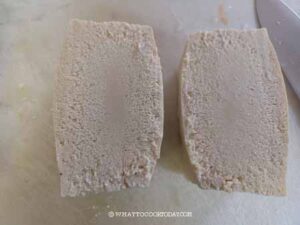
- Once it has thawed completely, remove from packaging, drain off the water and the defrosted tofu can be cut into 2 inch cubes
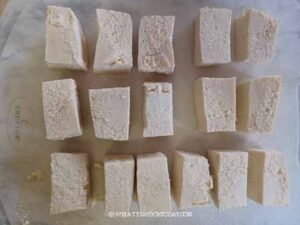
- Cut Napa cabbage into large chunks, about 2-inch chunks. Soak the dried shiitake mushrooms in warm water until they are soft and plump. If the stems of the mushrooms are still tough, you can cut them off, otherwise, I usually keep them if they are soft. You can keep the mushrooms whole for presentation, or cut into slices
- Combine all ingredients for seasonings in a bowl and set aside
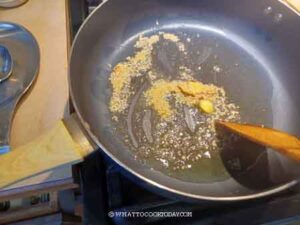
- Preheat a large skillet or wok with 1 Tbsp of oil over medium heat. Add garlic and ginger and saute for about 30 seconds.
- Add Napa cabbage pieces, mushrooms, chicken stock, and seasonings. Gently stir to combine. It may not seem like a lot of liquid, but the Napa cabbage will let out more liquid as it cooks.
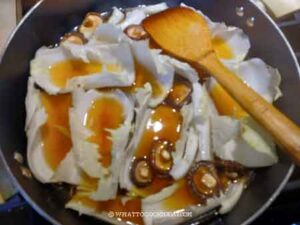
- Bring it to a simmer, and then cover and let it simmer for about 20 minutes
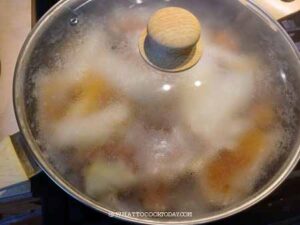
- Uncover and then add the tofu pieces. Make sure the tofu pieces are submerged into the braising liquid. Cover and let them simmer for another 10 minutes
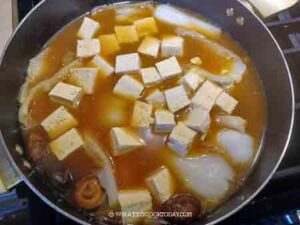
- Have a taste and adjust the seasonings as needed. The mushrooms should be tender
- Combine cornstarch with water and give it a good stir. Pour this into the pan while stirring gently until the sauce thickens. Of the heat. Stir in goji berries and let the residual heat softenit.
- Transfer to a serving dish and decorate with some chopped green onion
