This post may contain affiliate links. Please read our disclosure policy.
Crispy salted egg salmon skin inspired by IRVINS. Double-fried salmon skin tossed in a buttery salted egg yolk sauce for maximum crunch and flavor.
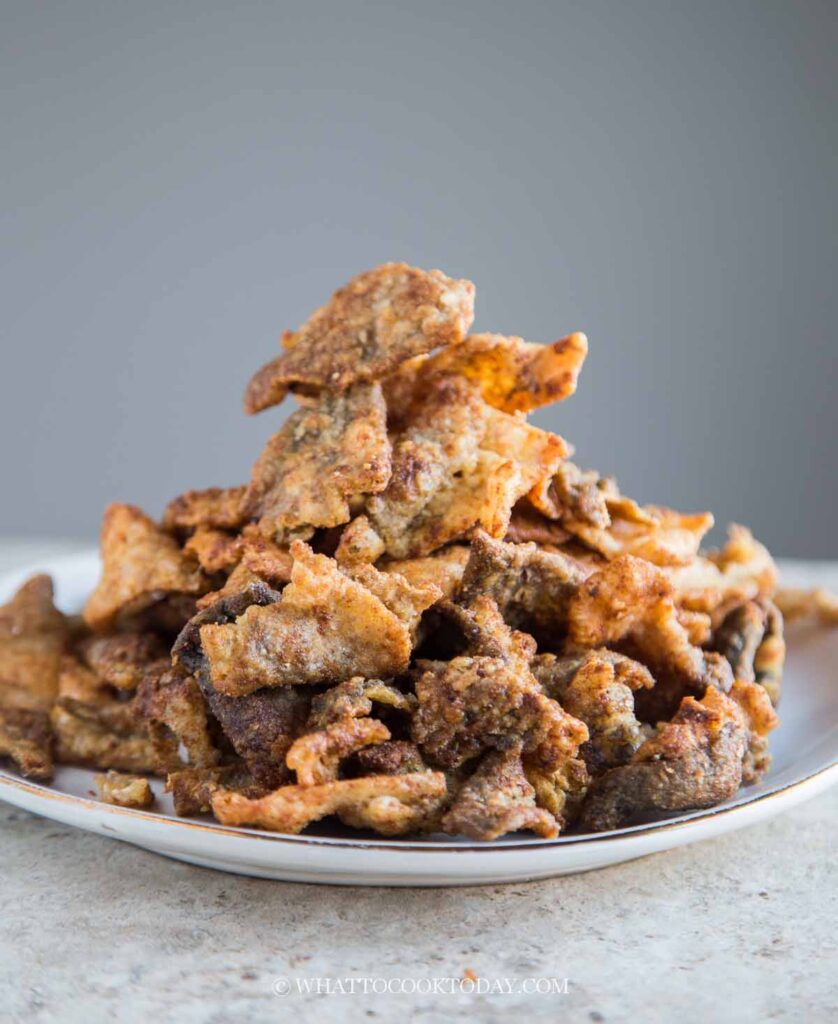
IRVINS Salted Egg Salmon Skin
IRVINS is a Singapore snack brand that turned salted egg yolk into a global craze. Their crispy salmon skin coated in rich, buttery salted egg yolk became an instant hit—and I completely understand why. My sister-in-law brought some for us when we were in Singapore and my kids went absolutely crazy over them. It’s one of those snacks that makes you wonder why you didn’t try it sooner!
Since coming back, I’ve been saving salmon skin every time I buy salmon, freezing them until I finally had enough to make my own version. Singapore is famous for anything salted egg yolk, so while I was there, I picked up Knorr salted egg yolk powder, which is super common and easy to find there. Of course, you can also use real salted egg yolks if you prefer.
Why Make Your Own
A small 3.5-oz bag of IRVINS costs about $10, which adds up fast. From about 400 grams of salmon skin, I ended up with roughly 450 grams (16 oz) of finished chips. Way more than a single bag — and definitely cheaper.
Yes, this involves deep frying, which I normally hate, but for this… it’s worth it LOL. I haven’t tested this in the air fryer yet, but I probably will once I collect enough salmon skin again. In Singapore and many other Asian countries, you can actually buy salmon skin by itself at the grocery store. Not so much where I live — even the Asian stores nearby don’t usually carry it. All in all, This homemade version totally hits the spot.
Why You’ll Like This Recipe
- It tastes incredibly close to IRVINS salted egg salmon skin.
- It’s ultra crispy thanks to double frying.
- You can use either real salted egg yolks or salted egg yolk powder.
- It’s much cheaper than buying imported chips.
- Perfectly crave-worthy — fair warning.
Ingredients and Substitutions
- Salmon skin – Use skin only with all flesh scraped off; this is key for crispiness.
- Egg white – Helps the starch cling; can be replaced with a light water coating, but egg white gives better adhesion and add extra crisp.
- Baking powder – Creates tiny bubbles for extra crisp texture; do not skip.
- Potato starch – Essential for light, shatteringly crisp skin; cornstarch works in a pinch but is slightly less crunchy.
- Neutral oil – Use oil with a high smoke point such as canola, peanut, or vegetable oil.
- Salted egg yolks – Traditional option; steam and mash before using.
- Salted egg yolk powder – Convenient substitute for whole yolks; adjust salt as needed.
- Unsalted butter – Use unsalted to control saltiness; salted butter can be used with reduced added salt.
- Curry leaves – Optional but classic; omit if unavailable.
- Red chili – Optional for heat; use less or omit for kids.
- Milk powder – Adds creaminess and depth; can be omitted if needed, but flavor will be lighter.
- Sugar – Balances the saltiness of the yolks; adjust to taste.
- Salt – Use sparingly and adjust depending on the saltiness of the yolks or powder.
What to Serve This With
- As a snack straight from the bowl
- Alongside a cold beer or sparkling water
- As a crunchy topping for rice or noodles
- On a snack board with other Asian chips and crackers
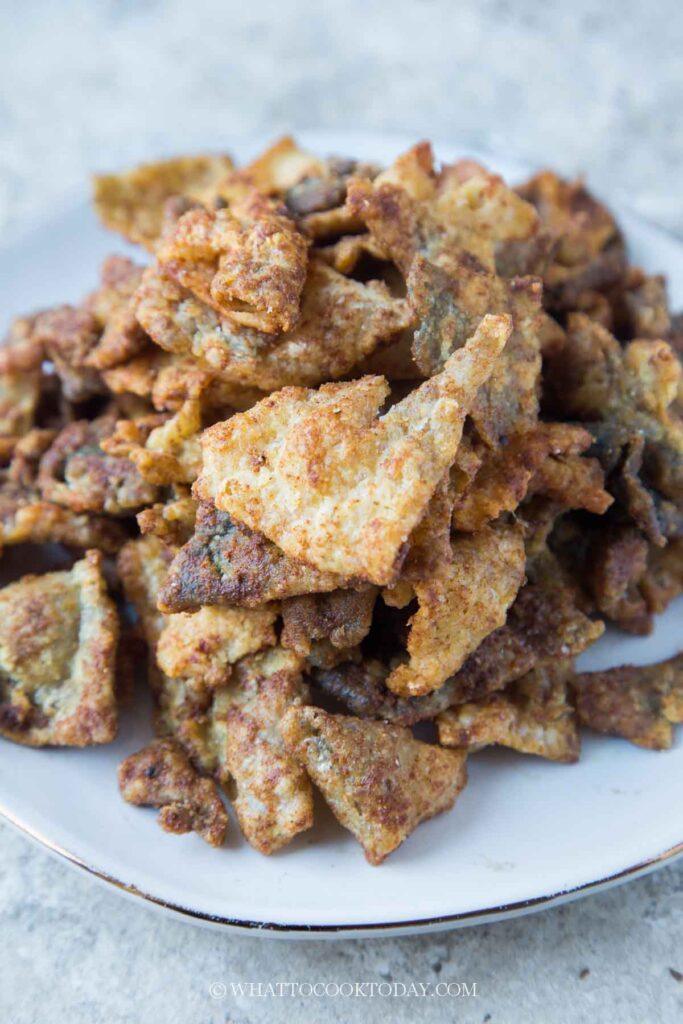
Storage & Reheating
- Let the salmon skin cool completely before storing.
- Store in an airtight container.
- Keeps crispy for 3–4 days or longer at room temperature.
- In very humid climates, store in the fridge to maintain crispiness longer.
- If they get soggy, reheating in the oven at 320 F (160 C) for 5 minutes and let it cool down a bit will crisp it back up
Frequently Asked Questions
- Can I use salted egg yolk powder instead of real yolks?
Yes. This recipe works beautifully with salted egg yolk powder and it’s much more convenient.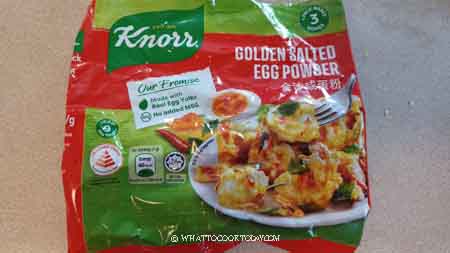
- Can I skip curry leaves and chili?
Absolutely. They are optional and mainly add aroma and heat. - Can I air fry the salmon skin instead?
I haven’t tested it yet, but it’s on my list. Deep frying gives the best crunch for now. - Why do I need to scrape off all the flesh?
Any remaining flesh traps moisture and prevents the skin from crisping properly. - What can I use besides potato starch?
Potato starch gives the best result but you can use cornstarch. DO NOT use tapioca starch, the texture is a bit off with tapioca starch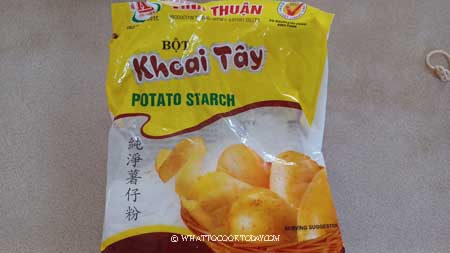
This crispy salted egg salmon skin is crazy good, just like the IRVINS version — maybe even more because you can eat it fresh. It does take some effort, and yes, it involves deep frying, but the payoff is absolutely worth it. If you love salted egg yolk anything, this one’s a must-try.
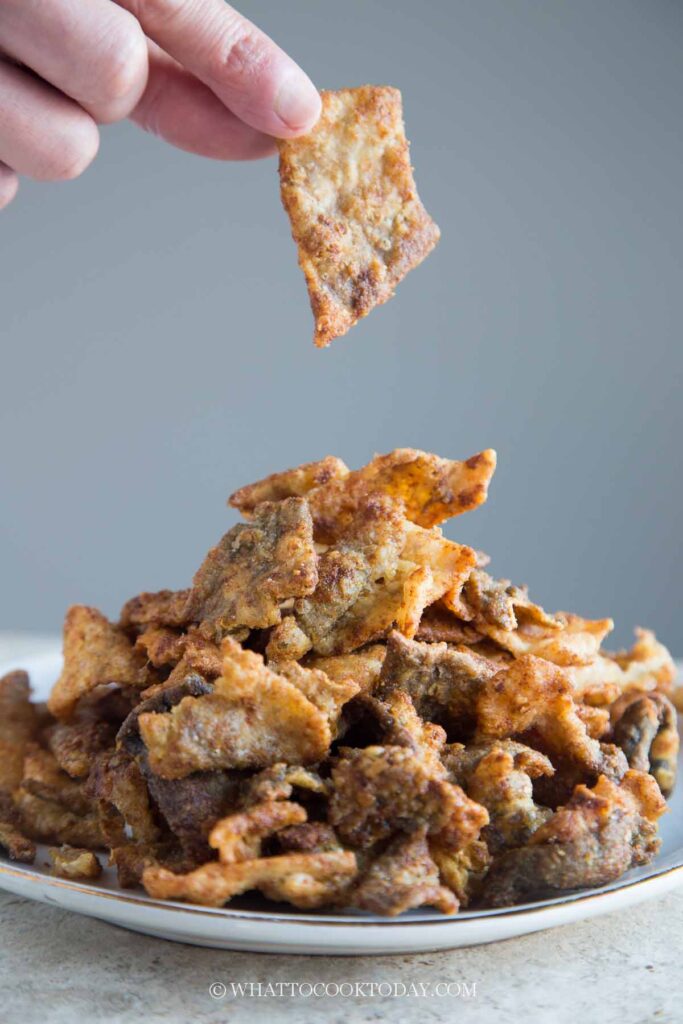
Crispy Salted Egg Salmon Skin Chips (Like Irvins)
Ingredients
- 400 g salmon skin
- 15 g egg white whisk with a fork
- 1 tsp baking powder
- 150 g potato starch NOT potato flour
- Oil for deep-frying
Salted egg yolk sauce:
- 6 salted egg yolks or use about 35 grams salted egg powder
- 85 g butter
- 1 cup curry leaves loosely packed (optional)
- 3 red chili seeded and finely chopped (optional)
- 10 g milk powder
- 1 Tbsp sugar
- Pinch of salt
Instructions
Prepare the salmon skin:
- Bring a pot of water to a boil. Add the salmon skin for about 5 seconds and remove
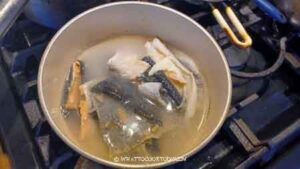
- Use a knife to gently scrape any salmon flesh off the skin This is important so the skin will be crispy when you fry them

- Pat the skin dry with an absorbent paper towel and cut into smaller pieces if the skin is in large piece

- Toss the skin with the egg white. The egg white will ensure the starch cling to the skin later
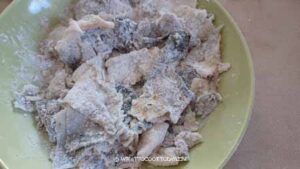
- Combine baking powder with potato starch. Toss some of the salmon skin in the starch mixture. I recommend doing this in small batches so that the skin is evenly coated with the starch. If the skin is folded, make sure to unfold and coat it evenly with the mixture
First frying:
- Prepare a heavy-bottom pot with some oil, enough for deep-frying. I would say the amount of oil is about 3 inches high for the best result. Preheat the oil over medium heat. When you put a skewer in, you will see bubbles around it. The oil is ready. You can also try to put in one small piece of the prepared salmon skin and it should sizzle immediately
- Fry in small batches for 2-3 minutes until they are dry and lightly golden brown.

- Remove with slotted spoon or spider strainer if you have one and place on an absorbent paper towel. Continue with the rest of the salmon skin

- Remove any crumbs from the oil as you fry to prevent them from getting burned
Second frying:
- Bring the oil back to hot over medium heat. The second frying will really ensure that the salmon skin is extra dry and crispy. It will be a quick fry.
- Fry in small batches, starting from the first batch you fried, for about 10 seconds or so. It should be a bit more deeper golden brown this time, but not too dark or get burned. Continue with the rest of the batch

Prepare the salted egg yolk sauce:
- Steam the salted egg yolk for 15 minutes and then mash with a fork when they are still warm. If you use salted egg powder, you can skip this step
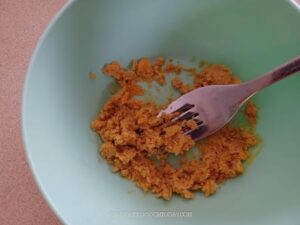
- If you use salted egg powder, combine it with milk powder, sugar, and salt and set aside
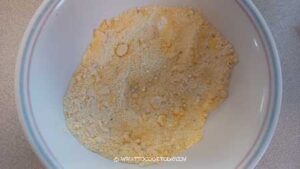
- Traditional salted egg yolk sauce is prepared by including curry leaves and some chopped chili padi. I didn't use curry leaves because it's not for me to get fresh curry leaves where I am. I didn't use chili padi because my daughter can't eat too spicy
- In a large pan or wok, melt butter. Add curry leaves and chili padi if you choose to use. Saute until the curry leaves are crispy, about 10 seconds or so. Add the mashed salted egg yolks (or salted egg powder mixture) into the pan. It should be bubbly and foamy. Add the milk powder, sugar, and salt. Stir for another 10 seconds. It should smell amazing. Have a quick taste and add more salt and/or sugar if needed. It should be savory, umami (from the salted egg yolks), with a hint of sweetness

- Add the fried salmon skin and toss to make sure the skin is evenly coated with the sauce

To serve:
- Serve immediately or room temperature
Storage:
- Once they have cooled down completely, store in an air-tight container. They stay crispy for 3-4 days. If it's really humid where you are, they stay crispy a lot longer in the fridge
