This post may contain affiliate links. Please read our disclosure policy.
Mie goreng noodle buns are a fun Indonesian twist on yakisoba pan, with savory mie goreng (fried noodles) tucked inside soft, fluffy buns.
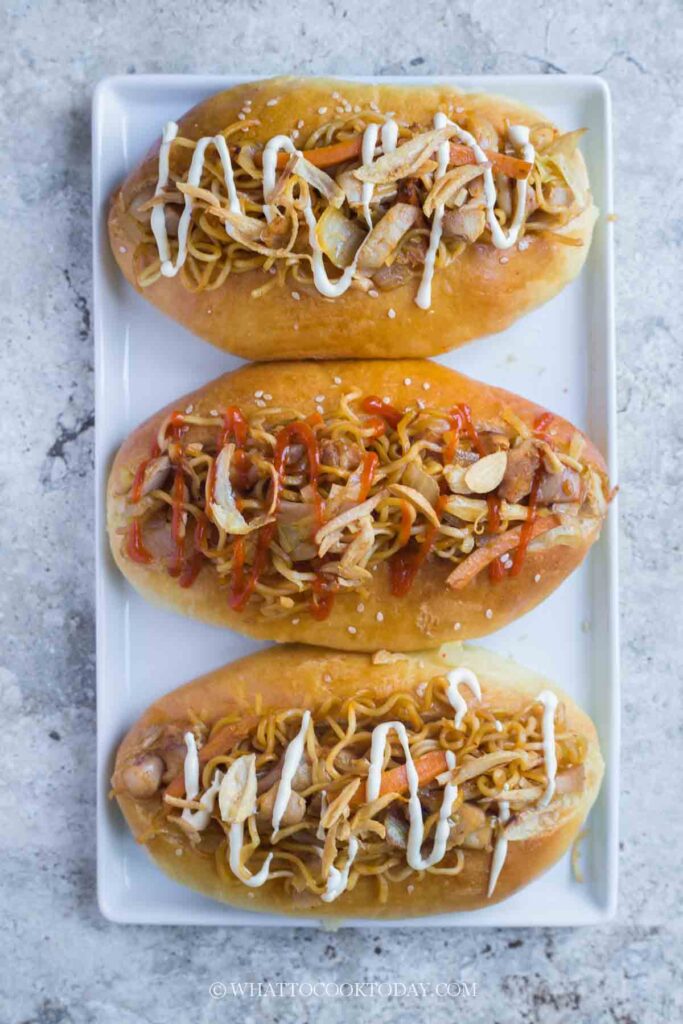
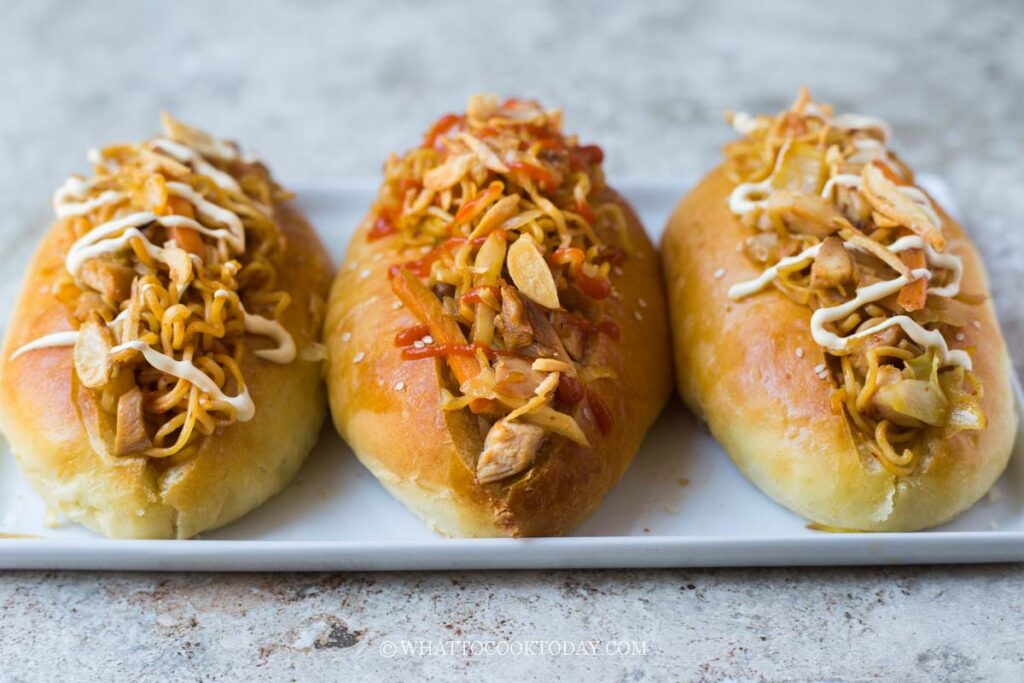
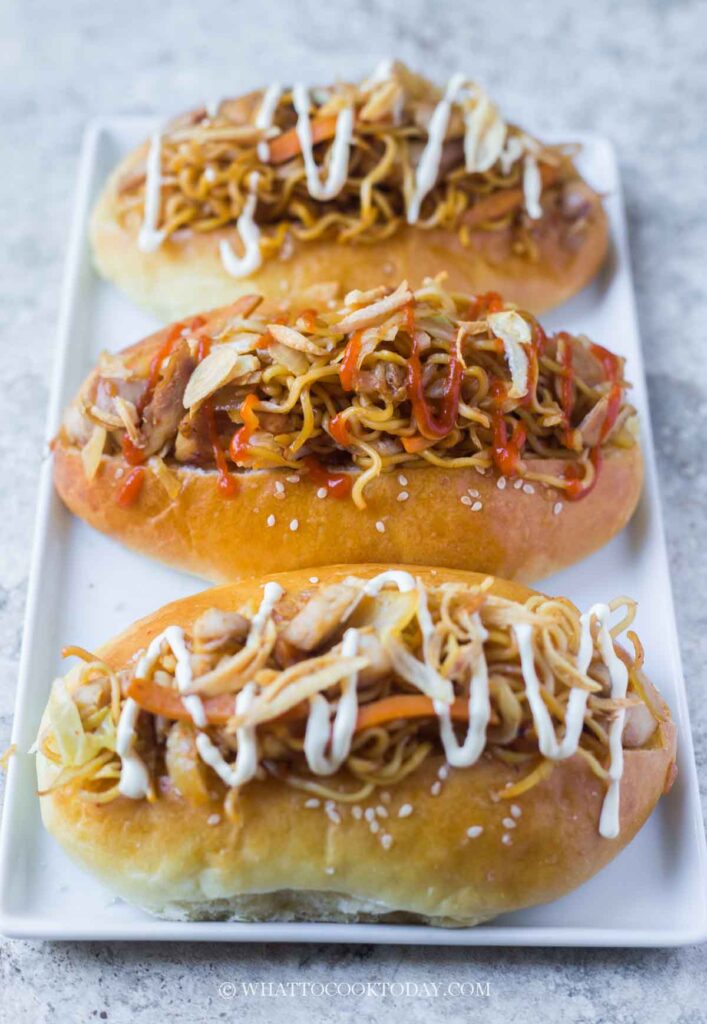
These mie goreng noodle buns are my Indonesian take on the Japanese yakisoba pan. Soft hot dog buns are filled with savory stir-fried mie goreng, then finished with mayonnaise or Sriracha and crispy fried shallots. They are easy to make, fun to eat, and make a great snack, light lunch, or casual party food.
I first became interested in yakisoba pan after seeing them everywhere during our trip to Tokyo and Seoul. We visited quite a few bakeries, and noodle-filled bread seemed to be a very common bakery item. When we went back to Medan, Indonesia, I realized that the idea was not unfamiliar there either. I saw mie goreng-filled buns at local bakeries, and I have even seen nasi goreng, or fried rice, served in bread.
So, this is really my version of something I have seen in different forms across Asia. Instead of yakisoba, I use mie goreng, my favorite Indonesian fried noodle dish. The combination of soft bread and savory noodles might sound like a lot of carbs in one snack, but it works surprisingly well! My son requested this as his after-school snack all the time now lol!
What is yakisoba pan?
Yakisoba pan is a Japanese bakery favorite made by filling a soft bread roll with yakisoba, which is Japanese stir-fried noodles. The word “pan” means bread in Japanese, while yakisoba refers to the stir-fried noodle dish.
Yakisoba itself is typically made with wheat-based noodles stir-fried with vegetables, meat, or seafood, then seasoned with a sweet and savory yakisoba sauce. When served as yakisoba pan, the noodles are placed inside a long, soft bread roll, creating a convenient handheld snack.
It may sound unusual if you have never had noodles and bread together, but the combination is actually very practical. The soft bread holds the saucy noodles neatly, making it easy to eat on the go. It is also a good example of how Japanese bakeries have combined familiar Western-style breads with Japanese and Asian fillings.
Mie goreng meets yakisoba pan
Yakisoba pan is not the only example of this idea. Across Asia, bakeries often take familiar savory dishes and turn them into convenient bread fillings.
When we visited Seoul and Tokyo, I noticed noodle-filled breads in bakeries in both places. Then I remembered seeing mie goreng versions in bakeries in Medan. The Indonesian version feels like a very natural adaptation because mie goreng is already a flavorful, filling dish that works beautifully inside bread.
The flavors are different from traditional yakisoba, of course. Mie goreng usually has a deeper savory flavor from soy sauce, oyster sauce, and kecap manis, with a little sweetness and chili depending on how it is prepared.
I call this version mie goreng noodle buns rather than yakisoba pan because the filling is specifically Indonesian-style mie goreng. Think of it as my Indonesian take on the noodle-filled bread idea.
Why you will like these mie goreng noodle buns
- Soft bread with savory noodles: The slightly sweet, soft bun is a great contrast to the savory and slightly sweet mie goreng.
- A fun way to serve mie goreng: Instead of eating the noodles from a bowl or plate, you can pick them up and eat them like a sandwich.
- Easy to prepare ahead: The mie goreng can be made up to 3 days ahead, so you only need to reheat it and assemble the buns when you are ready to serve.
- Easy to customize: Use chicken, shrimp, pork, tofu, or extra vegetables depending on what you have available.
- Great for parties and casual gatherings: You can prepare the noodles ahead and assemble only as many buns as you need.
Ingredients and substitutions
- Hot dog buns: You need 8 soft hot dog buns. Store-bought buns work perfectly, or you can make soft buns from scratch using the tangzhong-based dough I use for baked kare pan.
- Fresh yellow noodles: These give the mie goreng a chewy texture and classic appearance. You can also use dried instant noodles, dried ramen noodles, or spaghetti.
- Oil: Use a neutral cooking oil for stir frying the vegetables and noodles.
- Onion: Adds sweetness and savory flavor to the noodles. Yellow or white onion both work well.
- Cabbage: Adds sweetness and texture. Napa cabbage can also be used.
- Carrot: Adds color, sweetness, and texture. You can shred it or cut it into thin matchsticks.
- Cooked chicken: Use diced or shredded cooked chicken. Leftover roast chicken, poached chicken, or rotisserie chicken are all convenient options. You can also substitute shrimp, pork, tofu, or tempeh.
- Soy sauce: Provides saltiness and savory flavor.
- Oyster sauce: Adds depth and umami. For a vegetarian version, use vegetarian oyster sauce.
- Kecap manis: This Indonesian sweet soy sauce gives the noodles sweetness, color, and a characteristic caramelized flavor. It is worth having if you make Indonesian food regularly.
- Ketchup: A small amount adds sweetness and acidity to the sauce.
- White pepper: Adds a gentle peppery flavor that works particularly well with fried noodles.
- Sambal oelek: Optional, but adds a nice spicy kick to the mie goreng. Adjust the amount to your preference.
- Butter: Spread a thin layer on the cut side of the bun before adding the noodles. It creates a protective layer that helps keep the bread from becoming soggy.
- Mayonnaise and Sriracha: Optional toppings that add creaminess, tanginess, and heat.
- Crispy fried shallots: A classic Indonesian topping that adds a wonderful crunchy texture and savory flavor.
- Cheddar cheese: Optional, but very good if you want a cheesy version. You can use shredded cheddar or slices.
Tips and Variations
- Use fresh yellow noodles if you can: They give the mie goreng the chewy texture I like best for these buns, but dried noodles are a perfectly good substitute. I have used instant noodles, dried ramen noodles, and spaghetti noodles before too
- Undercook dried noodles slightly: Cook them 1 to 2 minutes less than the package directions and rinse them afterward. This keeps them from becoming too soft during stir frying.
- The butter is important: Spread a thin layer of butter over the cut side of the bun before adding the mie goreng. It helps create a barrier between the moist noodles and the bread.
- Make the mie goreng ahead: The noodles can be prepared up to 3 days ahead and refrigerated. Reheat them just before assembling the buns.
- Do not assemble too early: For the best texture, fill the buns shortly before serving. I recommend only assembling as many as you plan to eat that day.
- Make your own buns if you have time: The tangzhong-based buns I use for baked kare pan are soft and fluffy, making them particularly nice for this recipe.
- Adjust the spice: Sambal oelek is optional in the mie goreng, and you can also add Sriracha on top. This lets everyone adjust the heat to their preference.
- Try different fillings: Chicken is convenient, but leftover pork, shrimp, tofu, or tempeh would also work well.
Frequently asked questions
- What is mie goreng? Mie goreng is Indonesian fried noodles, typically stir fried with noodles, vegetables, protein, and a savory sauce. The exact ingredients vary from recipe to recipe and region to region.
- Is this the same as yakisoba pan? The concept is similar, but the filling is different. Yakisoba pan traditionally uses Japanese yakisoba, while this recipe uses Indonesian mie goreng.
- Can I use store-bought hot dog buns? Yes. Store-bought soft hot dog buns make this recipe very easy. You can also make homemade buns using the tangzhong-based dough mentioned in the recipe.
- Can I use leftover mie goreng? Yes. Leftover mie goreng works very well. Reheat it until warmed through before filling the buns.
- Why do you butter the inside of the bun? The butter creates a thin protective layer between the bread and the saucy noodles. This helps slow down moisture absorption so the bun does not become soggy as quickly.
- Can I make these vegetarian? Yes. Omit the chicken and use vegetarian oyster sauce. Tofu or tempeh would also make a good filling.
- Can I prepare these the day before? You can prepare the mie goreng up to 3 days ahead, but I do not recommend assembling the noodle buns the day before. Assemble them shortly before serving for the best texture.
- Can I freeze the assembled noodle buns? I do not recommend it. The texture of the bread and noodles is much better when freshly assembled. If you want to freeze something, freeze the mie goreng separately and prepare fresh buns when you are ready to serve.
- Why spread butter on the hotdog buns? The thin layer of butter acts as a barrier between the bread and the saucy noodles, helping to keep the bun from becoming soggy too quickly. It also adds a little richness to the finished noodle bun.
After seeing yakisoba pan in Japan and Korea, then finding mie goreng versions in bakeries back in Medan, I had to make my own version at home. It feels familiar and new at the same time, and that is probably my favorite thing about these noodle buns.
Mie Goreng Noodle Buns
Ingredients
- 8 hot dog buns store-bought or homemade
- 4 Tbsp softened butter
Mie goreng:
- 300 g fresh yellow noodles see notes
- 1 Tbsp oil
- 1 small onion diced
- 150 g shredded cabbage
- 1 small carrot shredded
- 150 g cooked chicken meat diced or shredded
Sauce for mie goreng:
- 1 Tbsp soy sauce
- 1 Tbsp oyster sauce
- 1 tsp kecap manis
- 1 Tbsp ketchup
- ¼ tsp ground white pepper
- 1 Tbsp sambal oelek optional
Optional toppings:
- Sriracha chili sauce
- Cheddar cheese shredded or slices
Instructions
- If you want to make soft hotdog buns from scratch, you can use this tangzhong-based buns that I use for baked kare pan. Instead of dividing into 15 buns, divide into 8 buns and bake at 375 F (180 C) for 15-18 minutes or golden brown. If you use convection oven, lower the temperature by 20 F (15 C)
Prepare mie goreng:
- Combine all the sauce ingredients in a bowl and set aside
- See the notes for the kind of noodle you can use. Preheat a wok or a large pan. Add 1 Tbsp of oil. Add the diced onions and saute for about 2-3 minutes until fragrant and soft.
- Add shredded cabbage and carrots and saute for about 3 minutes.
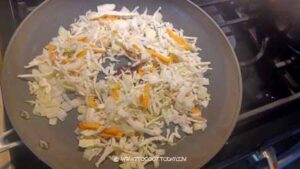
- Add the cooked chicken meat. Give them a quick stir to combine
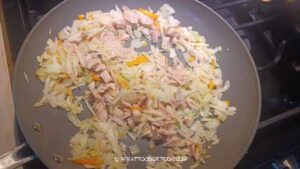
- Add the noodles followed by seasonings. Mix well to make sure the sauce is coating the noodles and everything else add more if needed. Adjust the taste to your preference.
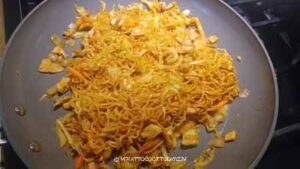
Assembling:
- Only assemble the noodle buns when you are ready to serve them.
- Cut the buns open along their length and leave them hinged (don't cut all the way down). Gently open the buns wider and spread about 1/2 Tbsp of butter in a thin layer on the cut side. This butter acts as a "protective" layer to prevent the buns from getting soggy from the noodles
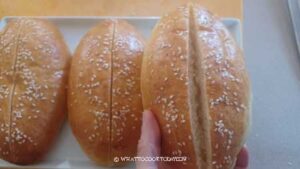
- Open the cut-side a bit wider to accomodate the noodles and pack it up with the mie goreng. Put it on a serving platter. Repeat with the rest of the buns and mie goreng
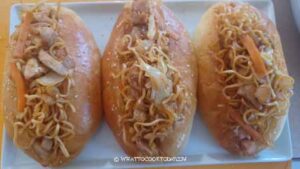
- Squeeze out some mayo and/or sriracha sauce on top of the noodles and top with some crispy shallots on top
For a cheesy version:
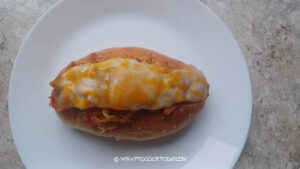
- After filling the bun with hot mie goreng, add a slice of cheddar or a small handful of shredded cheddar over the noodles. The heat from the noodles will soften the cheese. If you want the cheese fully melted, place the assembled buns on a baking sheet and briefly broil until the cheese is melted. Watch closely so the buns do not brown too much.
To serve:
- Serve immediately after assembling or on the same day. Do not store assembled leftover noodle buns. So I recommend only preparing as many as you want to serve
