This post may contain affiliate links. Please read our disclosure policy.
Enjoy this moist cranberry orange bread with a tender crumb and a lovely balance of sweet citrus and tart cranberries. Perfect for breakfast or snacking.
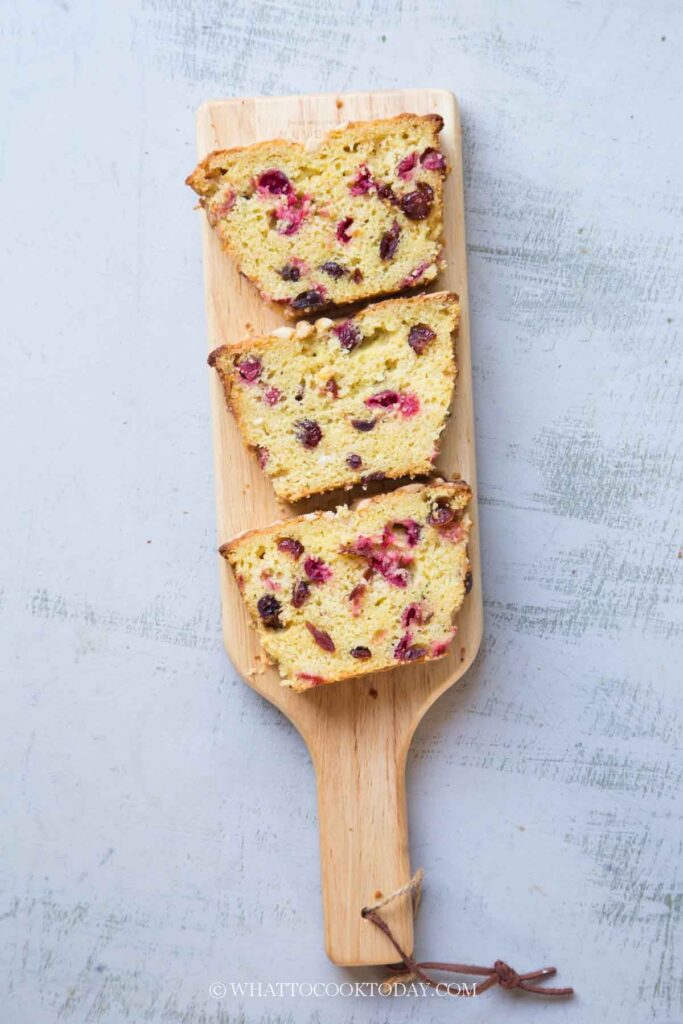
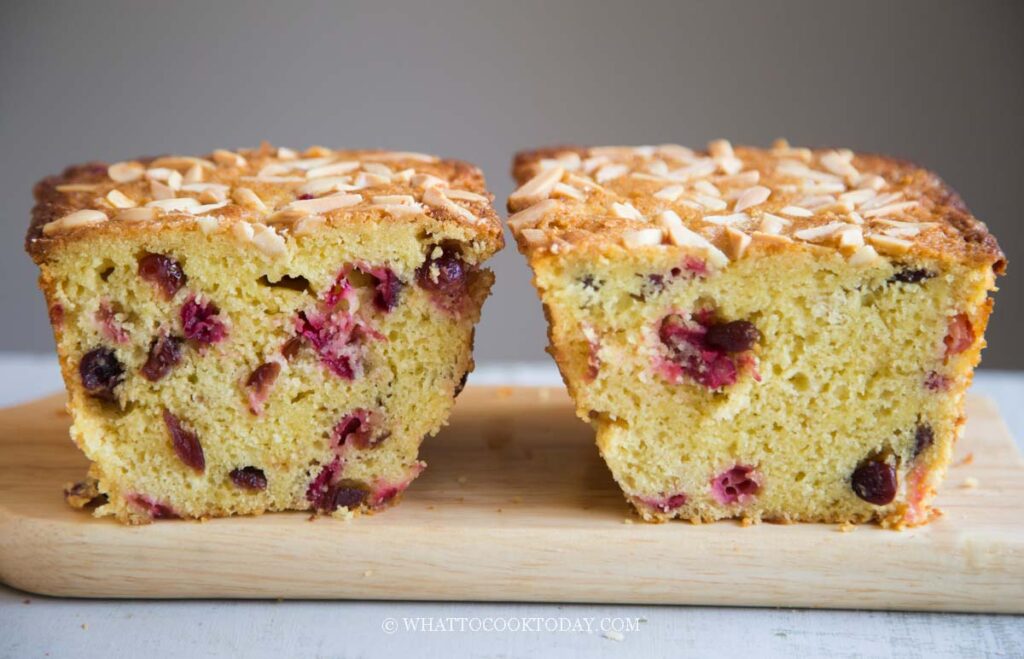
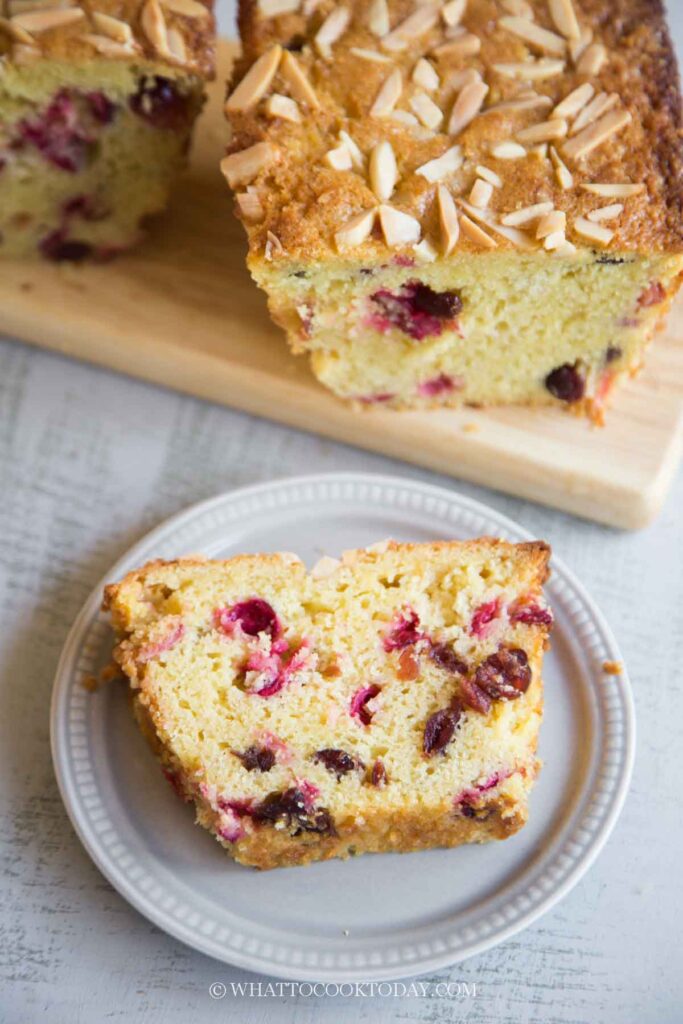
This cranberry orange bread combines bright citrus flavor with tart cranberries. Made with fresh and dried cranberries, fresh orange juice, and plenty of orange zest, this quick bread is moist, tender, and not overly sweet. The sliced almonds on top add a little crunch, making it perfect for breakfast, brunch, or an afternoon snack with a cup of coffee or tea.
Why You’ll Love This Recipe
- A lovely balance of flavors: The tartness of fresh cranberries and the sweetness of dried cranberries pair beautifully with the bright, citrusy flavor of orange.
- Not overly sweet: This bread has just the right amount of sweetness, allowing the natural tartness of the cranberries to shine through.
- Moist and tender texture: The combination of orange juice, milk, and oil gives the bread a lovely moist crumb without making it heavy.
- Easy to make: There is no need for a mixer. Simply combine the wet and dry ingredients, fold everything together, and bake.
- Great for using fresh cranberries: If you have a bag of fresh cranberries during cranberry season, this is a delicious way to use them.
Ingredients and Substitutions
- All-purpose flour: Provides structure while keeping the bread tender. I haven’t tested this recipe with alternative flours, so I recommend sticking with all-purpose flour for the best results.
- Sugar: Provides sweetness and helps balance the tartness of the cranberries. Rubbing the sugar with the orange zest also helps release the fragrant citrus oils.
- Baking powder: This is the leavening agent that helps the bread rise and gives it a tender texture.
- Salt: Enhances the overall flavor and balances the sweetness.
- Orange juice: Freshly squeezed orange juice adds a lovely citrus flavor. Store-bought orange juice will also work.
- Milk: Adds moisture and contributes to the tender crumb. Whole milk is my preference, but 2% milk should work too.
- White vinegar: The vinegar reacts with the baking powder and contributes to the texture of the bread. You won’t taste it in the finished bread.
- Eggs: Provide structure, richness, and moisture. I don’t recommend any substitutions
- Vanilla extract: Adds a subtle aroma that complements the orange and cranberries.
- Oil: Keeps the bread moist, even after a day or two. Use a neutral-flavored oil such as avocado, canola, or vegetable oil.
- Fresh cranberries: Cut them into smaller pieces so you get little bursts of tart cranberry flavor throughout the bread. If you prefer, you can roughly chop them instead.
- Dried cranberries: These add sweetness and a pleasantly chewy texture. I use sweetened dried cranberries.
- Orange zest: Don’t skip this! The zest provides a more concentrated orange aroma than the juice alone.
- Sliced almonds: These are sprinkled over the top before baking for a little crunch and a lovely finish. You can omit them if you prefer.
What Does Cranberry Orange Bread Taste and Feel Like?
The first thing you’ll notice is the lovely citrus aroma from the orange zest. The orange flavor is bright and fragrant, while the fresh cranberries bring little bursts of tartness throughout the bread. The dried cranberries add a touch of sweetness and a slightly chewy texture.
The crumb is moist and tender without being heavy or overly rich. It has just enough sweetness to balance the tart cranberries, but it doesn’t taste like a dessert cake. The sliced almonds on top add a delicate crunch that contrasts nicely with the soft interior.
I especially love the combination of orange and cranberries in this bread. They complement each other so well, and the result is a quick bread that feels right at home on the breakfast table or as an afternoon snack. It’s also a wonderful way to use fresh cranberries when they are in season!
Tips for Making the Best Cranberry Orange Bread
- Rub the orange zest with the sugar: Don’t skip this little step. It helps release the fragrant oils from the zest and gives the bread a more pronounced orange aroma.
- Don’t overmix the batter: Quick bread batter doesn’t need to be smooth. A few lumps are perfectly fine, and overmixing can make the finished bread tough.
- Use a cake tester to check for doneness: Because the cranberries add moisture, make sure you check the center rather than relying on the color of the top alone.
Frequently Asked Questions
- Can I use only fresh cranberries instead of fresh and dried cranberries?
You can, but the flavor will be noticeably more tart. The dried cranberries provide little pockets of sweetness that balance the fresh cranberries. If you want to use only fresh cranberries, you may prefer to increase the sugar slightly to suit your taste. - Can I use frozen cranberries?
Yes! You can use frozen cranberries without thawing them first. Chop them into smaller pieces while they are still frozen, then fold them directly into the batter. Keep in mind that frozen cranberries may slightly affect the baking time. - Can I use dried cranberries only?
Yes. You can replace the fresh cranberries with an equal weight of dried cranberries, although the bread will be sweeter and won’t have the same tart bursts of fresh cranberry flavor. - Why is my cranberry orange bread dense?
Overmixing is one possible reason. Once the wet and dry ingredients are combined, excessive mixing can develop the gluten in the flour and result in a tougher, denser crumb. Also, make sure your baking powder is fresh and hasn’t lost its leavening power. - Can I make this recipe into muffins?
You can bake the batter in a lined muffin pan instead. Divide the batter evenly among the cups, filling each about ⅔ to ¾ full. The baking time will be considerably shorter, so start checking for doneness around 18–22 minutes.
Storage and Reheating
- At room temperature: Let the bread cool completely before storing. Place it in an airtight container and keep it at room temperature for 4–5 days.
- In the freezer: For longer storage, wrap the completely cooled bread tightly in plastic wrap, then place it inside a freezer bag. Freeze for up to 1 month. You can freeze the entire loaf or slice it first for easier serving.
- To thaw: Let the bread thaw at room temperature for a few hours before serving.
- To reheat: If you enjoy it slightly warm, heat individual slices in a toaster oven at a low temperature for a few minutes. You can also microwave a slice briefly until just warm.

Ingredients
Equipment
Method
- If you use frozen cranberries, thaw them and remove any excess liquid and cut them into small pieces. If the dried cranberries you use are large in size, cut into smaller pieces.
- Preheat the oven to 350 F (180 C) for conventional oven and for a convection oven, please lower the temperature by 20 F (15 C). Oil the loaf pan on all sides and line with a parchment paper on the long side, overhanging on the side for easier removal later if you want
- In a large mixing bowl, combine orange zest with sugar. Rub them together with your dry fingertips for about a minute or so. This brings out the oil and nice aroma from the zest. Add the rest of the dry ingredients into this bowl and whisk to combine
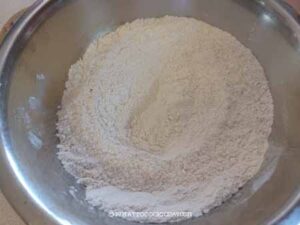
- In a large measuring cup or another mixing bowl, combine all the wet ingredients and whisk until thoroughly combined

- Make a well in the center of the mixing bowl with the dry ingredients and pour the wet ingredients in. Use a spatula to fold the ingredients until just combined. Halfway through combining, gently fold in the fresh cranberries, and dried cranberries until combined. Do not overmix.
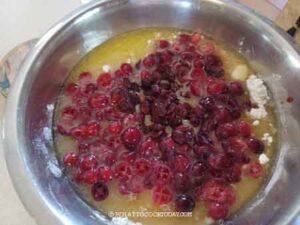
- As long as you don't see streaks of dry ingredients in the bowl, you are done mixing. The batter will be lumpy and that's fine.
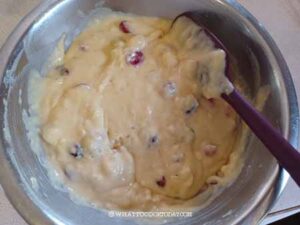
- Scrape the thick batter into a prepared pan. Smooth the top with a rubber spatula. Sprinkle with the sliced almond
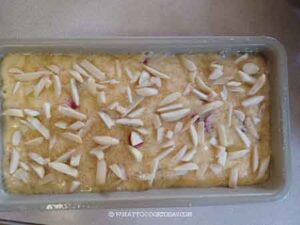
- Place the pan in the middle rack of the oven and bake for 55-60 minutes or until a cake tester inserted into the center of the cake comes out with just a few of moist crumbs but it shouldn’t be wet
- Let the bread cool in the pan, set on top of a cooling rack, for 15-20 minutes and then loosen the short side with a spatula and carefully lift the bread out of the pan onto a cooling rack and let it cool down completely. This may take 2-3 hours
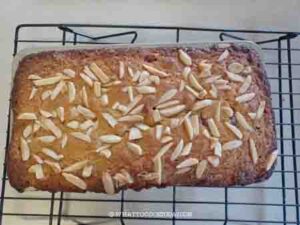
- Once it has cooled down completely, store the bread in an air-tight container or 4-5 days.
- For a longer storage, wrap in a plastic wrap and keep inside a freezer bag and it can be kept for up to 1 month. Simply thaw at room temperature for few hours before serving
