This post may contain affiliate links. Please read our disclosure policy.
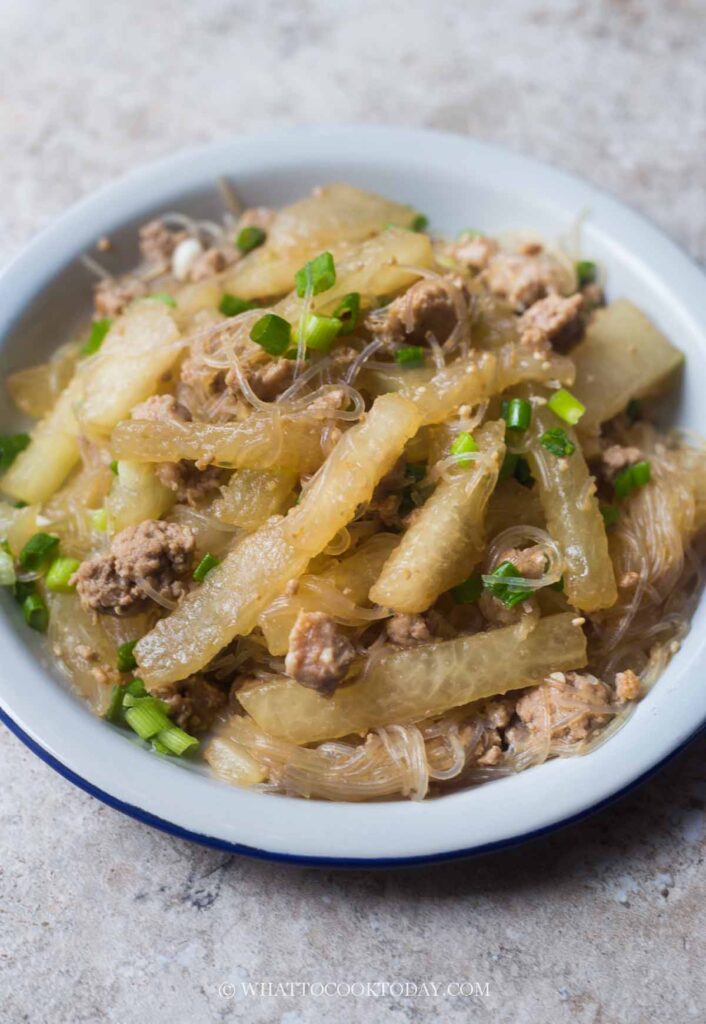
This Chinese stir-fried winter melon with pork and glass noodles is a simple, comforting home-cooked dish with tender-crisp winter melon and savory flavors.
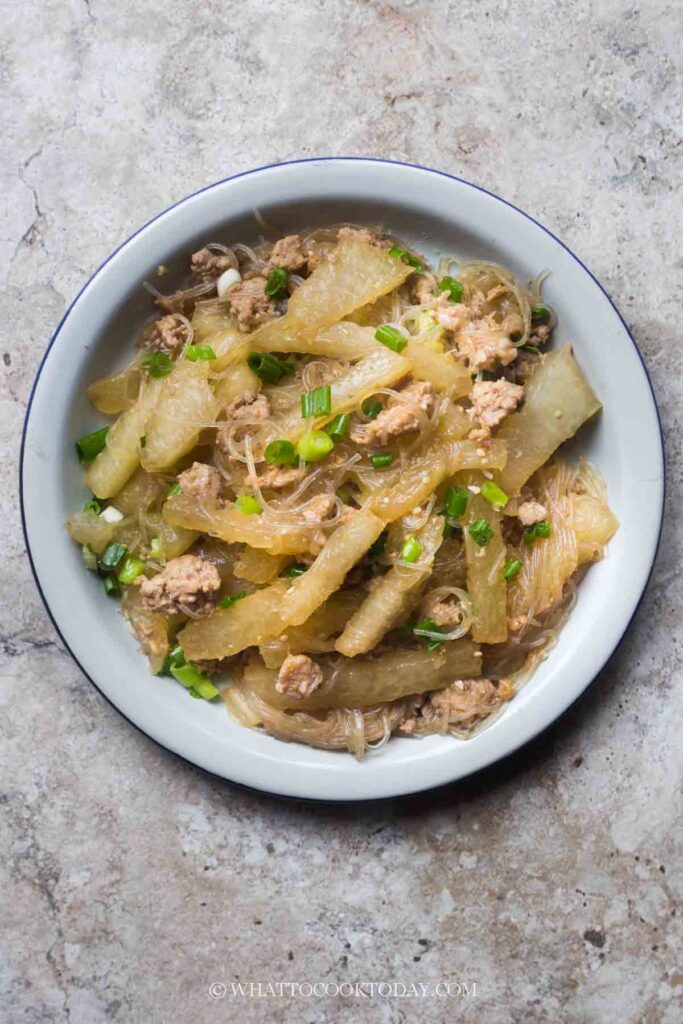
This stir-fried winter melon with pork and glass noodles is one of my favorite dishes to make when winter melon is in season. It is a simple Chinese home-cooked dish, but the combination of tender winter melon, savory ground pork, dried shrimp, and slippery glass noodles makes it so satisfying.
Growing up, my mom usually used winter melon to make soup, such as this winter melon pork ribs soup. I didn’t grow up eating winter melon prepared this way as often, but when my mom came to visit and I made this stir-fried version, she really enjoyed it. The whole family enjoyed this simple but tasty dish, and it has become one of my favorite ways to cook winter melon.
The dried shrimp adds a wonderful savory aroma, while the ground pork makes the dish hearty enough to serve with steamed rice. Glass noodles soak up the flavorful sauce, and the winter melon stays tender with just a little bite.
It is a lovely dish to make when you find fresh winter melon at an Asian grocery store, especially if you want something other than soup.
What is winter melon?
Winter melon (Benincasa hispida) is a large fruit from the gourd family that is commonly used as a vegetable in Asian cooking. It is also known as wax gourd, ash gourd, white gourd, winter gourd, ash pumpkin, Chinese preserving melon, and Chinese winter melon. In Chinese, it is called 冬瓜 (dōng guā). Depending on the region, you may also see names such as kundur in Indonesia and tōgan in Japan.
Despite the word “melon” in its name, mature winter melon is not sweet like a cantaloupe or honeydew. It has thick, pale flesh with a very mild, refreshing flavor that readily absorbs the seasonings it is cooked with.
Young winter melon can have a fuzzy exterior, while mature fruit develops a waxy coating, which explains why it is also called wax gourd. The mature fruit can be quite large, and it is commonly used in Chinese soups, braised dishes, stir-fries, and even sweet preparations.
Winter melon is particularly good in soups because its mild flavor works well with pork ribs, chicken, dried shrimp, and other savory ingredients. It is also delicious stir-fried, as in this recipe.
For this dish, I cut the peeled and seeded winter melon into relatively thick strips. Winter melon contains a lot of water and softens as it cooks, so keeping the pieces thick helps them hold their shape instead of becoming mushy.
What are glass noodles?
Glass noodles are thin, translucent noodles made from starch. They are also called cellophane noodles, mung bean thread noodles, bean thread vermicelli, or simply glass vermicelli. In Chinese, mung bean glass noodles are commonly called 粉丝 (fěn sī), while in Indoneisa, Singapore and Malaysia, you may hear them called tang hoon.
Glass noodles are often made from mung bean starch, although varieties made from sweet potato, potato, or other starches are also available. The type of starch affects the noodles’ texture and cooking characteristics.
When dry, glass noodles are usually pale and somewhat brittle. Once soaked and cooked, they become translucent, slippery, and pleasantly chewy. Their neutral flavor makes them especially good at absorbing the savory sauce in stir-fries, soups, and braised dishes.
For this recipe, I use dried mung bean thread noodles. They only need a short soak in warm water before cooking, making them convenient to prepare.
Ingredients and substitutions
- Winter melon: If winter melon is unavailable, chayote is a possible substitute, though the flavor and texture will differ.
- Dried shrimp: You can omit it if you don’t have any, but the dish will taste milder. Finely chopped dried scallops can also provide a similar savory depth, although they are usually more expensive.
- Garlic: Freshly minced garlic provides the aromatic base for the stir-fry. Fresh garlic is best, but you can use garlic paste if needed.
- Mung bean thread noodles: These are also known as glass noodles, cellophane noodles, or bean thread vermicelli. Use dried mung bean starch noodles for the closest match. Sweet potato starch glass noodles can also work, but they are often thicker and chewier, so adjust the soaking and cooking time according to the package directions.
- Ground pork: Ground pork adds richness and makes the dish more substantial. Ground chicken or turkey can be used instead, although the flavor will be leaner. Ground beef is another option if you prefer a stronger, meatier flavor.
- Cornstarch: A small amount helps keep the ground pork tender. Potato starch can be used instead in the same amount.
- Oyster sauce: Oyster sauce adds savory depth and a touch of sweetness to both the marinated pork and the stir-fry seasonings. For a vegetarian alternative, use mushroom-based vegetarian stir-fry sauce. The flavor may be slightly different, so adjust the seasoning to taste.
- Soy sauce: Use regular soy sauce or light soy sauce for seasoning. If you need a gluten-free option, use certified gluten-free tamari. Dark soy sauce is not the best substitute because it is darker and may change the appearance of the dish.
- Salt: The amount can be adjusted to taste, depending on the saltiness of your oyster sauce and soy sauce. Taste the dish before adding extra salt.
- Ground white pepper: White pepper adds gentle warmth without overwhelming the mild flavor of the winter melon. Ground black pepper can be used instead, although it has a more pronounced aroma and will leave visible specks.
- Sesame oil: Toasted sesame oil adds a fragrant, nutty aroma. If you don’t have it, you can omit it, although the dish will lose some of its characteristic fragrance.
- Green onions: Finely chopped green onions add freshness and color to the finished dish. You can substitute chopped chives or omit them if necessary.
- Neutral cooking oil: Use a neutral oil suitable for stir-frying, such as canola, vegetable, or peanut oil. Avoid strongly flavored oils that may overpower the other ingredients.
Tips for making the best stir-fried winter melon
- Cut the winter melon into thick strips. Winter melon releases moisture and softens as it cooks, so thicker pieces are less likely to break apart.
- Prepare everything before heating the wok. The cooking process is quick, and having the pork, winter melon, noodles, and seasonings ready makes the stir-fry easier to manage.
- Avoid overcooking the winter melon. It should be tender but still hold its shape. Check it as you cook, since the exact timing depends on the thickness of the pieces and the maturity of the melon.
Frequently asked questions
- Can I use fresh winter melon instead of frozen winter melon?
I don’t recommend for this stir-fry recipe because frozen winter melon tends to soften more quickly and may release more water, so the final texture will be different. - Can I use a different type of glass noodle?
Yes. Sweet potato starch glass noodles or other transparent starch noodles can work. Keep in mind that different noodles vary in thickness and soaking time, so follow the package directions and adjust the cooking time as needed. - Can I make this dish without dried shrimp?
Yes. You can leave out the dried shrimp if you do not have any or prefer not to use it. The dish will still be tasty, but it will have a milder, less complex savory flavor. - Can I prepare this dish ahead of time?
This dish is best served freshly cooked because the winter melon continues to soften and the glass noodles can absorb more liquid as they sit. You can prepare the ingredients in advance and cook everything just before serving. - What should I serve with stir-fried winter melon with pork and glass noodles?
Steamed white rice is a natural choice. You can also serve it with another simple vegetable dish or a light soup for a family-style Chinese meal.

Ingredients
Equipment
Method
- Soak the dried shrimp in warm water for 10 minutes and then discard the soaking liquid and finely chop the dried shrimp.

- Combine the pork with cornstarch, oyster sauce, soy sauce, and ground white pepper. Let it marinate at room temperature while you prepare the rest.
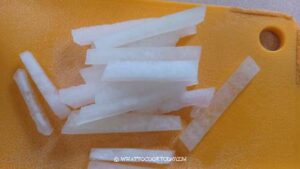
- Cut the winter melon into about 1/2-inch thick strips. The strips can be 3-4 inches long. They don’t have to be exact. You don’t want to cut them too thin though as winter melon has high water content and if you cut them too thin, they may “disappear” when you cook them
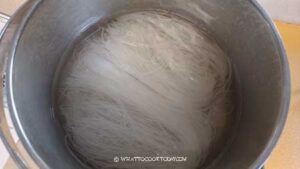
- Soak the mung bean thread noodles (also known as glass noodles or cellophane noodles) in warm water for 10 minutes until they are softened. Cut into about 3-4 inches length using kitchen shears.
- Combine all the ingredients or the seasonings in a bowl and set aside
- Preheat a large skillet or wok with 1 Tbsp of oil over medium heat.
- Add the garlic and dried shrimp and saute until they are fragrant, about 1 minute or so.

- Add the pork into the pan. Use a sturdy spatula to break the meat up. Let them cook until they just started to turn opaque. You may still see few pink spots.

- Add the winter melon pieces along with the seasonings.
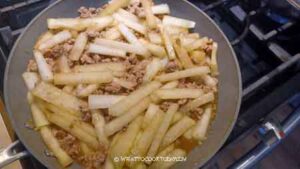
- Give it a good stir and then cover with a lid. Cook for about 3 minutes
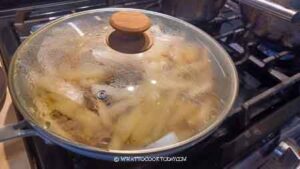
- Uncover the lid. The winter melon pieces should be still crisp but slightly tender at this point. Add the glass noodle piecess. Give everything a stir again and then cover with a lid and cook for another 2 minutes.
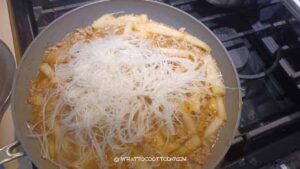
- The winter melon pieces should be tender crisp and slightly translucent, but they shouldn't be mushy. Have a taste and adjust the seasonings if necessary. Turn off the heat. Scatter the chopped green onion on top
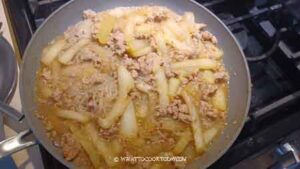
- Transfer into a serving platter and serve immediately
