This post may contain affiliate links. Please read our disclosure policy.
Looking for an alternative to Beef Wellington? This Pork Wellington features tender pork, savory mushrooms, ham, and flaky puff pastry with creamy mustard sauce.
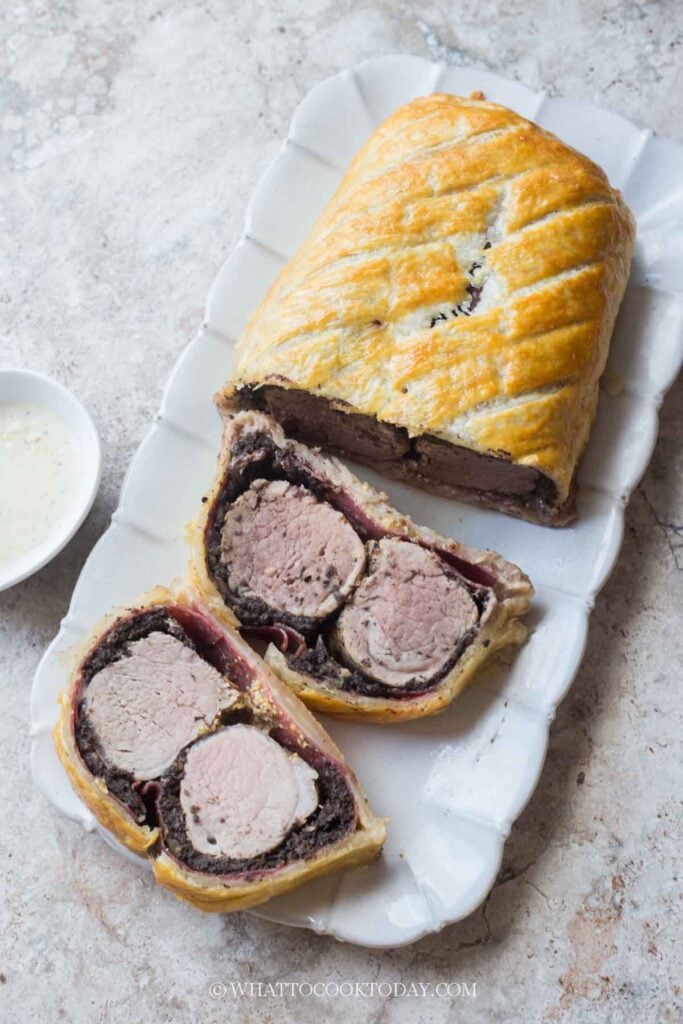
If you love Beef Wellington but want a more budget-friendly alternative, this Pork Wellington is worth making! It features juicy, tender pork tenderloin coated with mustard, wrapped in savory ham and finely chopped mushrooms, then enclosed in buttery, flaky puff pastry. I serve it with a creamy mustard sauce that brings everything together beautifully.
I first made this Pork Wellington for Thanksgiving instead of roasting a whole turkey. My family isn’t particularly fond of roasted turkey, so I wanted to make something different for our holiday dinner. It turned out to be such a hit that I’m making it again this year!
This recipe is also perfect for my mom, who doesn’t eat beef. She has never tried Pork Wellington before, and I think she’ll really enjoy it. My whole family loves this dish, and although it takes a little preparation, it is not nearly as difficult as it might look.
I use two pork tenderloins wrapped together in one large puff pastry package, which makes a beautiful centerpiece for a holiday meal. You can also make two smaller individual Wellingtons if you prefer. Serve it with the creamy mustard sauce, and you have a special-occasion meal that feels fancy without the hefty price tag of Beef Wellington.
What is Pork Wellington?
Pork Wellington is a variation of the classic Beef Wellington. Instead of beef tenderloin, pork tenderloin is used as the main protein. The meat is typically seared first, coated with mustard, layered with finely chopped mushrooms (also known as mushroom duxelles), wrapped in ham or prosciutto, and finally enclosed in puff pastry before baking. The result is a beautiful golden pastry crust surrounding tender pork and a savory, flavorful mushroom filling.
The traditional Beef Wellington is often associated with Arthur Wellesley, the first Duke of Wellington, who defeated Napoleon at the Battle of Waterloo in 1815. However, the exact origin of the dish and how it got its name are still debated. Some believe it was named in his honor, while others think it may have evolved from the French dish filet de boeuf en croûte, which is beef fillet baked in pastry.
Regardless of its exact origins, Beef Wellington became a well-known celebratory dish, especially for special occasions and holiday dinners. Pork Wellington follows the same general idea but uses pork tenderloin for a more economical and equally delicious variation.
Best cut of pork for Pork Wellington
Pork tenderloin is my preferred cut for this recipe, and I highly recommend using it rather than pork loin
1. Naturally tender: Pork tenderloin is one of the most tender cuts of pork. It has a fine texture and doesn’t require long cooking to become tender.
2. Lean and relatively uniform: Its long, narrow shape makes it easier to wrap in the mushroom and ham layers and then enclose in puff pastry.
3. Quick cooking: Compared to larger cuts such as pork loin, tenderloin cooks relatively quickly, which is important when baking meat inside puff pastry. You want the pork to cook without overbaking the pastry.
4. Budget-friendly: Pork tenderloin is generally less expensive than beef tenderloin, making it a wonderful alternative for a special-occasion meal.
Can I use pork loin ?
I wouldn’t recommend it for this particular recipe. Pork loin is a larger, thicker cut with a different shape and cooking time. It may require adjustments to the wrapping and baking process, and the pastry could become overdone before the center of the meat is cooked properly.
Ingredients and substitutions
- Pork tenderloin: Use fresh, trimmed pork tenderloin. A typical package contains two smaller tenderloins, which is what I use for this recipe. Remove any silver skin before cooking.
- Grain mustard and Dijon mustard: I combine both for a more interesting mustard flavor. Dijon provides a smooth, tangy flavor, while grain mustard adds texture. You can use one type if that’s what you have.
- Mushrooms: Finely chopped mushrooms make up the mushroom duxelles. Cremini (baby bella) or white button mushrooms both work well. I prefer cremini for their deeper, earthier flavor.
- Ham: Thinly sliced ham creates a protective layer between the mushrooms and puff pastry. You can also use prosciutto or salami. Prosciutto has a more pronounced savory flavor, while salami will give the filling a slightly different seasoning profile.
- Onion: A small onion adds sweetness and flavor to the mushroom mixture. Shallots are another good option.
- Puff pastry: Store-bought frozen puff pastry makes this recipe much easier. You will need two sheets to create a large enough rectangle to wrap the pork tenderloins together. Keep the pastry cold but pliable when working with it.
- Egg yolks: I use egg yolks rather than whole eggs for the egg wash because they give the pastry a beautiful, deep golden color.
- Heavy cream: This forms the rich base of the creamy mustard sauce. I wouldn’t substitute milk because it won’t give you the same creamy consistency.
- Chicken broth: Chicken broth adds savory flavor and balances the richness of the cream. You can use homemade or store-bought broth.
- Mustard for the sauce: I use both Dijon and grain mustard to echo the mustard flavor in the pork filling. Adjust the amount to your preference.
Tips for making the best Pork Wellington
- Sear the pork first: Searing adds flavor and creates a nice browned exterior. Make sure you sear all sides, but don’t try to cook the pork through.
- Cool everything before assembling: The pork and mushroom mixture should be completely cool before you wrap them in the ham and pastry.
- Cook the mushrooms until dry: This is probably the most important step for preventing soggy pastry. Mushrooms release a surprising amount of moisture, so don’t rush this process.
- Don’t overcrowd the mushroom mixture: If your pan isn’t large enough, cook the mushrooms in batches. Overcrowding makes it harder for moisture to evaporate.
- Overlap the ham slices: This creates a continuous protective layer around the pork and helps keep the mushroom filling in place.
- Keep the puff pastry cold: Warm puff pastry becomes sticky and difficult to handle. If it gets too soft while you’re working, place it in the refrigerator for a few minutes.
- Seal the pastry well: Make sure there are no openings along the seams or ends where the filling can escape.
- Chill before baking: This helps the pastry retain its shape and encourages better flaky layers during baking.
- Use a cooling rack: Elevating the Wellington allows heat to circulate underneath, helping the bottom pastry bake more evenly.
- Use a digital thermometer: Don’t rely solely on baking time or pastry color. The pastry may look ready before the pork has reached its safe internal temperature.
- Let it rest before slicing: Resting helps the juices redistribute and makes it easier to slice without the filling falling apart.
- Don’t slice too thinly: Thicker slices show off the beautiful layers of pork, mushrooms, ham, and pastry.
Common mistakes to avoid
- Soggy puff pastry: This usually happens because the mushroom mixture contains too much moisture or the Wellington isn’t chilled before baking. Cook the mushrooms until dry and make sure all the filling components are cool.
- Puff pastry becomes soft and difficult to handle: The pastry may have become too warm. Return it to the refrigerator briefly before continuing.
- The filling falls apart when sliced: The Wellington may not have been rolled tightly enough, or it may not have rested long enough after baking. Make sure the ham layer is secure around the pork and allow the Wellington to rest before cutting.
- The pork is overcooked: Pork tenderloin is lean and can dry out when cooked too long. Use an instant-read thermometer and check the thickest part of the meat rather than relying entirely on the estimated baking time.
- The bottom pastry is underbaked: Baking the Wellington directly on a baking sheet can sometimes trap moisture underneath. A cooling rack set over a baking sheet helps improve air circulation.
Can I make Pork Wellington ahead of time?
Yes! This is one of the reasons I love making this recipe for Thanksgiving and other holiday meals. You can prepare several components ahead of time:
1. Pork: Sear the pork, cool it, brush it with mustard, and refrigerate it in an airtight container for up to 1 day.
2. Mushroom mixture: Cook the mushrooms until completely dry, cool, and refrigerate in an airtight container for up to 2 days.
3. Creamy mustard sauce: Prepare the sauce up to 2–3 days ahead. Refrigerate and gently reheat before serving.
4. Assembled Wellington: You can assemble the ham and mushroom-wrapped pork ahead of time and refrigerate it overnight. For the best pastry texture, wrap it in puff pastry closer to baking time.
You can also assemble the entire Wellington, cover it carefully, and refrigerate it for several hours before baking. Keep it cold and brush with the final egg wash just before it goes into the oven.
How to store leftover Pork Wellington
Let the leftover Pork Wellington cool, then transfer it to an airtight container. Refrigerate for up to 3–4 days. The puff pastry will soften as it sits in the refrigerator, but you can bring back some of its crispness when reheating.
How to reheat Pork Wellington
I recommend reheating leftover Pork Wellington in the oven or air fryer rather than the microwave. Reheat the creamy mustard sauce separately in a small saucepan over low heat.
1. Oven: Preheat to 350°F (175°C). Place the slices on a baking sheet or wire rack and heat until warmed through and the pastry has crisped up again. Cover loosely with foil if the pastry browns too quickly.
2. Air fryer: Reheat at 325°F (165°C) for several minutes, checking frequently so the pastry doesn’t get too dark.
3. Microwave: This is the quickest option, but the puff pastry will become soft rather than flaky. I don’t recommend it if you want to preserve the pastry texture.
Frequently asked questions
1. Can I use one pork tenderloin instead of two?
Absolutely! You can halve the recipe and make one smaller Pork Wellington. You will need less ham, mushroom filling, and puff pastry. The baking time may also be shorter, so use a thermometer to check for doneness.
2. Can I make two separate Pork Wellingtons?
Yes! Divide the ham, mushroom mixture, and puff pastry between the two tenderloins. You may need to adjust the pastry dimensions and baking time depending on the size of each Wellington.
3. Can I use prosciutto instead of ham?
Yes! Prosciutto is a wonderful substitute. It has a more concentrated savory flavor and works particularly well with the mushrooms and pork. Make sure the slices overlap to create a continuous layer.
4. Why do I need to wrap the pork in ham before the puff pastry?
The ham acts as a barrier between the moist mushroom mixture and the puff pastry. It helps prevent moisture from seeping into the pastry and making it soggy. It also adds another layer of savory flavor.
5. Can I use store-bought mushroom duxelles?
You can, provided it is sufficiently dry. Homemade mushroom duxelles are easy to prepare and allow you to control the moisture and seasoning.
6. Can I freeze Pork Wellington?
You can freeze the assembled, unbaked Wellington, although I prefer making it fresh for the best pastry texture. If freezing, wrap it tightly and freeze until solid, then transfer to a freezer-safe container or bag. Bake from frozen, allowing additional time, and check the pork’s internal temperature with a thermometer. Cover the pastry loosely with foil if it browns too quickly.
7. What should I serve with Pork Wellington?
Pork Wellington is rich and savory, so I like serving it with lighter vegetable sides. Roasted green beans, Brussels sprouts, asparagus, glazed carrots, or a fresh green salad are all wonderful choices. Mashed potatoes or roasted potatoes also make a lovely holiday side.
8. What temperature should pork tenderloin reach?
Pork tenderloin should reach an internal temperature of 145°F (63°C), then rest for at least 3 minutes. I let my Wellington rest for 15 minutes before slicing. Always measure the temperature in the thickest part of the pork, avoiding the surrounding pastry and filling.
More holiday recipes to try
If you’re planning a special holiday meal, you might also enjoy some of my other celebratory recipes such as Soy-sauce Brined Five-spice Oven-Roasted Chicken, Balinese Spiced Chicken (Ayam Betutu Bali), Easy Peking Duck, Instant Pot Ginger Honey Pork Loin,
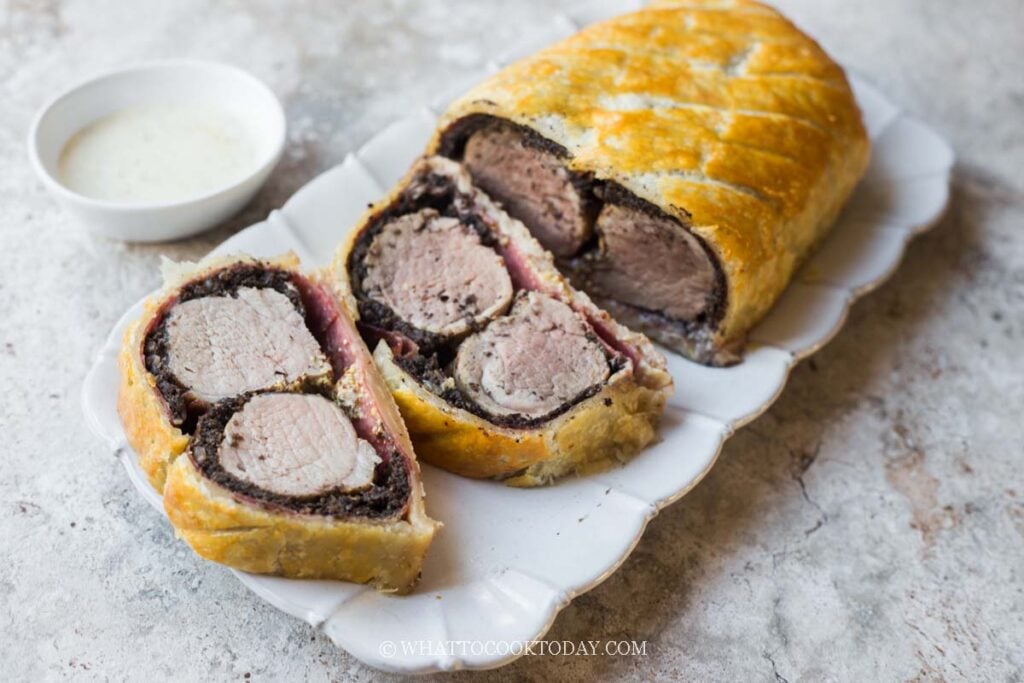
This Pork Wellington is proof that you don’t need an expensive cut of beef or a whole roasted turkey to make a memorable holiday centerpiece. The combination of tender pork, savory mushrooms, ham, buttery puff pastry, and creamy mustard sauce makes this a dish my family is always happy to see on the table!

Ingredients
Equipment
Method
- The pork tenderloin pack usually comes with 2 pieces, about 1 lb each. You can halve the recipe and make only one, or make two 1 lb pork wellington, or like me, use both 2 lbs pieces in the same wrap
- Season the pork with salt and pepper900 g pork tenderloin, Salt and pepper

- Heat a cast-iron pan or heavy-bottom pan with 2 Tbsp of oil over high heat. When you start seeing smoke to rise, place the pork on the pan undisturbed, for about 2-3 minutes per side. Make sure you sear all sides.2 Tbsp oil

- Remove from the pan onto a plate and let them rest and cool down completely. Combine the grain mustard with Dijon mustard and brush it on the seared pork pieces

- Place the mushrooms and peeled and quartered onion in a food processor and pulse a few times until they are finely chopped900 g mushrooms, 1 small onion
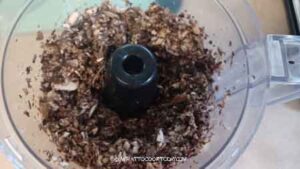
- Into the same pan that you use to sear the pork, add the mushroom mixture and saute them over medium heat until all moisture has evaporated.
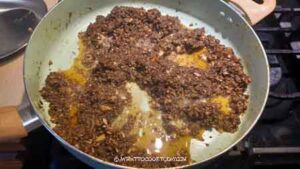
- You want to make sure the mushrooms are dry or they will make the pork wellington wet and the crust becomes soggy
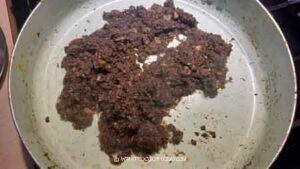
- If the puff pastry sheets are frozen, make sure you have thawed them overnight in the fridge or at room temperature until they can be unrolled without cracking them2 sheets puff pastry
- Roll out a large sheet of plastic wrap on a clean work surface. Lay out the slices of ham, overlapping to make sure the ham slices will cover the tenderloin when you bring both sides of the wrap together to cover the tenderloin when you position it in the center224 g thin slices of ham

- Place a piece of parchment on top and use a rolling pin to roll over it to flatten it so they stick better to the pork tenderloin later


- Spread the mushroom mixture evenly over the ham slices
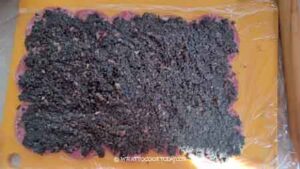
- Place the pork tenderloin in the center.

- Using the plastic wrap to help you, gently bring both sides over to cover the tenderloin.
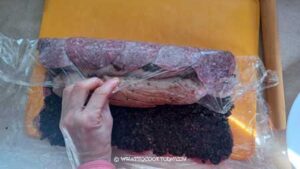
- Secure the plastic wrap tightly around it and place this in the fridge for at least 20 minutes to as long as overnight
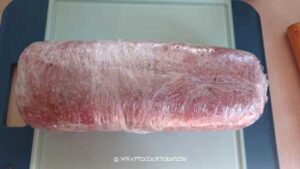
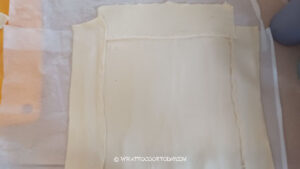
- Gently unroll the puff pastry sheets. I need to use two sheets to make sure they have about 13 x 15 inches rectangle to wrap around the tenderloin. I have to cut to size. Trim off any excess pastry if necessary
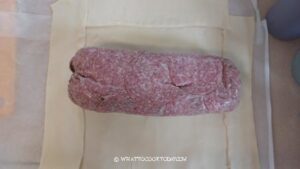
- Carefully remove the plastic wrap from the meat roll and place it in the center of the puff pastry.3 egg yolks
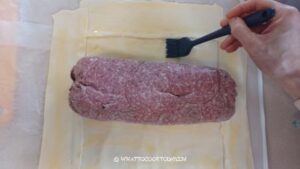
- Brush the puff pastry with egg yolk wash.
- Fold the bottom up and fold the top down.
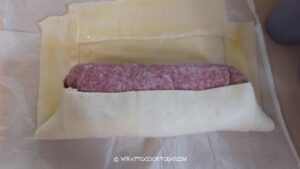
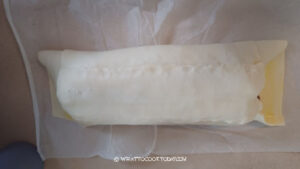
- Fold the two sides to enclose. Pinch the seams together to seal. Place the seam-side down on a large baking pan lined with parchment paper
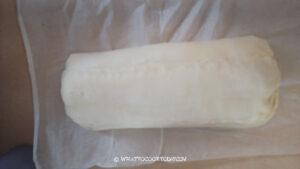
- Since the puff pastry has been thawed and worked on, to preserve the flaky layer, you want them cold. Put the assembled pork wellington on a baking pan lined with parchment paper and put this in the freezer for 30 minutes or in the fridge for 1 hour to firm them back up again
- While waiting, you can preheat the oven to 425 F (220 C). Position the oven rack at the center of the oven
- Remove from the fridge or freezer. For the best result, I highly recommend baking the pork on top of a cooling rack to prevent a soggy bottom. Place the rack on top of the baking pan, leave the parchment paper on the pan for easier clean up later. Transfer the pork onto the rack
- Brush the top of the pastry with the remaining egg yolk wash all over. Use a very sharp knife to make several diagonal slashes3 egg yolks
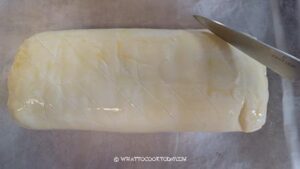
- Bake for 35-40 minutes or until a digital thermometer inserted into the meat portion registers 145 F (63 C)
- Whisk all the sauce ingredients in a saucepan. Cook over medium-low heat to bring it to a gentle simmer (don't hard boil it so the cream won't separate!). Cook until the sauce reduces slightly. It thickens as it cools down. Make the sauce ahead and keep it in the fridge for 2-3 days. Simply reheat gently on the pan before serving250 g heavy cream, 250 g chicken broth, 1 Tbsp Dijon mustard, 1 Tbsp grain mustard, Salt and pepper to taste
- Let the pork rest for at least 15 minutes before slicing it. Serve with the sauce