This post may contain affiliate links. Please read our disclosure policy.
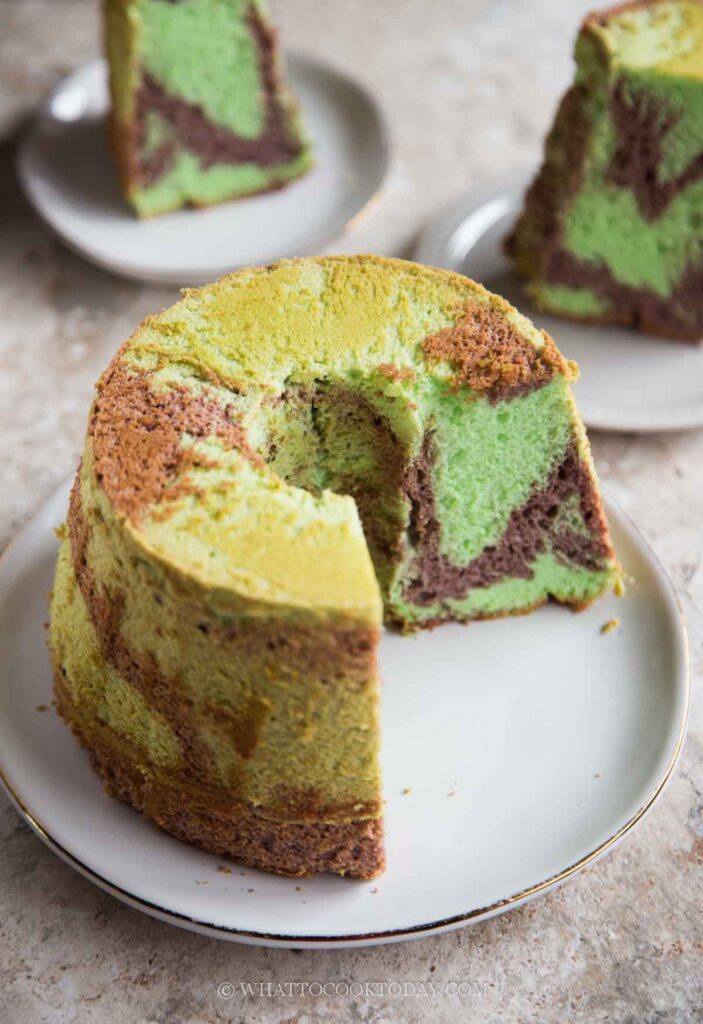
If you grew up in Southeast Asia, you probably know how nostalgic the combination of pandan and black glutinous rice is. These flavors show up in so many traditional desserts across Indonesia, Malaysia, and Singapore. Pandan is basically our version of vanilla — floral, sweet, and instantly comforting. Meanwhile, black glutinous rice (pulut hitam) brings this earthy aroma and subtle nuttiness that you simply can’t get from regular sticky rice. Put them together in a chiffon cake? Pure magic.
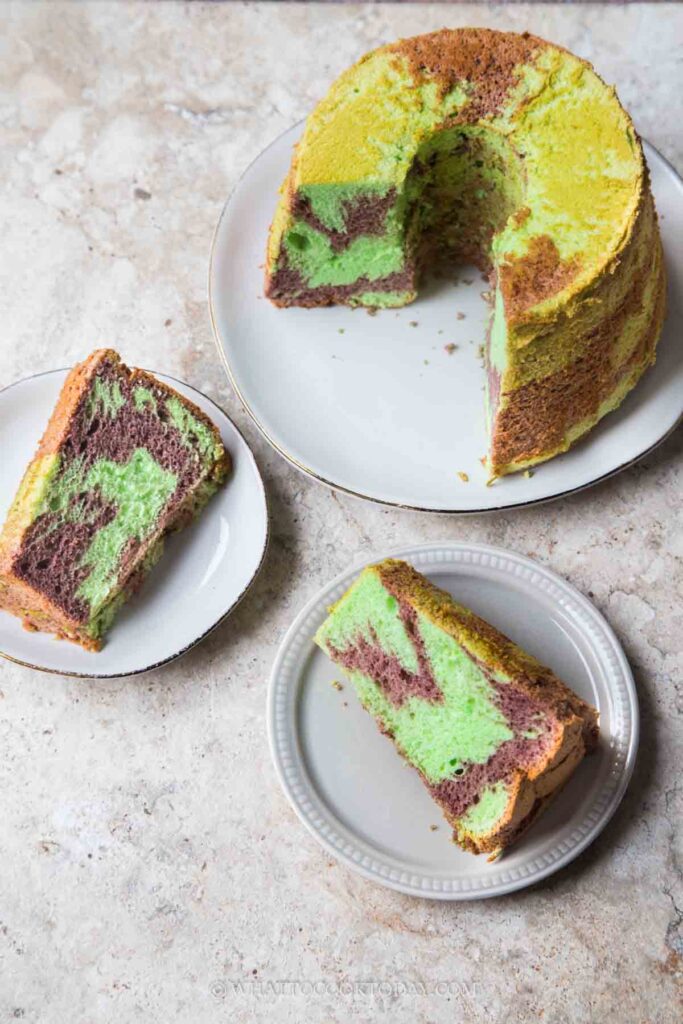
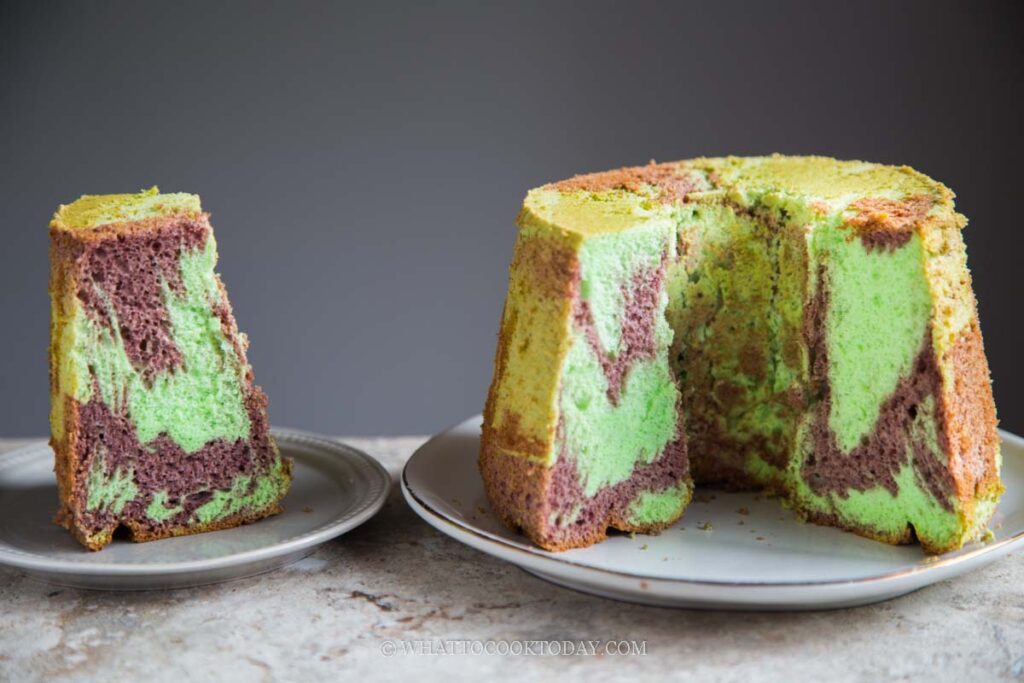
This marbled pandan and black glutinous rice chiffon cake is incredibly light, fluffy, and beautifully fragrant — but also visually stunning thanks to the natural dark purple hue from the pulut hitam flour. It’s a little extra work because you’re preparing two different batters, but the result is absolutely worth the effort.
Why You’ll Like This Recipe
- Classic Southeast Asian flavors – Pandan and pulut hitam are a beloved combo that instantly feels nostalgic and cozy.
- Ultra-soft and fluffy texture – The two batters create gorgeous marbling with that signature chiffon-style airy crumb.
- Natural colors and flavors – No artificial coloring needed; the purple tones come purely from black glutinous rice flour.
- Stays soft for days – This chiffon stays moist and tender without drying out.
- Great for special occasions – The marbled effect makes it look impressive even without frosting.
Ingredients and Substitutions
- Egg yolks & egg whites – Please weigh them for accuracy since egg sizes vary greatly. A slight difference is fine.
- Substitution: No substitute for chiffon-style texture.
- Oil – Helps keep the cake soft.
- Substitution: Any neutral oil like canola, vegetable, grapeseed.
- Canned coconut milk – Adds richness and Southeast Asian aroma.
- Substitution: Whole milk works, but flavor won’t be the same.
- Cake flour – Gives the chiffon its tender texture.
- Substitution: AP flour minus 1 Tbsp per 100 g.
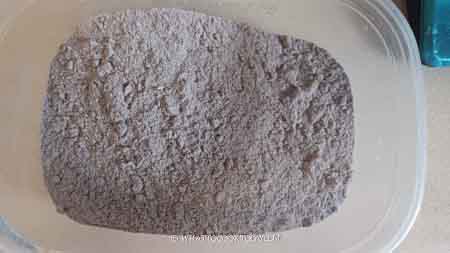
- Black glutinous rice flour – Adds flavor and color.
- Substitution: You can make your own (instructions below!).
- Sugar – Stabilizes the meringue and sweetens the cake.
- Salt & vinegar – Strengthen the egg white structure.
- Pandan essence – Gives that iconic flavor.
- Substitution: Real pandan juice if you have access.
How to Make Your Own Black Glutinous Rice Flour
If you can’t find premade black glutinous rice flour, you can absolutely make your own — and honestly it often tastes better because it’s freshly ground.
- Use raw black glutinous rice (pulut hitam) — not regular black rice.
- Rinse and dry (optional): If the rice looks dusty, rinse quickly and dry completely before blending.
- Blend: Add the rice to a high-speed blender and grind until it becomes a very fine powder.
- Sift: This is important. Sift the flour and return any gritty bits to the blender.
- Repeat until ultra-fine: The finer it is, the better your chiffon will rise and the more delicate the texture. The flour must be powdery and not sandy. Coarse flour will weigh down your cake.
Tips for Success
- Use an ungreased chiffon pan – The batter needs to cling to the sides to rise tall.
- Weigh your ingredients – Especially egg whites and yolks. This ensures consistent results.
- Don’t rush the meringue – Medium speed makes a finer, more stable meringue.
- Fold gently but confidently – Overfolding deflates the batter; underfolding leaves streaks.
- Make sure black glutinous rice flour is ultra-fine – Gritty flour will cause a dense cake.
- Avoid opening the oven too early – Wait until the last 10 minutes if you need to check.
- Invert immediately after baking – Prevents the cake from collapsing.
Troubleshooting
- Cake shrank badly after cooling
Usually underbaked or insufficient meringue stability. Bake longer next time. - Cake fell out of the pan while cooling
Most likely you underbake the cake and/or the pan may have non-stick coating. Use only ungreased aluminum chiffon pans. - Dense layer at the bottom
Meringue was not folded evenly or the flour was too coarse. - Big air pockets inside
Batter wasn’t properly released of bubbles. Drop the pan before baking and use a skewer to run through the batter to pop any large air bubbles trapped inside the batter. - Cake cracked on top
Totally normal for chiffon—this becomes the bottom.
Frequently Asked Questions
1. Can I use fresh pandan juice instead of pandan essence?
Yes! Use 1–2 tablespoons of concentrated pandan juice, but reduce coconut milk slightly to keep the consistency.
2. Can I bake this in a regular round pan?
No. Chiffon cakes need a tube pan for proper rise.
3. How do I know if my meringue is ready?
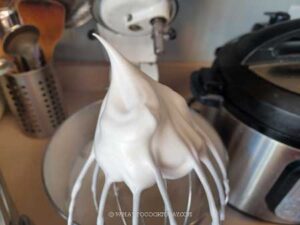
The peak should stand but bend slightly at the tip. It should look glossy and smooth.
4. Can I reduce the sugar?
Not recommended. Sugar stabilizes the meringue. Reducing it may cause the cake to collapse. This recipe is not overly sweet
This pandan pulut hitam chiffon cake is everything I love about Southeast Asian flavors — fragrant, nostalgic, soft, and incredibly comforting. The two-tone marbling also makes it a showstopper without needing any decoration at all. If you’ve never baked with black glutinous rice flour before, you’re in for such a treat. And once you make it from scratch, it’s hard to go back!
Marbled Pandan and Black Glutinous Rice and Chiffon Cake
Ingredients
For pandan rice batter:
- 40 egg yolks from 2 egg yolks
- 25 g oil
- 42 g canned coconut milk
- 45 g cake flour
For black glutinous rice batter:
- 40 g egg yolks from 2 egg yolks
- 25 g oil
- 42 g canned coconut milk
- 20 g cake flour
- 35 g black glutinous rice flour
For meringue:
- 120 g egg whites from 4 egg whites
- 80 g sugar
- ½ tsp salt
- ½ tsp vinegar
Instructions
- Make sure your chiffon cake pan does not have a non-stick coating or your cake will not rise. The cake needs to cling to the side of the pan to rise tall
- I strongly suggest weighing the ingredients including the egg yolks and the whites because the size of the eggs may vary. If the eggs are off by a few grams, it's not really a big deal
- Get the eggs out of the fridge and separate them when they are still cold. They are easier to separate when they are cold. Let the yolks and the whites come to a room temperature, this may take about 30 minutes or so
- Preheat the oven to 330 F (165 C) for conventional oven, 310 F (150 C) for convection oven
Prepare two cake batter:
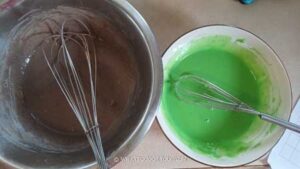
- You will need two different mixing bowls, one for the pandan batter and the other one for the glutinous rice batter
- Whisk egg yolks, oil, coconut milk, pandan essence until well-combined. Then add cake flour and whisk again until they are well-combined
- Do the same for the other batter by combining egg yolks, oil, and coconut milk, pandan essence, and whisk until combined. Then add cake flour and whisk again until they are well-combined
Whipping the meringue:
- I weigh the mixing bowl that I'm going to use to beat the egg white. This way I know how much whipped egg white I'm going to put in each of the batter later
- Beat the egg whites on medium speed until frothy, add cream of tartar or lemon juice/vinegar and whip until it turns whitish and air bubbles are fine. Gradually add the sugar as you beat, in 3 batches. I beat them at medium speed (speed 6 on Kitchen Aid). This will take a bit longer compared to beating at high speed. I used to do higher speed (speed 8), but the meringue is smoother and nicer when I maintain the speed on 6 and much more stable too. I highly recommend stopping several times to check on the consistency and scraping the sides of the bowl to make sure no sugar left on the side of the bowl. Whip until you reach a stiff peak but still have a slight bent on the tip. Then lower the speed to 4 and whip for 1 minute to even out large bubbles and stop beating
- Weigh the bowl with the meringue in it and then subtract the weight of the bowl. The weight you get now is just the meringue. You can now divide equally by weight into two, one for the black glutinous rice batter and the other for the pandan batter
- Gently fold 1/3 of the meringue into the thick batter. Using a whisk, using a cutting motion and fold over to mix. Repeat this motion several rounds. Continue on with the second 1/3 of the meringue again to mix.
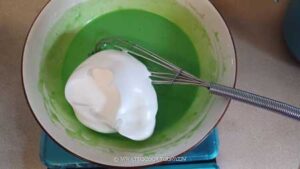
- For the last 1/3 of the meringue, use a rubber spatula instead to ensure you get all the batter at the bottom of the bowl mixed in as well. Use a cut down in the middle and fold over motion to fold gently but quickly.
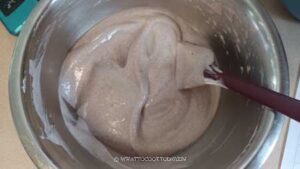
- Make sure you don't see any more white meringue. The mixture should be fluffy and voluminous.
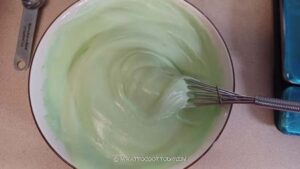
- Repeat with the other batter and meringue
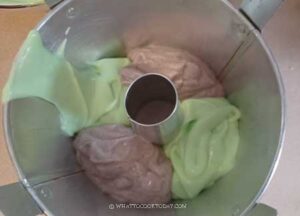
- Pour 1/3 of black glutinous rice batter into an UNGREASED chiffon tube pan, then alternate with the pandan batter and so on until you run out of both
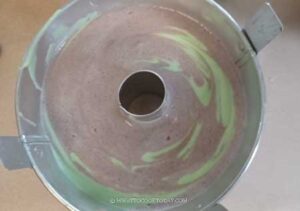
- Use a skewer to draw a zig zag to pop bubbles inside the cake batter. Gently drop the cake pan from about 10 cm height on the counter 2-3 times.
Baking:
- Put the chiffon pan in the middle rack and let it bake for 50-55 minutes. The time is just for a reference. Your oven may need less or more time to bake
Test for doneness:
- I know this is weird to say, but it's actually "safer" to overbake chiffon cake than underbaking. Underbaking tends to cause the cake to collapse. Usually if you insert a skewer inside the cake and no crumbs stick to it or very minimal crumbs, it is safe to say that the cake is cooked through. You can also touch the top and if it springs back, it's a good sign that it's cooked through. I like to have some golden brown on top. I don't know if you notice, but when the cake has a golden brown color on top, it's actually more flavorful too than when the cake is pale in color
- Don't be alarmed if your cake has some cracks on top. What you are looking at will become the bottom of your cake. I know many people mind it a lot and make a big fuss when the top of the chiffon cake cracks, but actually it's not a flaw.
Cooling:
- Drop the cake pan from about 10 cm height on the counter several times to prevent shrinkage when you pull the cake out of the oven. Then carefully invert the pan upside down immediately. Please don't be tempted to remove it from the pan if it's still warm. It takes a few hours to cool down completely
- Once it's cool down completely, use a spatula knife to run through the edge and the outer center of the tube to help release the cake. Gently push the base to lift the cake out. Use the knife again to run through the base of the pan and then carefully release the cake.
- I suggest that you wait for 24 hours before serving the cake (if you can wait). The flavor always gets better the next day compared to when you serve it on the same day
Storage:
- Let the cake cool down completely. Store the cake in an air-tight container for up to 3 days at room temperature.
