This post may contain affiliate links. Please read our disclosure policy.
Learn how to make homemade preserved lemons and preserved lemon paste with this easy step-by-step recipe. Discover the history of preserved lemons, how to use them in savory and sweet recipes, plus all the best tips for success.

If there’s one kitchen project I wish I had started years ago, it’s definitely preserved lemons. I kept seeing jars of them at the store and noticed them popping up over and over again in Middle Eastern and North African cookbooks. After finally making them myself, I totally understand the obsession now.
Preserved lemons have this magical ability to make food taste brighter, deeper, saltier, and somehow more complex all at the same time. The rind becomes soft and intensely fragrant while the brine develops this bold citrusy savoriness that can completely transform a dish.
And honestly? They’re not just for savory cooking either. I’ve been experimenting with preserved lemon in baking and desserts and I’m hooked. I love that balance of sweet and salty in baked goods, and preserved lemons fit right in. They add this incredible citrus zing with just enough briny depth to make people stop and wonder what makes something taste so good.
I adapted this recipe from Ottolenghi: The Cookbook by Yotam Ottolenghi with a few tweaks of my own. I also turn mine into a preserved lemon paste inspired by Samin Nosrat and her cookbook Good Things because it’s just so convenient to use.
The best part? This project is actually very easy. It requires more patience than anything else.
What Are Preserved Lemons?
Preserved lemons are whole lemons cured in salt and their own juices over several weeks. Over time, the peel softens and loses its bitterness while becoming intensely flavorful, aromatic, salty, and almost floral.
The rind is the prized part because that’s where most of the flavor lives after curing. The pulp can be used too, depending on the recipe and your preference.
They are commonly used in Moroccan, Middle Eastern, Mediterranean, and North African cooking, especially in tagines, stews, salads, grain dishes, and sauces.
But once you start experimenting, you’ll realize they can go far beyond savory recipes.
A Little History Behind Preserved Lemons
Preserving citrus with salt goes back centuries and was originally a practical way to extend the life of lemons before refrigeration existed. In Morocco, especially, preserved lemons became an essential pantry ingredient and are now deeply woven into traditional cooking. They’re most famously used in Moroccan chicken tagines, where the preserved lemon adds brightness and depth that fresh lemon juice simply cannot replicate.
Over time, preserved lemons spread across Middle Eastern and Mediterranean cuisines and eventually became popular worldwide thanks to chefs and cookbook authors introducing them to home cooks.
Now they’re showing up everywhere—from pasta and roasted vegetables to cakes, cookies, salad dressings, and cocktails.

Why You’ll Like This Recipe
- The flavor is incredibly complex—bright, salty, floral, and deeply citrusy.
- It’s surprisingly easy to make with just lemons and salt.
- Most of the process is passive time.
- You can use preserved lemons in both savory and sweet recipes.
- Turning them into a paste makes them super convenient to use.
- They last a long time in the fridge.
- This is a great way to preserve seasonal lemons.
Ingredients and Substitutions
- Lemons – Organic unwaxed lemons are best because you’ll be eating the rind. Meyer lemons also work and produce a slightly sweeter, more floral flavor.
- Flaky sea salt – Use a good-quality sea salt without anti-caking agents. Kosher salt also works well. Avoid iodized table salt because it can create an unpleasant flavor.
- Black peppercorns – Completely optional but they add subtle warmth and complexity.
- Bay leaves – Optional, but they add an herbal note to the brine.
How To Tell When Preserved Lemons Are Ready
- The rind feels soft and tender
This is the biggest indicator. The peel should no longer feel firm like a fresh lemon. You should be able to pierce or cut through the rind easily without resistance. - The lemons look slightly translucent
The rind changes from a bright, opaque yellow to a softer, slightly translucent appearance as the salt and juice cure the peel. - The aroma changes dramatically
Instead of smelling like fresh lemon juice, the jar smells deeply citrusy, floral, salty, and almost mellow or jammy. - The bitterness mellows out
Fresh lemon peel can be quite bitter. Properly cured preserved lemons lose most of that harsh bitterness. - The brine becomes cloudy and flavorful
The liquid usually becomes more concentrated and aromatic over time. Slight cloudiness is normal. - The lemons release more juice over time
As they cure, the lemons soften and collapse slightly into the brine.
Useful Tips Before You Start
1. Use unwaxed lemons if possible
Since the peel is the main part you’ll be eating, unwaxed organic lemons are ideal. If you can only find waxed lemons, scrub them thoroughly with hot water first.
2. Don’t skip sterilizing the jar
A clean sterilized jar helps prevent mold and unwanted bacteria.
3. Pack the lemons tightly
The tighter they are packed, the more juice they release naturally.
4. Keep the lemons submerged
This is probably the most important tip. Any exposed lemon can develop mold. Push them down occasionally and add extra lemon juice if needed.
5. Be patient
The flavor improves dramatically over time. They’re technically usable after about 4 weeks, but I personally love them after 8 weeks.
6. Use clean utensils every time
Always use clean tongs or spoons when removing preserved lemons from the jar.
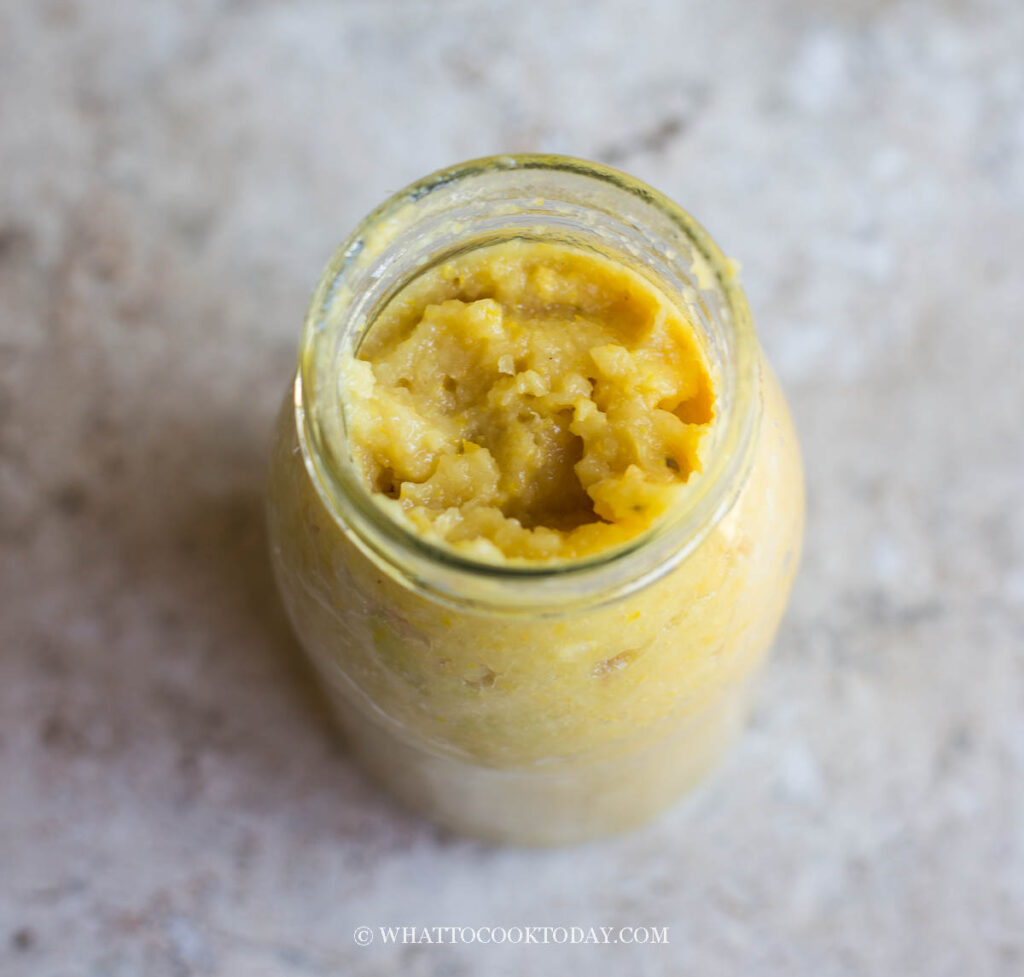
How To Make Preserved Lemon Paste/Puree
You can absolutely keep the preserved lemons whole, but I personally love turning them into a paste because it’s easier to stir into recipes.
1. Remove the preserved lemons from the jar using clean tongs or utensils.
2. Remove any seeds.
3. You can scrape away the pulp or keep it. I keep the pulp because I hate wasting anything if I don’t have to LOL.
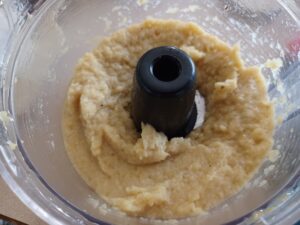
4. Place the preserved lemons into a blender or food processor.
5. Add a little brine, about 1 tablespoon at a time, until you get a smooth paste consistency.
Transfer to a clean jar and refrigerate.

How Preserved Lemons Taste
If you’ve never had preserved lemons before, the flavor can be hard to describe. They don’t taste like regular fresh lemons. They’re salty, intensely citrusy, slightly fermented, mellowed out, and deeply aromatic. The bitterness disappears over time while the peel becomes soft and almost silky. A tiny amount goes a long way.
Common Problems and Troubleshooting
- White film on top
A harmless white film can occasionally form. This is usually normal fermentation yeast and not mold. Simply remove it. - Mold growth
If you see fuzzy mold or anything brightly colored, discard the batch. Mold usually happens when lemons are exposed above the liquid. - Not enough juice
Some lemons are juicier than others. Add extra fresh lemon juice if needed to fully submerge the lemons. - Bitter flavor
Bitterness mellows significantly over time. Give them more time to cure.
How To Use Preserved Lemons
1. Savory applications
Moroccan tagines and stews, Pasta dishes, Salad dressings and vinaigrettes, Roasted vegetables, Grilled chicken or seafood, Grain bowls and couscous, Hummus and dips, Compound butter, Yogurt sauces, Rice dishes
2. Sweet applications
The salty-briny note works especially well when paired with honey, vanilla, olive oil, pistachios, almonds, and dark chocolate.
They are great in Lemon cakes and loaf cakes, Shortbread cookies, Citrus curds, Cheesecake, Ice cream or gelato, Whipped cream flavoring, Marmalade-inspired desserts, Sweet breads and buns.
Frequently Asked Questions
- Can I use regular table salt?
I don’t recommend it because iodized salt can affect the flavor and texture. - Can I use Meyer lemons?
Absolutely. They create a slightly sweeter and more floral preserved lemon. - Do preserved lemons taste very salty?
Yes, but the saltiness balances beautifully with the citrus flavor. A little goes a long way. - Can I store them at room temperature the whole time?
I prefer refrigerating after the initial room-temperature curing period for safety and flavor consistency. - Do I eat the peel or the pulp?
Traditionally the peel is mainly used, but the pulp can also be used depending on the recipe. - Can I freeze preserved lemon paste?
Yes. Freeze small portions for convenience.
Once you make preserved lemons at home, it’s hard to go back. The flavor is so much more vibrant and complex than store-bought versions, and there’s something really satisfying about opening that jar weeks later and tasting how dramatically the lemons have transformed. I honestly find myself adding preserved lemon paste into everything these days—from roasted vegetables and pasta to cakes and whipped cream. That salty-citrusy punch is incredibly addictive.
And if you’re anything like me, you may eventually start wanting to preserve lemon everything too LOL!
How To Make Preserved Lemons and Preserved Lemon Paste
Ingredients
- 12 lemons divided, organic unwaxed if possible
- 6 Tbsp flaky sea salt
- ½ tsp black peppercorns optional
- 4 bay leaves optional
Instructions
Sterilize the jar the day before:
- Get a large jar with a wide-mouth that can fit in 6 large whole lemons. I use a 64-oz wide-mouth canning jars
- Boil a large pot of water to a rolling boil. To safely pour the boiling water into the jar without burning myself, I pour some of the hot water into a heat-proof measuring cup with a spout and then pour into the jar. Repeat this process to fill the jar up with boiling water all the way to the top. I leave it for 5 minutes after that. We are sterilizing the jar.

- Then carefully pour the water out to discard. Don't wipe it dry because you are introducing germs again to the jar. Let the jar air dry naturally in a cool, dry place and a place you know your kids or family member won't be touching the jar
Prepare the lemons:
- We will preserve 6 lemons and juice the other 6 lemons one week later. Wash the lemons and pat them really dry.6 lemons

Preserving the lemons:
- Cut a deep cross from the top all the way to about an inch from the base of the lemon. So the lemons are cut into quarters, but still attached at the base if that's making sense. Spoon 1 Tbsp of the flaky sea salt into each of the lemon.

- Carefully place each lemon inside the sterilized jar. Packing them in tightly. Cover the mouth of the jar with cling wrap and then seal the jar with the lid. This is to prevent the lid from rusting. Leave it at room temperature for one week. My room temperature is about 70 F (21 C)6 Tbsp flaky sea salt

After one week:
- I like to zest the 6 lemons that I'm going to juice and save the zest for other uses (like in baking or cooking). I wrap it in cling wrap and freeze the zest. Then juice the 6 lemons6 lemons
- After one week, open the lid and use a clean long wooden spatula or any utensil to push on the lemons. This will squeeze out some juice from the lemons. Push as hard as you can. Pour the lemon juice you just squeeze earlier. Make sure they are submerged in the juice. You may need more than 6 lemons to get enough juice.1/2 tsp black peppercorns, 4 bay leaves

- Add the peppercorns and bay leaves. Push them into the juice. Close the lid again and this time leave it in the fridge for at least 4 weeks.

- The longer you leave them, the better and stronger the flavor is going to be. I leave them for a total of 8 weeks in the fridge. During that time you can always open the lid and push the lemons into the juice to make sure they are submerged. The preserved lemons will also release more juice as time passes. Add more lemon juice if needed to make sure they are always submerged in the juice
Store in the fridge:
- The preserved lemon can be kept in the fridge for 6 months
How to make preserved lemon paste:
- You can keep your preserved lemon in whole pieces as is. I like to turn them into a paste because it is convenient to use.
- Simply remove the lemon from the jar using clean utensils or tongs. You can scrape off the lemon pulps or keep them. I've seen people do both. The flavor is actually on the rind. But I choose to keep the pulp (I hate throwing things away if I don't have to LOL). Remove any seeds

- Place the preserved lemons into a blender. You will need to add some of the brine to help things go, about 1 tablespoon at a time until you reach a smooth puree consistency. Transfer this to a clean jar and store in the fridge for up to 6 months (some people managed to keep it for 2 years!)