This post may contain affiliate links. Please read our disclosure policy.
Gochujang caramel cookies with crisp chewy edges, soft center, and a hint of spice. A unique sweet-salty dessert with rich umami flavor.
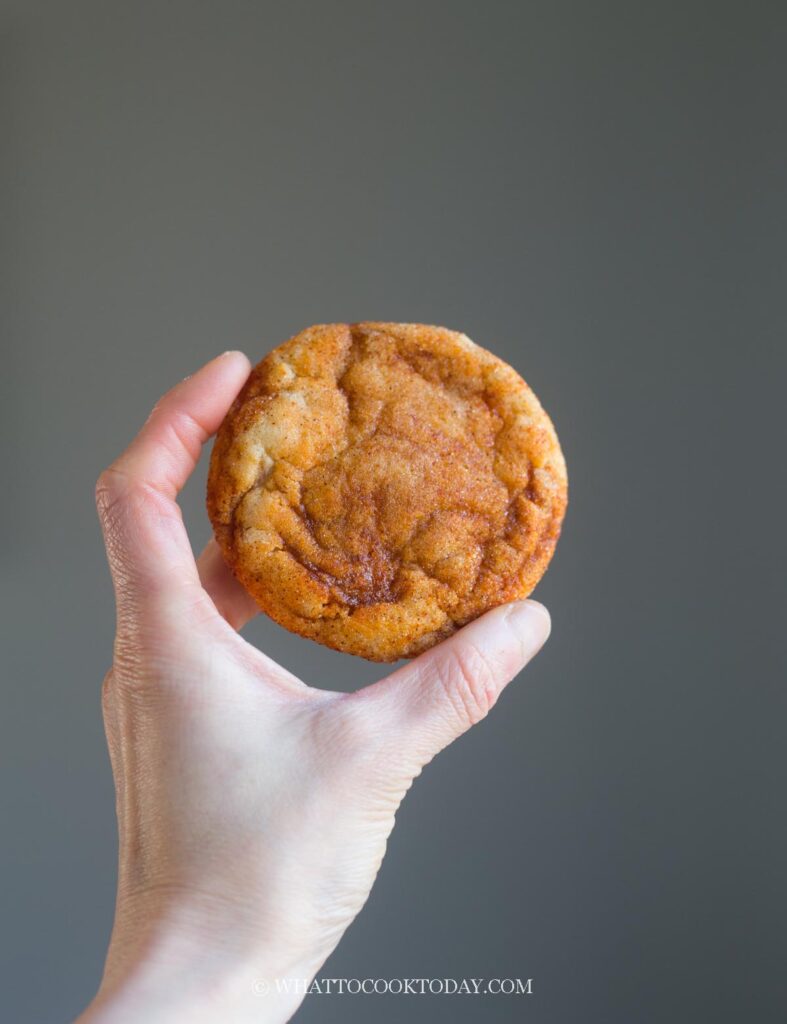
I’ve been eyeing the viral NYT gochujang caramel cookies by Eric Kim for a while now, but never got around to trying them…until now. And of course, I couldn’t help myself—I tweaked it a little (okay, a fair bit 😄).
If you’ve ever used miso in sweets or even soy sauce in cookies (yes, I’ve done that and it was SO good), then this won’t feel strange at all. Gochujang adds this deep, slightly spicy, salty-sweet umami flavor that works. These cookies are everything I want in a cookie: crisp edges, chewy centers, and just enough kick to keep things interesting.
What Is Gochujang?
Gochujang is a Korean fermented chili paste made from red chili powder (gochugaru), glutinous rice, fermented soybeans, and salt. It’s thick, sticky, and packed with flavor—sweet, savory, spicy, and deeply umami all at once.
It’s commonly used in Korean cooking (like bibimbap or tteokbokki), but it has quietly made its way into desserts because of that complex flavor. Think of it like miso—unexpected in sweets, but surprisingly delicious.
Why You’ll Like This Recipe
- Perfect texture – crisp edges with a soft, slightly chewy center
- Unique flavor – sweet, salty, spicy, and umami all in one bite
- Not overly spicy – just a gentle warmth, not heat overload
- Balanced spread – cookies hold their shape and don’t turn thin
- Make-ahead friendly – dough freezes beautifully
How This Differs From the NYT Version
I made a few intentional tweaks based on reviews and my own preferences:
1. Uses less egg → helps control spread and improves texture
2. More gochujang paste → deeper flavor and more noticeable contrast
3. Added baking powder → gives a bit more lift and softness
4. Includes a spiced sugar topping (with gochugaru + cinnamon)
5. Chilling the dough is non-negotiable → prevents overspreading
THE RESULT? A slightly thicker cookie with better structure and a more pronounced flavor.
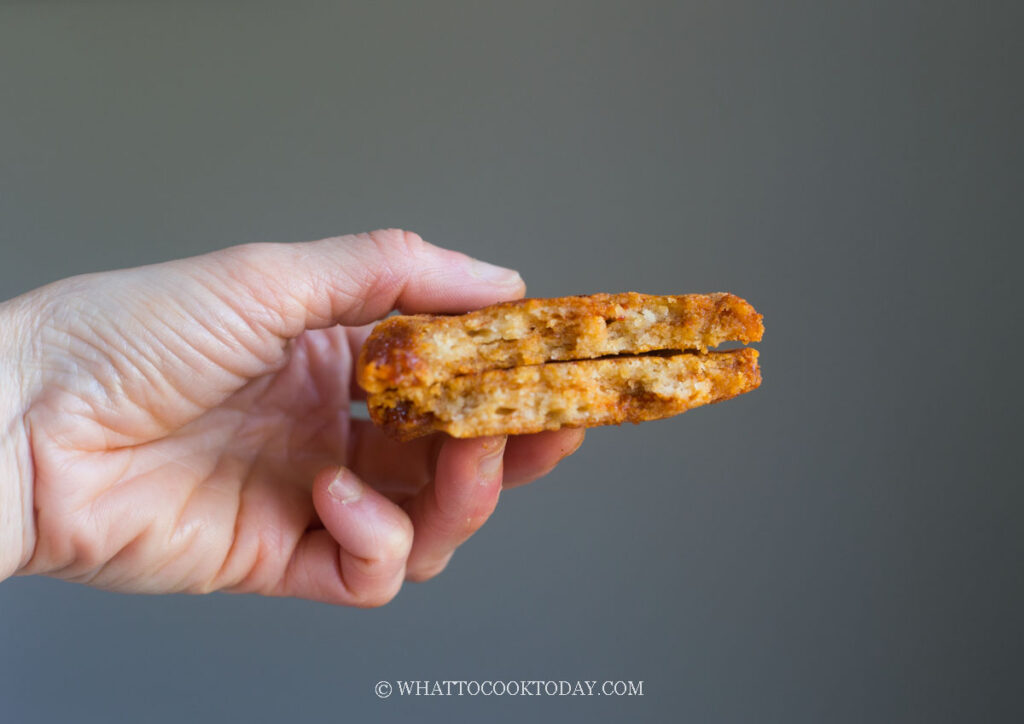
Ingredients and Substitutions
- Gochujang paste – use a thick Korean-style paste (not runny)
- Brown sugar – light or dark brown sugar works. Dark brown sugar gives a bit more intense molasses flavor
- Unsalted butter – soften before using
- Granulated sugar – I don’t recommend any substitutions
- Egg – you’ll use half; save the rest for something else
- Vanilla extract
- All-purpose flour – I haven’t tried with any other flour
- Baking powder – I don’t recommend any substitution
- Baking soda – I don’t recommend any substitution
- Salt – you can use fine sea salt or table salt
- Ground cinnamon
- Gochugaru – optional but recommended for topping
What to Serve This With
- Hot coffee or espresso
- Black tea or milk tea
- Vanilla ice cream (SO good together)
- A glass of cold milk
Storage & Reheating
- Store in an airtight container at room temperature for 2–3 days
- Freeze baked cookies for up to 1 month (wrap individually)
- To serve, thaw at room temp or warm briefly in the oven
Frequently Asked Questions
- Will the cookies be very spicy?
Nope! Just a mild warmth. You can skip gochugaru if sensitive to spice. - Why did my cookies spread too much?
Most likely the gochujang was too thin or the dough wasn’t chilled enough. - Can I freeze the dough?
Yes! Freeze shaped dough and bake straight from frozen (add 1–2 minutes). - Can I use the whole egg instead of half?
I tweaked the recipe to use only 1/2 egg. If you use whole egg, the cookies most likely will spread more - Do I have to swirl the gochujang paste?
I highly recommend it—it gives you little pockets of flavor instead of a uniform taste.
I love recipes like this that challenge what we think belongs in dessert. Gochujang might sound unusual in cookies, but once you try it, it just makes sense. These are bold, a little unexpected, and honestly pretty addictive. If you enjoy sweet and salty desserts with a twist, this one is definitely worth making.
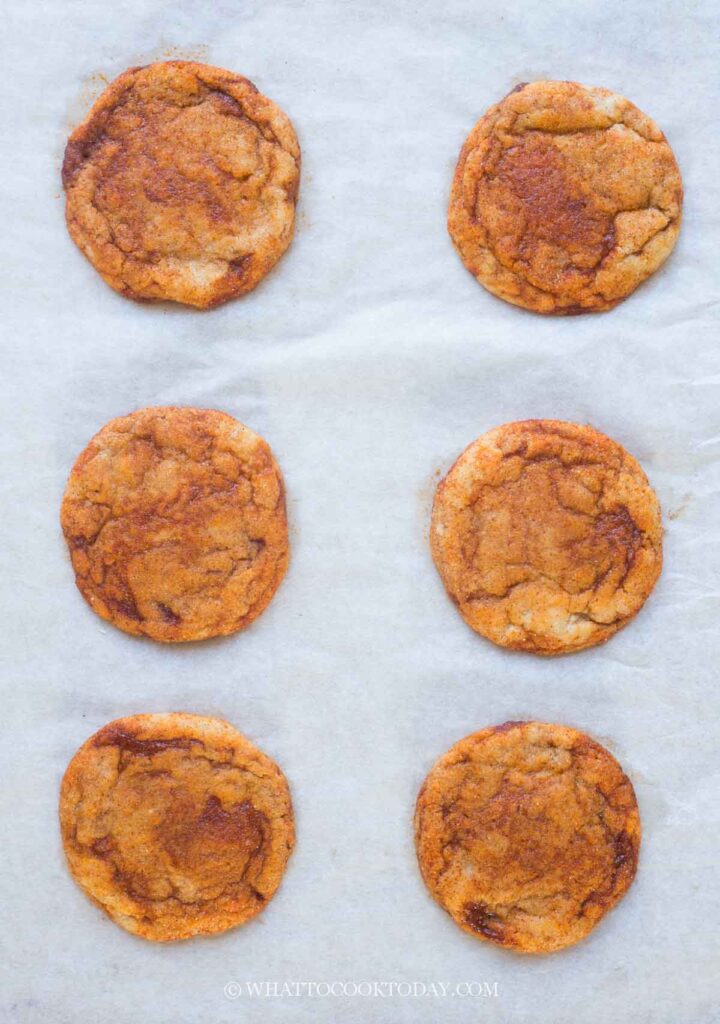
Gochujang Caramel Cookies
Ingredients
Gochujang caramel paste:
- 40 g gochujang paste
- 30 g brown sugar light or dark brown works
- 15 g unsalted butter softened
Cookie dough:
- 113 g unsalted butter softened
- 100 g sugar
- 25 g egg 1/2 of large-size egg
- 1 tsp vanilla extract
Dry ingredients:
- 172 g all-purpose flour
- ½ tsp baking powder
- ½ tsp baking soda
- ¼ tsp salt
- ¼ tsp ground cinnamon
Topping:
- 2 Tbsp sugar
- ½ tsp gochugaru optional, but add a nice kick
- ½ tsp ground cinnamon
Instructions
- This recipe makes 10 medium-sized cookies. It has a unique taste (in a good way IMHO!) , and I make it in a small batch just in case you want to try it out before committing to 2-3 dozen of cookies. The recipe can be easily scaled up if you find yourself enjoying it.
- Line two large baking sheets with parchment paper and set aside
Prepare the gochujang sugar paste:
- Combine the soft butter, brown sugar, and gochujang paste in a bowl. Mix until thoroughly combined. The mixture will be thick. Set aside40 g gochujang paste, 30 g brown sugar, 15 g unsalted butter
Prepare the topping:
- Combine sugar, gochugaru, and ground cinnamon in a small bowl and set aside2 Tbsp sugar, 1/2 tsp gochugaru, 1/2 tsp ground cinnamon
Prepare the cookie dough:
- Combine the flour, baking powder, baking soda, salt, and cinnamon in a bowl and set aside172 g all-purpose flour, 1/2 tsp baking powder, 1/2 tsp baking soda, 1/4 tsp salt, 1/4 tsp ground cinnamon
- Crack the egg in a bowl and beat it with a fork. I know it's a pain to use only 1/2 egg, but you can save the other 1/2 for egg wash, or add it into your morning breakfast egg, etc. Don't throw it away for sure! Measure out 25 grams (or about 1/8 cup) of the egg for the recipe25 g egg
- In a mixing bowl, add soft butter and sugar. I use a stand mixer and use a paddle attachment to beat the butter and sugar on high speed until creamy, about 2-3 minutes. Scrape the sides of the bowl113 g unsalted butter, 100 g sugar
- Then add the egg and vanilla extract. Continue to beat for another minute and don't forget to scrape the sides of the bowl1 tsp vanilla extract
- Add the flour mixture and continue to mix until just combined
Combine with the gochujang sugar paste:
- Dollop the gochujang sugar paste on the cookie dough in several different spots
- Use a butter knife to mix them into the dough. Turn the dough over a few times to make sure the paste is distributed throughout the dough, but not thoroughly mixed into the dough. Sort of like a "swirled" effect on the dough, if that makes sense
Shaping:
- The dough should be pretty easy to work with. If it's too sticky, you can chill it in the fridge for 15-20 minutes before shaping. Scoop about 48 grams (about 3 Tbsp) of cookie dough using a spoon and roll it into a round dough ball
- Roll the dough ball into the topping you prepared earlier. Place the cookie dough on the prepared baking sheet, about 3 inches apart. So about 6 cookie dough per baking sheet is ideal. Flatten the dough slightly with your palm
Chill the dough: (do not skip)
- Place the baking sheet into the fridge and chill for at least 1 hour, or at least 30 minutes if in the freezer
- You can prepare up to this point and freeze the unbaked dough to be baked later too
Baking:
- 10 minutes before the end of the chilling time, preheat the oven to 350 F (180 C) for conventional oven and 330 F (165 C) for a convection oven. Position the oven rack in the middle
- I bake one tray at a time for the best results
- Place the baking pan in the preheated oven and bake for 12-13 minutes. The cookies will spread. The edges should be firm but the center is soft and puffy. My oven takes about 13 minutes
- If the dough has been kept frozen for a few hours or longer, you may need to add 1-2 minutes to the baking time
Cooling:
- Remove from the oven and set the pan on a cooling rack. Let the cookies cool down for 5 minutes on the pan. The cookies will flatten slightly as they cool down. Transfer to a cooling rack and let them cool down completely
Storage:
- Once the cookies have cooled down completely, store them in an air-tight container for 2-3 days at room temperature
- The baked cookies can also be kept frozen. Wrap each one well with a cling wrap and put them inside a freezer bag and they can be kept frozen for up to 1 month. Simply thaw at room temperature before serving
