This post may contain affiliate links. Please read our disclosure policy.
Soft and jiggly ongol ongol hunkwe made with mung bean starch, coconut milk, and palm sugar, then coated in savory steamed coconut. This traditional Indonesian kue is naturally gluten-free and easy to make.
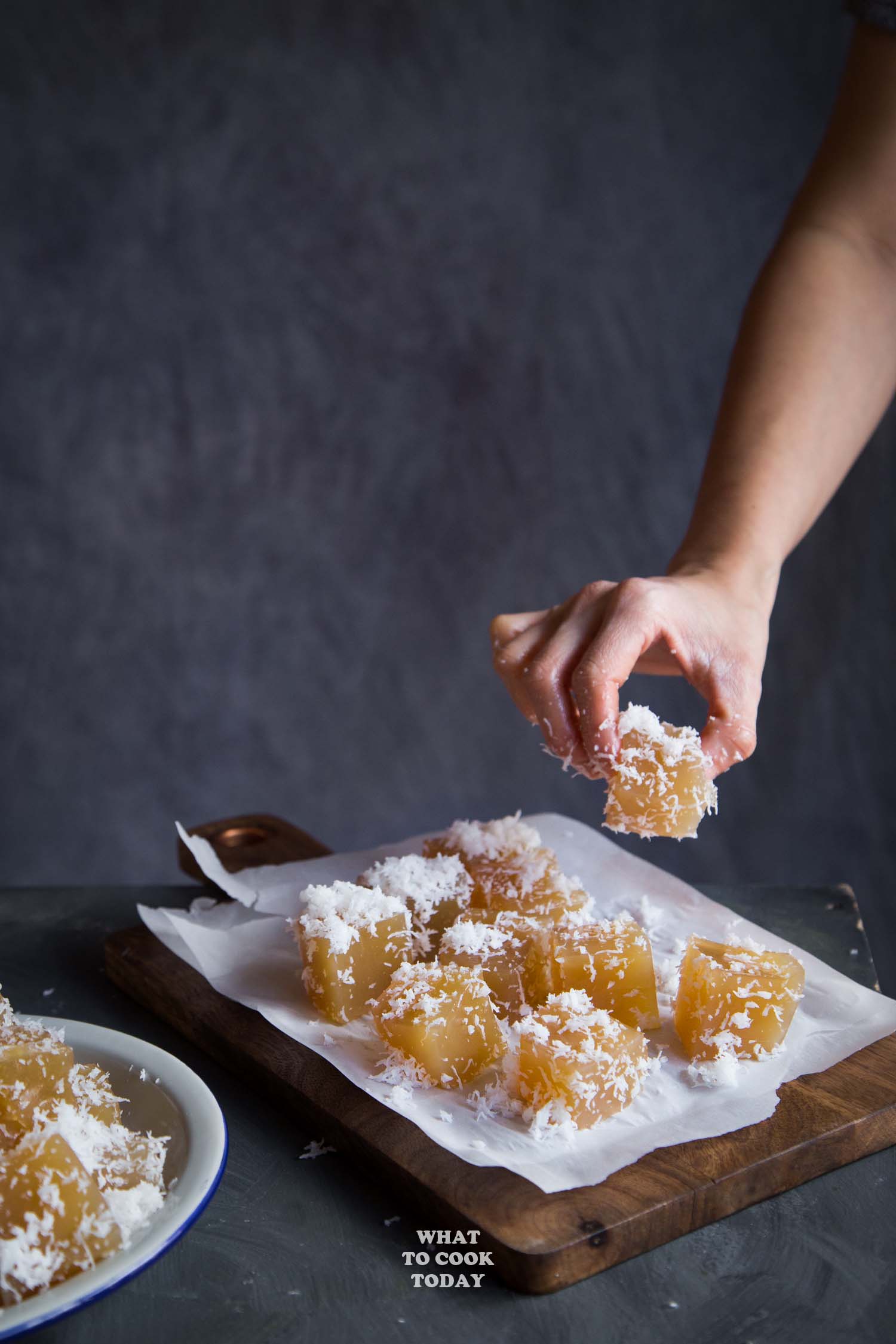
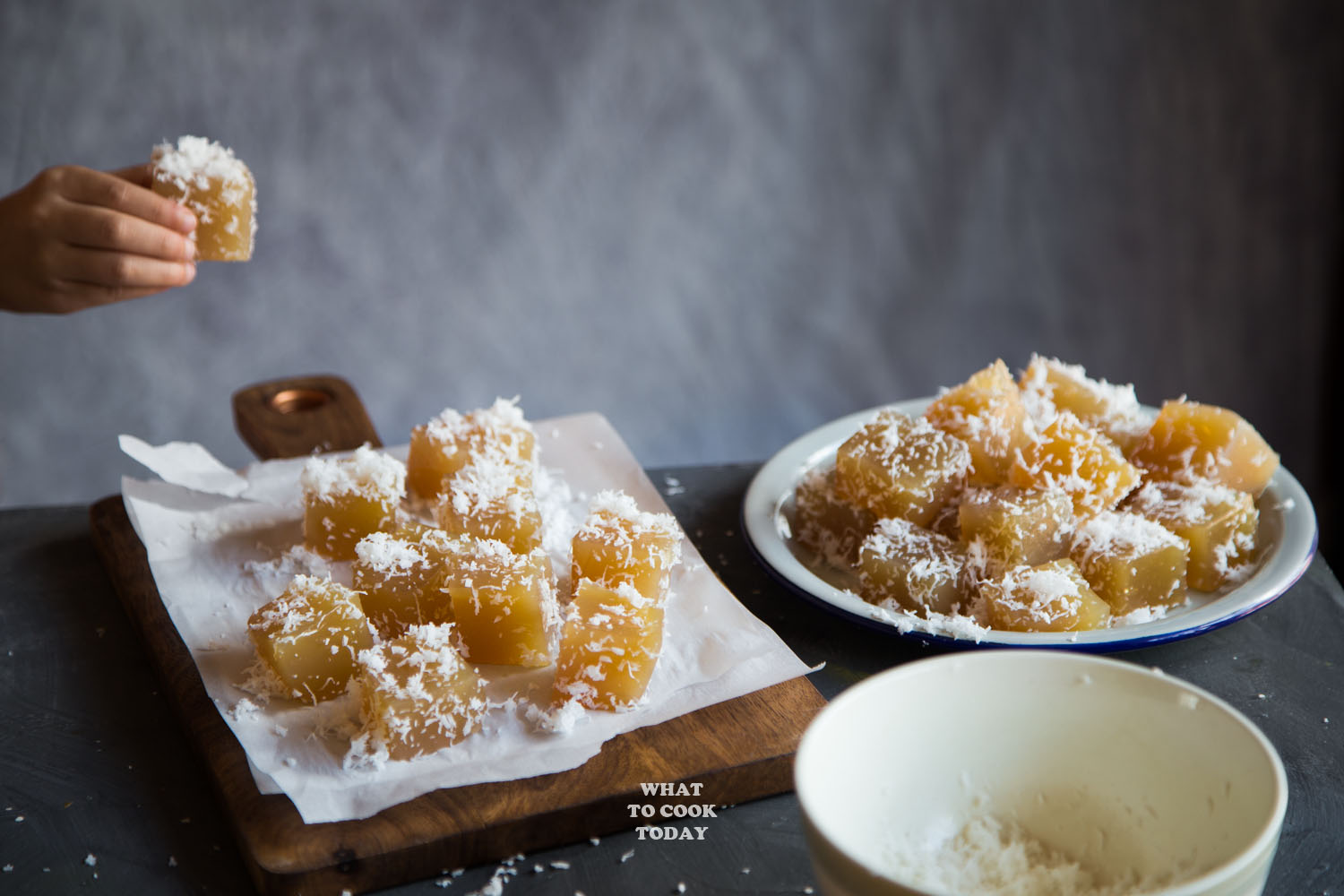
Soft, jiggly, lightly sweet, and coated in savory steamed coconut, ongol ongol hunkwe is one of those nostalgic Indonesian snacks I never get tired of. This traditional kue is made with mung bean starch (tepung hunkwe), coconut milk, and palm sugar, giving it a wonderfully bouncy texture and rich caramel-like flavor. It’s naturally gluten-free, dairy-free, and surprisingly easy to make at home. Growing up, this was one of those simple market snacks we would happily eat with afternoon tea or coffee. I love how humble the ingredients are, yet the texture and flavor are so satisfying. The soft and slightly chewy cake paired with the salty coconut topping is just so good.
If you enjoy traditional Indonesian kue with coconut and palm sugar flavors, this one deserves a spot on your list.
What Is Ongol Ongol Hunkwe?
Ongol ongol is a traditional Indonesian kue (snack cake). There are different regional versions, but this particular version uses tepung hunkwe, or mung bean starch. The cooked batter sets into a soft, jelly-like cake that is cut into pieces and rolled in freshly steamed grated coconut.
The flavor is mild and fragrant with notes of coconut and caramel from palm sugar. The grated coconut coating adds a slightly salty contrast that makes the cake hard to stop eating.
The word “ongol-ongol” in Indonesian generally refers to a chewy traditional cake made with starch, sugar, and coconut.
What Is Tepung Hunkwe?
Tepung hunkwe is starch extracted from mung beans. It is not the same as regular mung bean flour made from ground whole mung beans.
When cooked with liquid, hunkwe starch creates a soft, springy, and slightly translucent texture that is commonly used in Indonesian and Southeast Asian desserts. In many Asian grocery stores, you may also see it labeled as mung bean starch.
If you can’t find Indonesian brands, Korean mung bean starch works well too.
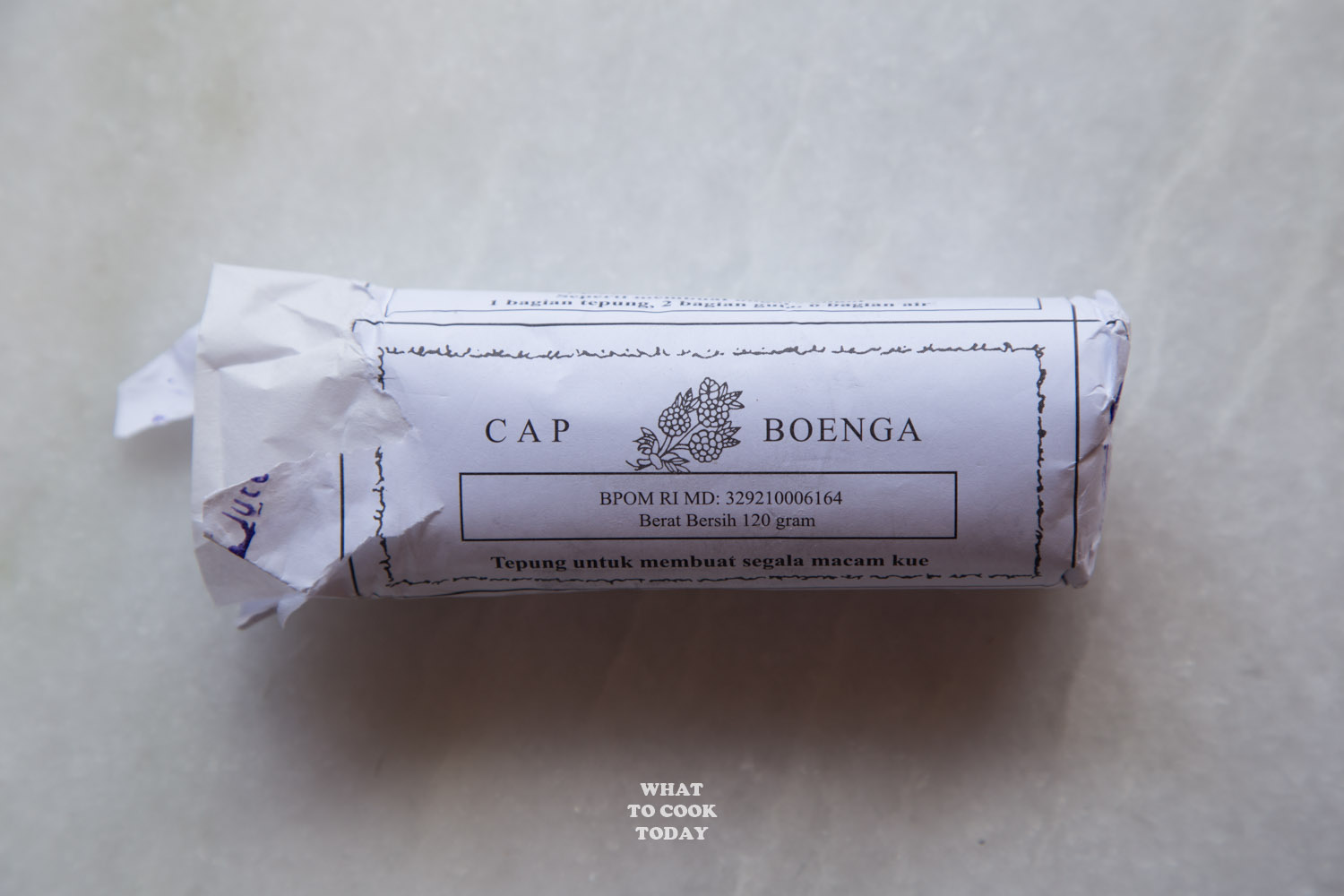
Ingredients and Substitutions
- Tepung hunkwe (mung bean starch)
This gives the cake its signature soft and bouncy texture. Do not substitute with regular mung bean flour. - Coconut milk
Adds richness and flavor. I recommend full-fat coconut milk for the best taste and texture. - Coconut sugar or Indonesian palm sugar
This gives the cake its beautiful deep brown color and caramel flavor. You can substitute with gula melaka or palm sugar. - Granulated sugar
Balances the flavor and sweetness. - Grated coconut
Fresh grated coconut gives the best texture and flavor. Frozen grated coconut works too. - Salt
A little salt in the coconut coating balances the sweetness beautifully. - Pandan leaves
Optional, but highly recommended for extra aroma in the coconut topping.
Helpful Tips Before You Start
- Stir continuously while cooking
The mixture thickens fairly quickly once heated. Constant stirring helps prevent lumps and scorching. - Don’t overcook the batter
Once the mixture turns glossy, thick, and translucent, it’s ready. - Use lightly oiled utensils for cutting
This prevents sticking and gives cleaner cuts. - Steam the grated coconut
Steaming keeps the coconut fresh longer and prevents it from spoiling too quickly. - Let the cake cool completely before cutting
The texture firms up as it cools.
Texture Notes
This version has a softer and more tender texture compared to some traditional recipes. I personally prefer it this way because it stays pleasant even after refrigeration.
Some recipes use a higher starch-to-liquid ratio, which creates a firmer and chewier result. After testing several versions, I found this ratio gives the best balance of softness and bounce.
What To Serve This With
- Hot jasmine tea
- Indonesian coffee or kopi tubruk
- Teh tarik or milk tea
- Fresh tropical fruits like mango or pineapple
- Other Indonesian kue for an afternoon snack spread
Storage & Reheating
- Store leftovers in an airtight container in the refrigerator for up to 5 days.
- The texture will become slightly firmer after chilling, but still tastes good.
- I don’t recommend freezing because the texture changes significantly after thawing.
- You can let the cake sit at room temperature for 10–15 minutes before serving to soften slightly.
Frequently Asked Questions
- Can I use regular mung bean flour instead of hunkwe starch?
No. Regular mung bean flour is made from ground whole mung beans and won’t give the same bouncy texture. - Why is my ongol ongol too firm?
Too much starch or overcooking can make the texture firmer than desired. - Can I use water instead of coconut milk?
You can, but the flavor won’t be as rich and creamy. - Can I make this ahead of time?
Yes. It actually slices more cleanly after chilling for a few hours. - Why do I need to steam the grated coconut?
Steaming helps prevent the coconut from spoiling quickly and improves the texture.
Ongol ongol hunkwe is one of those traditional Indonesian snacks that proves simple ingredients can create something truly special. The combination of soft, chewy cake and salty coconut coating is timeless and comforting. I especially love how easy it is to make with just a few ingredients and minimal equipment.
If you grew up eating Indonesian kue, this recipe may bring back nostalgic memories. And if this is your first time trying ongol ongol, I hope you’ll fall in love with its unique texture and flavor as much as I have.
Ongol Ongol Hunkwe (Mung Bean Starch Cake with Grated Coconut)
Ingredients
- 120 gr mung bean flour/ tepung hun kwe available at Asian grocery store- I used “cap boenga” brand
- 125 gr coconut sugar / Indonesian palm sugar
- 120 gr sugar
- 900 ml coconut milk divided
Coconut topping:
- 1 screwpine leaves/pandan leaves washed and knotted
- 200 gr grated coconut
- ½ tsp salt
Instructions
Prepare the cake:
- Place coconut sugar, regular sugar, and 200 ml of coconut in a medium saucepan. Bring to a simmer until the sugar melted
- Meanwhile, mix the mung bean flour and the remaining 700 ml of coconut milk. Stir this flour mixture into the coconut sugar mixture and continue to stir. After about 8-10 minutes, the mixture will start to thicken. Continue to cook until the color gets darker and the mixture turns translucent. The batter will be thick but pourable
- Pour this into a heat-proof container. Smooth with a rubber spatula and let it cool down
Prepare the coconut mixture:
- While waiting for the cake to cool down, prepare a steamer by bringing the water to a boil. Mix the coconut with a pinch of salt and cut pandan leaves into smaller pieces and mix with the coconut. Steam for about 10 minutes on high heat. Set aside to let it cool down before rolling the cake
Putting it together:
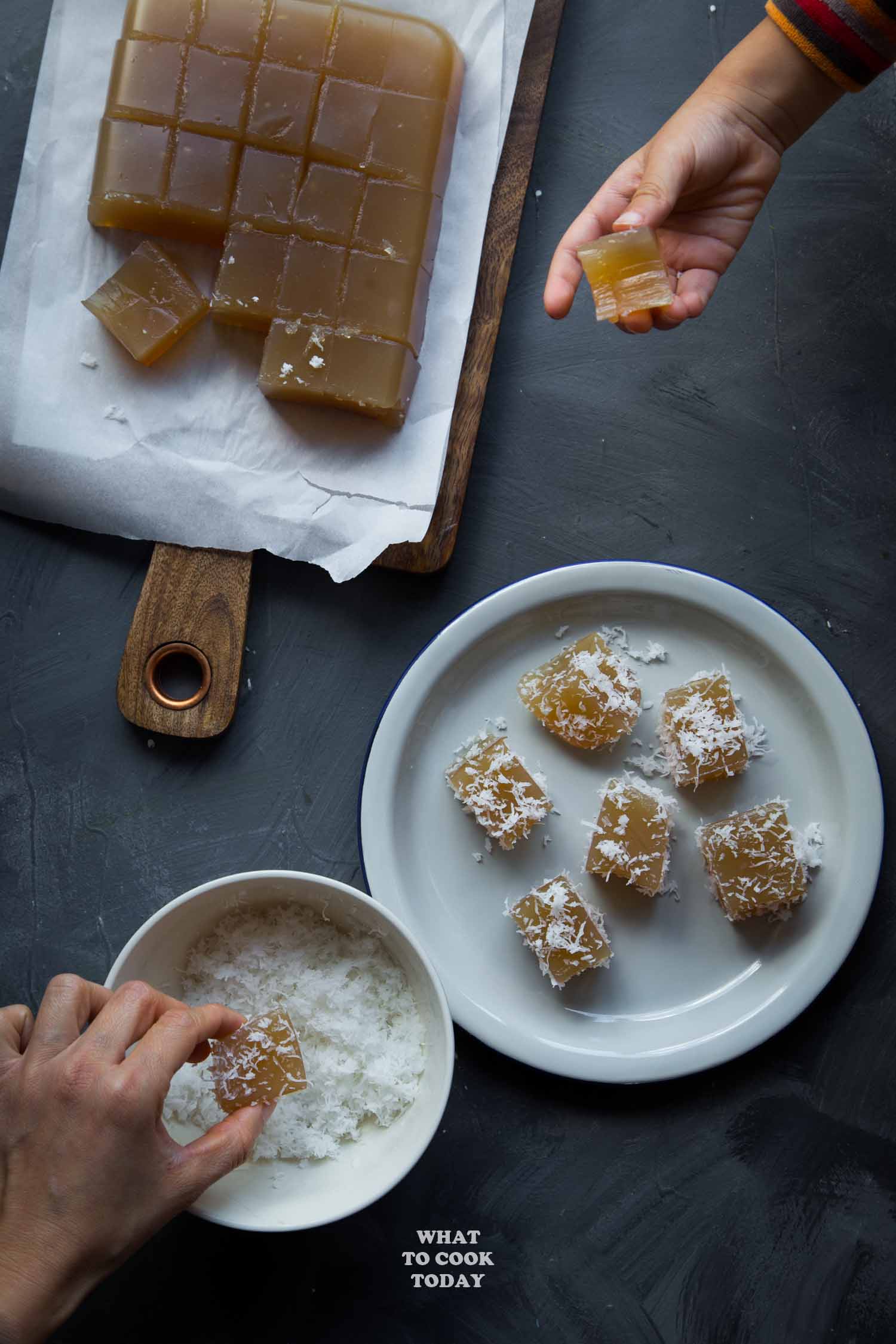
- Unmould the cake from the container. You should be able to do this without any difficulty as the cake doesn’t stick to the container at all. It has this soft and jiggly texture once it is cooled down. Use a plastic knife or rub a thin layer of oil on a knife and cut the cake into squares
- Roll each square in the coconut mixture and serve.
Reheat:
- Save any leftover in the refrigerator for up to 5 days. Do not freeze any leftover as they do not do well after freezing

12 comments
Hello, you mentioned water above the recipe (to melt sugar in and mix with the mung bean powder) but in the recipe you use coconut cream.. I made it tonight and was waiting for it to go translucent but I think I overcooked it as it separated a bit. Which one is the correct one to use?
Hi Erin, so sorry for the confusion. It should be coconut milk.